



Category: Art Conservation
Student Blog: Reflections on Sustainability and Cultural Heritage Conservation
August 10, 2026 Written by Michelle Facini, Ph.D. student in the Preservation Studies Program | Photos courtesy of Michelle Facini
Sustainability and cultural heritage conservation. Everyone talks about it—but what does it look like in practice?
What enables mission-driven organizations to be resilient and build a sustainable future? While conservation efforts often center on protecting individual objects or collections, I have come to believe that true stewardship extends further. It also requires investing in the people, organizations and systems that make those efforts possible.
The conservation field in the United States is remarkably small, yet its responsibility is enormous. Early in my career, I felt a profound obligation to master the technical skills of the profession: understanding artists’ materials, conducting scientific investigations and making thoughtful treatment decisions. That technical foundation remains essential, but it ultimately led me to a broader interest in what enables conservators to sustain their work over the long term.
Time and again, I returned to a question that had quietly accompanied me throughout my career: What makes an organization healthy, sustainable and resilient? And what would it take to create a future in which cultural heritage professionals are supported as thoughtfully as the collections they care for?
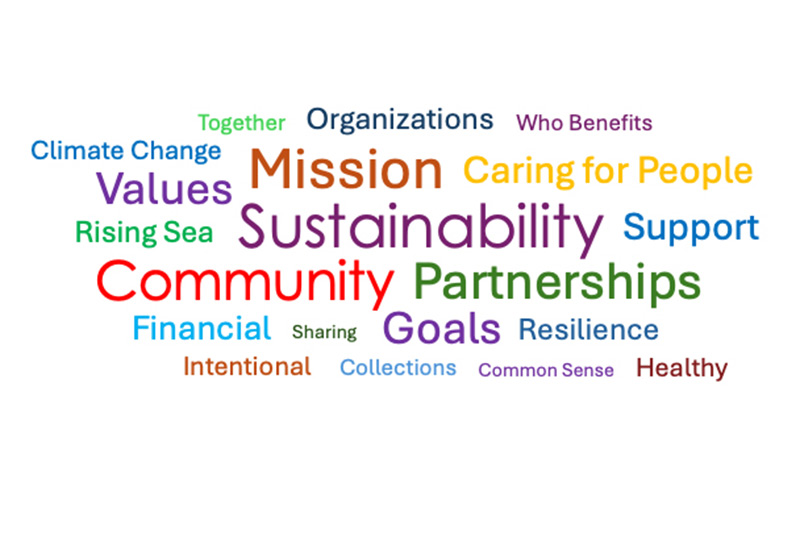
Conservators work alongside many partners to safeguard the nation’s cultural heritage—work that is increasingly shaped by climate change, shrinking public investment and workforce challenges. Those growing demands put pressure on organizations to meet the moment in ways that not only preserve cultural memory but also invest in people and partnerships.
In my current position as the Welch Head of Conservation and Scientific Research at the Smithsonian Institution’s National Museum of Asian Art, I find myself repeatedly returning to a simple truth: The future of collections depends on the well-being of the people and organizations that care for them. Museums, libraries, archives and historic sites must responsibly manage resources, reduce their environmental impact and strengthen their capacity to serve future generations.
The challenge of sustainable practice ultimately led me to pursue doctoral work in the University of Delaware’s Preservation Studies Program and explore how organizations can remain mission-driven and financially resilient while balancing their responsibilities to communities.
Using a case study model, my research examines the organizational legacy of Heritage Preservation, a nonprofit that, for more than 40 years, helped coordinate national preservation efforts through advocacy partnerships, education and emergency response programs. Through archival research, oral histories and organizational theory, I continue to explore why some mission-driven institutions thrive while others struggle to survive—and what their stories can teach us about sustainable stewardship.

Beginning this journey required me to step back into the role of a student and immerse myself in organizational ecology, systems theory, governance and social science research methods. The experience has been both exciting and humbling.
My professors in the Biden School and the Preservation Studies Program opened doors to knowledge and ways of thinking I could not have discovered on my own. Their interdisciplinary approach demonstrated that theory is not merely abstract. It is a tool for understanding how people, organizations and systems interact and for imagining new possibilities for the future.
One of the most important insights to emerge from my research so far is that theory and practice are not opposing forces. They are most powerful when they inform one another, helping organizations create opportunities that build resilience, support their workforce and strengthen their capacity to preserve cultural heritage.
At its core, sustainable practice is about caring for both people and heritage—now and into the future.
What ideas or challenges do you think belong in the broader sustainability conversation?


