


Category: Art Conservation
Student Blog: Conservation & Collaboration
November 10, 2026 Written by Sarah Lavin, Winterthur/University of Delaware Program in Art Conservation Class of 2027 | Taylor Zartman, Sarah Lavin, Gwynne Ryan, Steven O'Banion, Jenifer Bosworth, Jan Stuart, Jenifer Bosworth, National Museum of Asian Art.
WUDPAC Class of 2027 Fellow Sarah Lavin was drawn to a career in conservation by the interdisciplinary nature of the field. In this blog post, she talks about the knowledge sharing, relationship building and collaboration of her summer internship with Voices in Contemporary Art and her third-year placement at the Smithsonian’s National Museum of Asian Art.
One of the reasons I was drawn to a career in conservation is the inherent interdisciplinary nature of the field. Conservators frequently collaborate with a wide network of professionals, including artists, fabricators, scientists, and caretakers. Conservation relies on knowledge sharing, relationship building and collaboration, and I experienced this firsthand during my summer internship as one of two Voices in Contemporary Art (VoCA) Fellows.
As fellows, my classmate Sydney Collins and I partnered with VoCA and the Ellsworth Kelly Foundation to study outdoor sculpture conservation and the work of artist Ellsworth Kelly. I was especially excited about this partnership because it provided opportunities to collaborate not only with artists and foundations, but also with the many stewards and stakeholders responsible for preserving Kelly’s work.
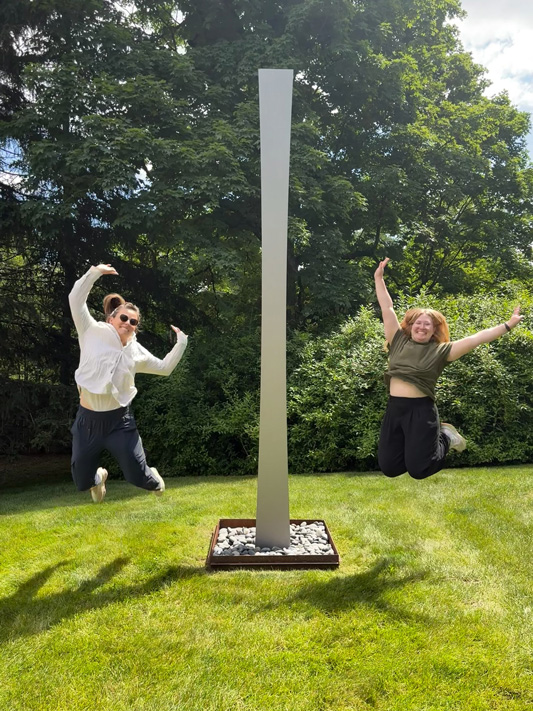
Ellsworth Kelly created a significant body of outdoor sculpture that is displayed in museums and private collections around the world. Since Kelly’s passing and the closure of several longtime fabrication studios, decisions regarding the care of his sculptures have become increasingly complex. This has created a need for systematic conservation guidelines to support recommendations on managing material change in these works.
To address this challenge, Sydney and I developed a project aimed at standardizing how stewards monitor Kelly’s outdoor sculptures, with a focus on his stainless steel works. We embarked on an adventurous summer, traveling to six cities, including New York City, Spencertown, NY, Washington, D.C., Baltimore, MD, St. Louis, MO, and Chicago, IL, meeting with experts involved in outdoor sculpture conservation along the way.
In New York, we spent a week with the VoCA team learning how to conduct artist interviews and exploring the city’s contemporary art and conservation communities. We met with artists in residence at Governors Island, toured Kelly’s sketchbook collection with conservators and curators at the Museum of Modern Art (MoMA) and visited galleries and contemporary art installations. In Spencertown, we conducted archival research, sculpture examinations, and staff interviews at the Ellsworth Kelly Studio to better understand Kelly’s sculptural practice.
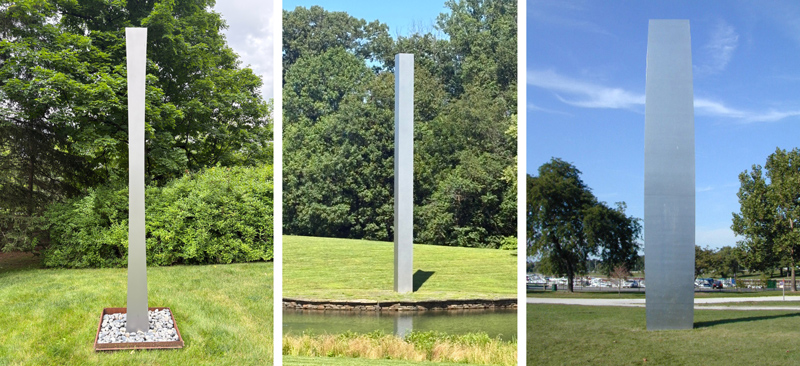
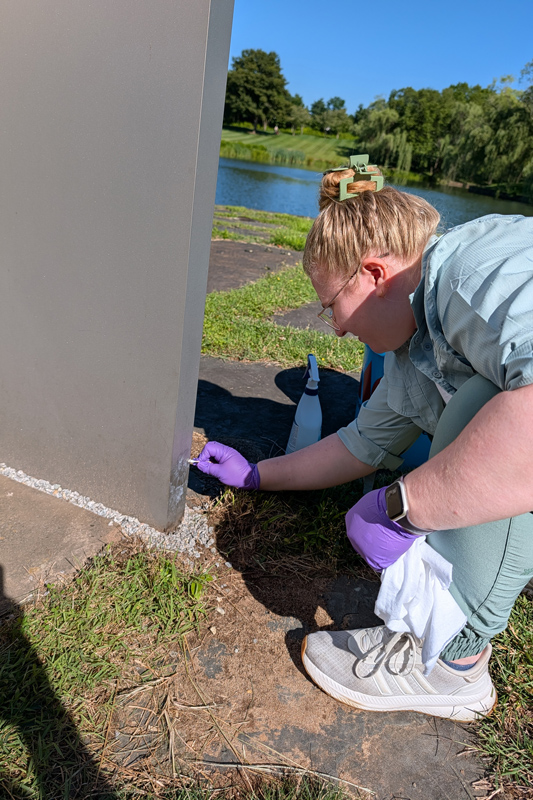
In Washington, D.C., we worked with conservation staff at Glenstone to carry out a passivation treatment on one of Kelly’s sculptures. We also visited the American Stripping Company (ASCo) in Manassas, Virginia, where President James Sejd and his team support the fabrication and conservation of monumental outdoor sculptures for institutions worldwide. Observing several active projects highlighted the deeply collaborative relationship between artists and fabricators.
In Baltimore and Chicago, we connected with conservation and collections management staff at the Baltimore Museum of Art, the Art Institute of Chicago, and the Chicago Parks District to examine Kelly’s stainless-steel sculptures. We also spent a week with the conservation team at the St. Louis Art Museum studying a weathering steel sculpture and learning about their outdoor sculpture maintenance program.
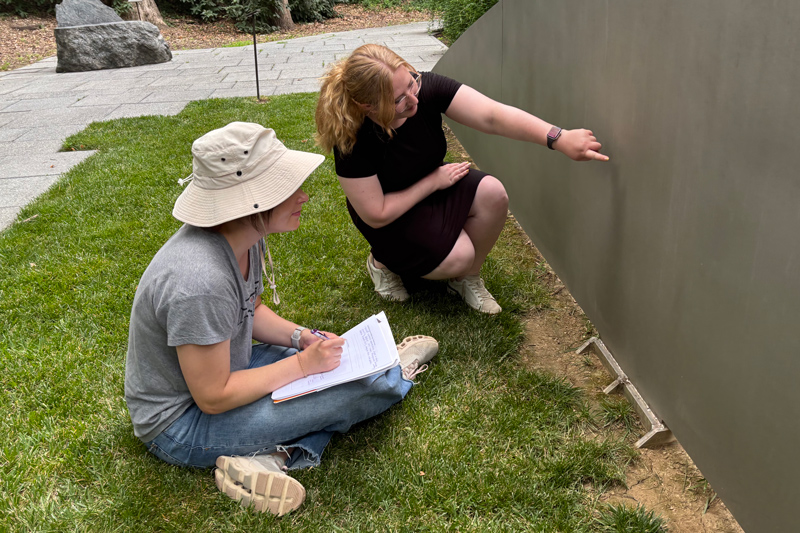
A major focus of our summer was developing a condition survey form for unpainted stainless steel sculpture. The goal was to make it easier for stakeholders to document change over time, compare sculptures, and identify treatment or refabrication needs. At each site, we used the form to assess an artwork’s condition and refined it based on our observations.
Through these examinations, we became increasingly aware of the important role that the environment plays in the viewing experience. We explored ways to incorporate environmental context into condition reports and emphasized the importance of viewing distance by documenting the point at which condition issues become visually apparent.
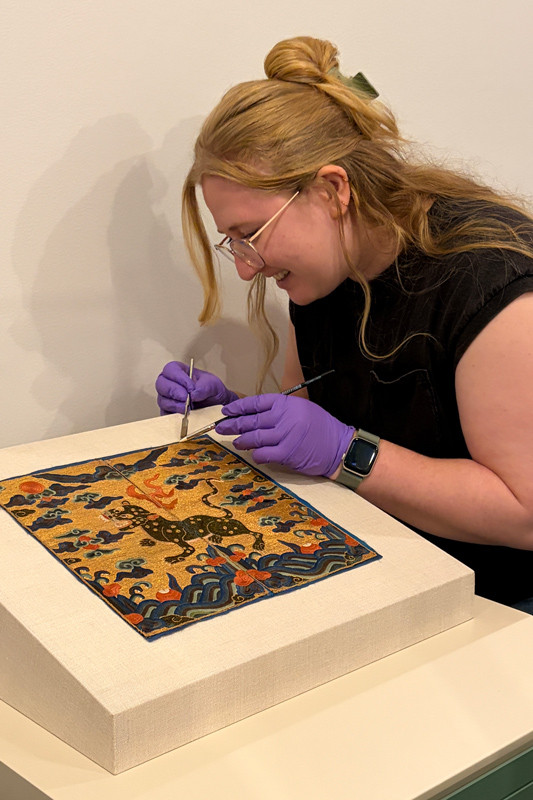
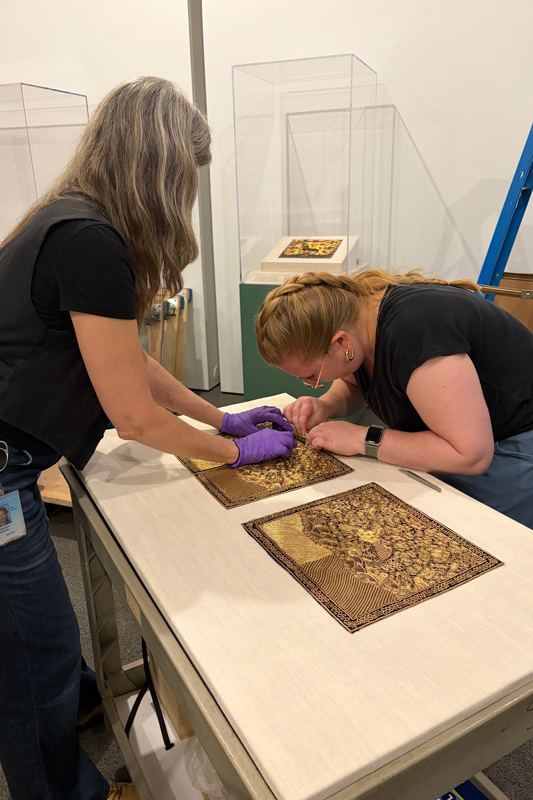
I have continued to experience the collaborative nature of conservation in my current role as a third-year graduate intern at the Smithsonian’s National Museum of Asian Art (NMAA) in Washington, D.C. When considering placements for my third-year internship, I knew I wanted to be a part of a dynamic museum environment with opportunities for outreach and cross-departmental collaboration.
From my first week at NMAA, I have observed the installation and deinstallation of exhibitions, a process that brings together conservators, curators, registrars, exhibition designers, collection managers, exhibit specialists, and more. Recently, I assisted with the installation of Woven and Cast, an exhibition exploring Chinese textiles alongside Japanese metalwork.
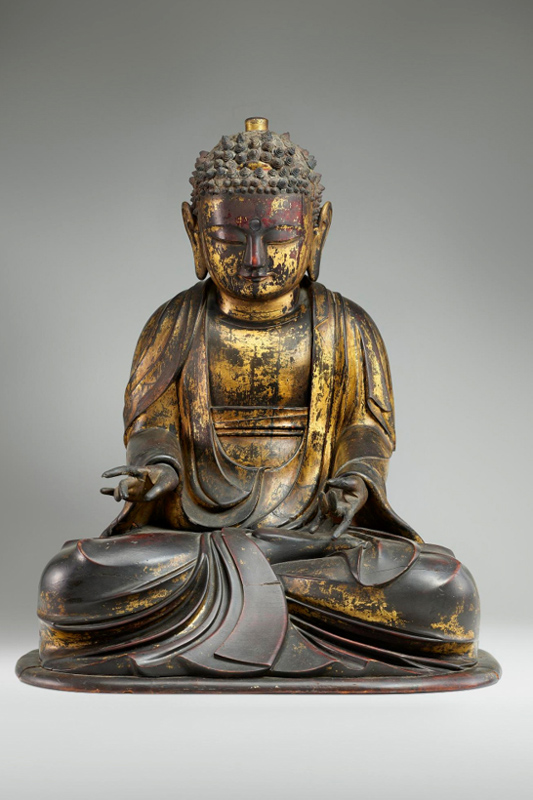
I am also contributing to the collaborative study and treatment of a rare seventeenth-century Joseon dynasty lacquered and gilt wooden Buddha, the first Korean Buddhist sculpture acquired by the museum. The sculpture’s complex history is reflected by historic restorations, material loss, and later interventions, and the future treatment will rely on close collaboration among scientists, conservators, and Korean specialists. Next month, I’ll have the opportunity to participate in a workshop hosted by NMAA which will bring together experts from Korea and the United States to develop a culturally informed approach to the sculpture’s conservation treatment, research and display.
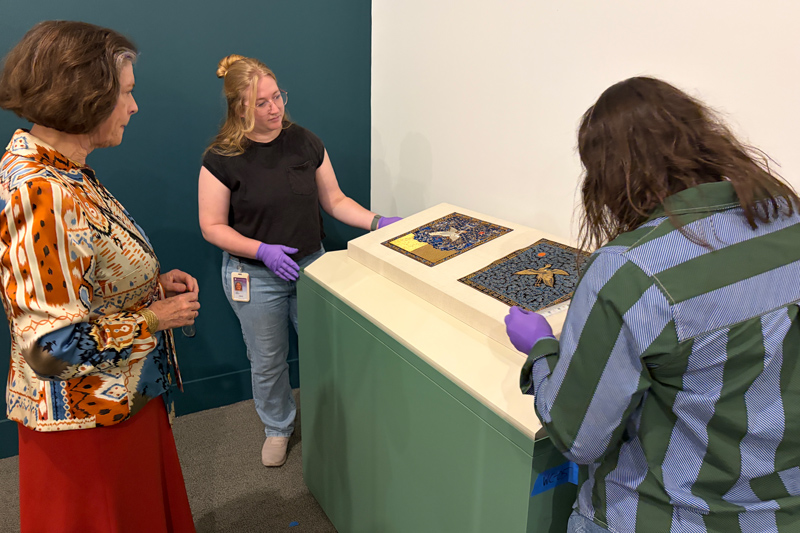
Beyond collections work, I have enjoyed collaborating with NMAA’s conservation outreach specialist on programs that connect conservation with the public, from assisting with field trips alongside the education department to developing workshops for children and families.
Looking back on my summer with VoCA and ahead to my year at NMAA, I am grateful for the many opportunities to learn from and work alongside professionals across disciplines. These experiences have reaffirmed that conservation is fundamentally collaborative, and meaningful preservation depends on the collective knowledge, perspectives, and care of many individuals.