


Category: Art Conservation
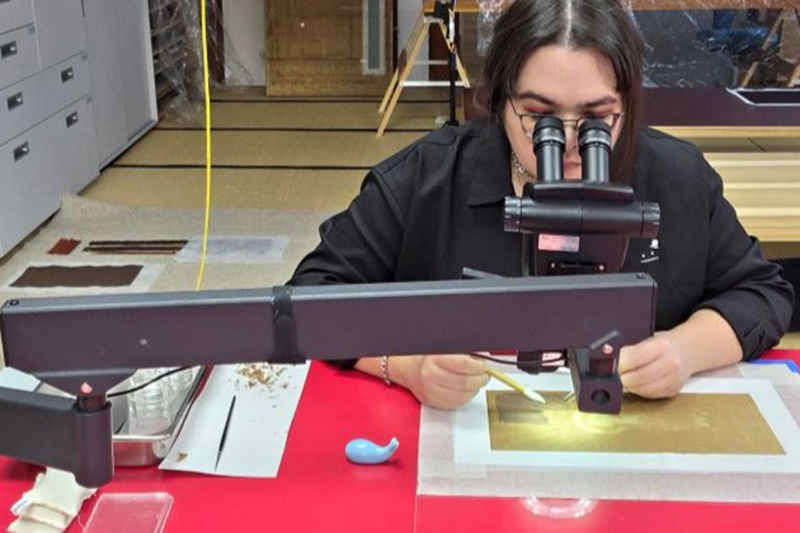
Student Blog: Cleveland Museum of Art
March 30, 2026 Written by Sam Callanta Winterthur/University of Delaware Program Graduate Fellow | Photos courtesy of Sam Callanta
In this blog post, WUDPAC Class of 2026 Fellow Sam Callanta shares her third-year internship experience working with the specialist conservators and collections at the Cleveland Museum of Art to pursue her interest in Asian painting conservation.
For some time now, I have wanted to become a conservator of Japanese paintings and veered my education towards that path. Along with Chinese and Korean paintings, these complex laminate artworks require training beyond that of Western graduate programs. Commonly, conservators working in this field spend significant time in Asia learning the traditional craft of mounting paintings with decorative fabric borders and supportive paper linings. While I hope someday to do the same, training opportunities in this  particular niche of conservation are few and I have leaned on the Winterthur/University of Delaware Program in Art Conservation (WUDPAC) to support me in other ways: They provided a strong foundation in materials science, sent me to Japan this past summer for language training and research, and helped me to find internship opportunities for this year. While my primary goal remains training in Japanese mounting (hyōgu, 表具), I decided to familiarize myself with Chinese and Korean mounting formats as well so that I can better serve North American collections of Asian art. This year, I headed as a graduate intern to the Cleveland Museum of Art (CMA), one of only a handful of institutions in the US that boasts an East Asian paintings conservation studio, as well as a splendid collection of East Asian art and opportunities to further my education in both Japanese and Chinese mounting techniques, making it the perfect place to spend my final year as a WUDPAC student.
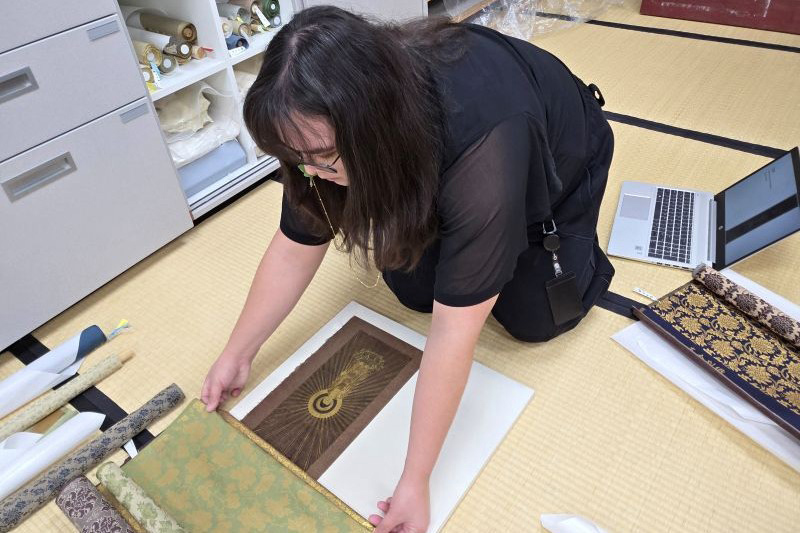
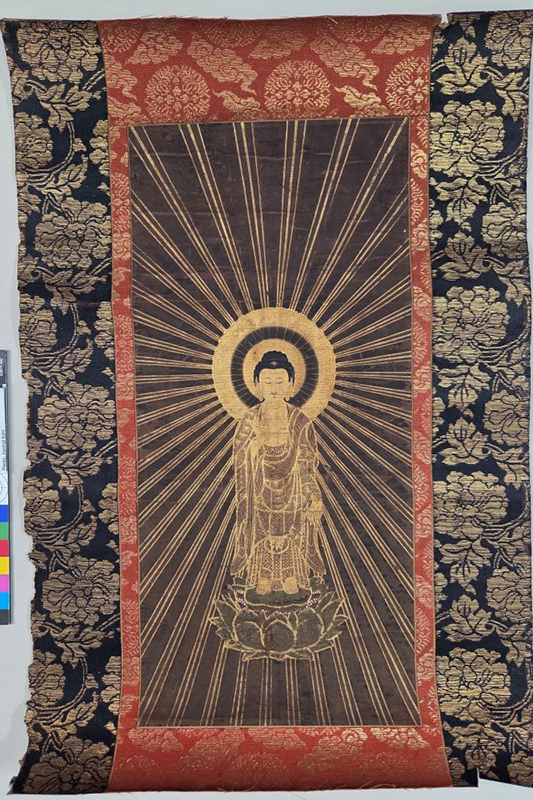
My main project has been the remounting of a small, non-accessioned Buddhist painting to develop my skills in hyōgu and produce a hanging scroll for my portfolio, completed under the supervision of Sara Ribbans, conservator of Asian paintings and trained in Japanese mounting. Paintings, once lined and joined, require several months spent stretch-drying on a drying board (karibari, かりばり). Due to time constraints, it was imperative to treat the painting quickly, so that it could spend as long as possible on the board. I began preparing during my summer research trip by purchasing this painting of Amida Buddha while at the famous outdoor market at Tōji Temple (known locally as “Kobo-san”) in Kyoto. Paintings of this type are meant for personal devotional use, often placed in home altars (butsudan, 仏壇). According to the vendor, the painting dates to the Meiji Era (1868-1912) and while I cannot confirm this, the condition was certainly quite poor, with a fragile and torn silk support, significant discoloration of the linings and crispy edges. An even darker inscription on the verso and internal crease reinforcements between the final lining and second lining indicates that the painting has been remounted at least once before. A good mounting is said to last one hundred years, lending credence to its possible age. Over the course of remounting, I also treated the painting by washing it, reinforcing creases, mending tears, and infilling losses with aged silk. The new mounting fabrics and lining papers will provide structural support, allowing it to hang as intended when on view. Now that the painting is on the drying board, I will begin inpainting the silk fills. In two months’ time, Sara and I will remove and flip it, reattaching it to the board verso out for the final two months of drying, after which we can finish the scroll by installing the hanging stave, rolling rod and hanging hardware.
This project represents a significant step as my first attempt at mounting a painting into a hanging scroll. I have read about mounting, I have strengthened my Japanese vocabulary to speak with mounters, and I understand the materials and the mechanisms by which mounted paintings deteriorate, but the integration of craft into the conservation process can only be understood through active experience, and that is exactly what the CMA has given me.