




More Than a Major: The Many Paths of International Relations
June 26, 2026 Written by Chiu-Yin Mak | Photos courtesy of Jack Mullarkey
Jack Mullarkey reflects on the versatility of studying international relations and offers career tips for students
When Jack Mullarkey graduated in May with degrees in international relations and Spanish studies, he left the University of Delaware with an impressive record of academic achievement, leadership, and global engagement.
Originally from Havertown, Pennsylvania, Mullarkey arrived at UD as an English major interested in journalism and publishing. Through his coursework, study abroad experiences and involvement across campus, he discovered a passion for language, culture and international education, ultimately pursuing a double major in international relations and Spanish studies with a concentration in development and political economy and a regional specialization in Latin America.
When asked what inspired him to pursue degrees in international relations and Spanish studies, Mullarkey said the flexibility of the international relations program allowed him to explore topics ranging from economics and environmental politics to Latin American politics and history, complementing his Spanish studies and supporting his long-term goal of becoming an educator.
Outside the classroom, Mullarkey worked as a peer consultant at UD's Career Center, where he assisted students with resumes, cover letters, LinkedIn profiles and career readiness skills. Reflecting on that experience, Mullarkey said that many students struggle to communicate the value of their experiences.
“The majority of political science and international relations students have experiences that are interdisciplinary and require more soft skills than hard skills. Students have the skills and experience. They just need help explaining it in a professional, organized way,” he explained.
Mullarkey encourages students to utilize the Career Center's resources, noting that they provide valuable guidance on resume writing, career preparation and professional development throughout a student's time at UD.
For students exploring internships, careers or graduate school opportunities, Mullarkey emphasizes the importance of building meaningful relationships with faculty.
“Go to their office hours, but not only to get help on assignments or study for exams. Ask professors about themselves, how they got to where they are. These conversations helped me build relationships that extended beyond the classroom,” Mullarkey said.
Mullarkey also recommends that students pursue extracurricular activities that align with their interests and provide opportunities to develop leadership skills. He found many students study political science, international relations, law, history and related fields because they are passionate about them, but that does not automatically translate to being a skilled or experienced professional.
“Join things that will teach you technical skills, challenge you as a leader and force you to apply what you've learned in the classroom to real-world situations,” Mullarkey said.
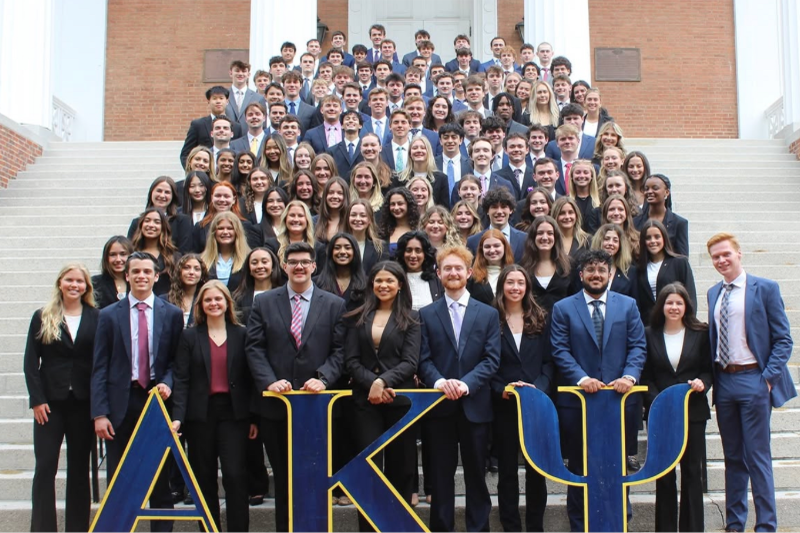
His own involvement as a study abroad ambassador, honors college ambassador, iBuddy Mentor, career center peer consultant and executive board member of Alpha Kappa Psi helped him gain valuable leadership experience while refining his professional goals.
Mullarkey emphasized the importance of networking and maintaining a professional online presence for students entering today's job market. As hiring processes become increasingly digitized across industries, he noted that employers often consider a candidate's online presence when evaluating their fit for a role. He encourages students and recent graduates to build professional networks and thoughtfully manage their digital profiles as part of their career development.
Mullarkey also stresses the importance of students creating a strong LinkedIn profile and maintaining genuine professional connections, noting that having a LinkedIn presence is very important today, as it allows students to present their skills and experiences in a more personal and detailed way than a one-page résumé, and adding that the Career Center also supports students through resources such as a room for taking LinkedIn headshots and a closet of donated business professional attire that students can borrow and take home.

Looking back on his undergraduate experience, Mullarkey credits many of his opportunities during his time at UD, including internships, study abroad experiences and graduate school prospects.
Mullarkey plans to continue pursuing his passion for language education and cross-cultural learning. He is currently considering the University of Delaware's master's program while also exploring the North American Language and Culture Assistants Program (NALCAP). Whether through graduate study or international teaching, Mullarkey hopes to return to Spain and continue building connections through language and education.


