


Category: Art Conservation
Art conservation and historical travel
June 03, 2026 Written by Lisa Chambers | Photos courtesy of Jim Schneck and Lauren Fair
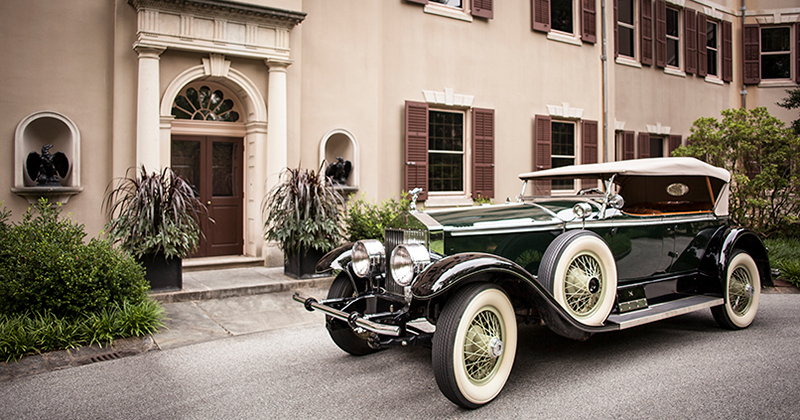
Anna-Colette Haynes, a second-year objects major with the Winterthur/University of Delaware Program in Art Conservation, is developing a pest eradication plan for a 1927 Rolls-Royce Phantom I Ascot Tourer at the Winterthur estate.
Most conservation projects at the Winterthur/University of Delaware Program in Art Conservation (WUDPAC) can fit on a worktable. Anna-Colette Haynes’ latest assignment is steering her in an unexpected direction—the Winterthur estate’s Coach House, where a 1927 Rolls-Royce awaits treatment.
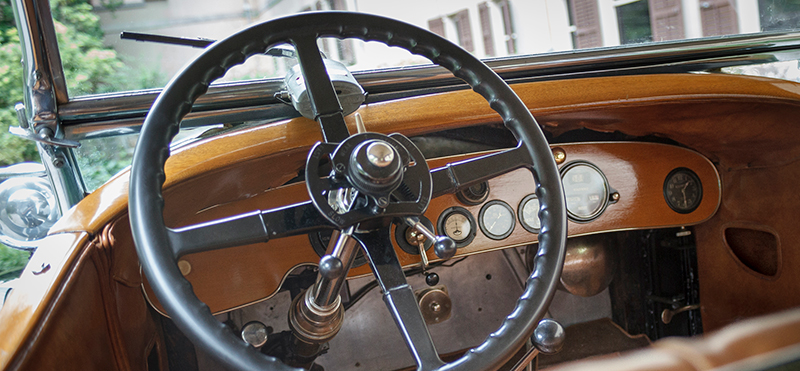
Anna-Colette, a second-year objects major with a preventive minor, earned her undergraduate degree from UD before returning to WUDPAC, one of the few programs to offer preventive conservation as a specialty. She is developing a pest eradication plan for a dark green Phantom I Ascot Tourer formerly owned by Phillip C. Beals of Southborough, Mass. The car was donated to the museum with the stipulation that it remain operational. “It’s kind of wild to watch someone drive it,” she said. “You start the ignition by these levers on the wheel—it’s a whole different way to drive.”
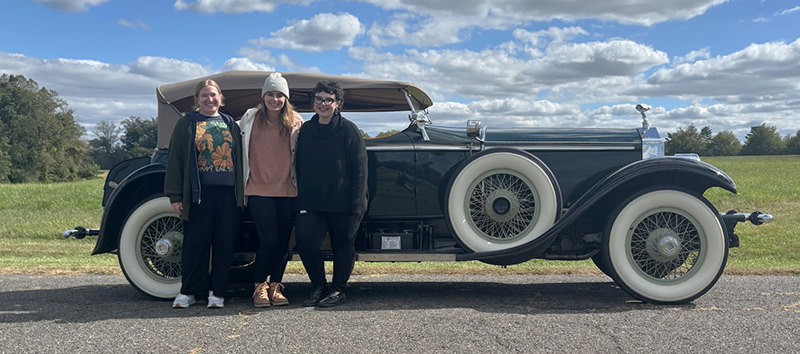
Recently, conservators noticed frass—evidence of carpet beetles—emerging from the vehicle’s tan leather seats. The infestation presented a challenge: The seats, reupholstered using horsehair padding and leather, are structurally attached to the car’s frame, making a full interior inspection impossible. “There’s a small hole in one corner, but we don’t know if the extent of the infestation is causing a lot of damage and we’re just not seeing it yet,” she said. With little published guidance on pest eradication for oversized objects and the material complexity of a car, Anna-Colette reached out to conservators who had faced similar situations and built a full decision matrix to weigh her options. “The normal pathway in most museums is to freeze items,” she said. After ruling out industrial freezer rental as impractical, she identified two viable roads to explore.
This summer, after removing the convertible top, she and Winterthur conservators will seal the car’s upholstery inside black polyethylene bags, creating a microclimate that absorbs heat from the summer sun. Bluetooth temperature and humidity monitors will track conditions as the interior gradually reaches about 120 degrees Fahrenheit—warm enough to kill pests without damaging the leather, paint or other historic materials. If signs of infestation persist, she’s recommending the entire vehicle be sealed inside a bubble and oxygen-scavenging packets be deployed to eliminate any remaining pests.
Because the Rolls-Royce could face future infestations, Anna-Colette is writing an instructional guide so Winterthur’s preventive conservation team can repeat the protocol if needed. “There are so many applications where something like this would need to be known,” she said, “not just in the context of a car.”