



Category: Art Conservation
Art conservation and historical journeys
November 15, 2024 Written by Lisa Chambers
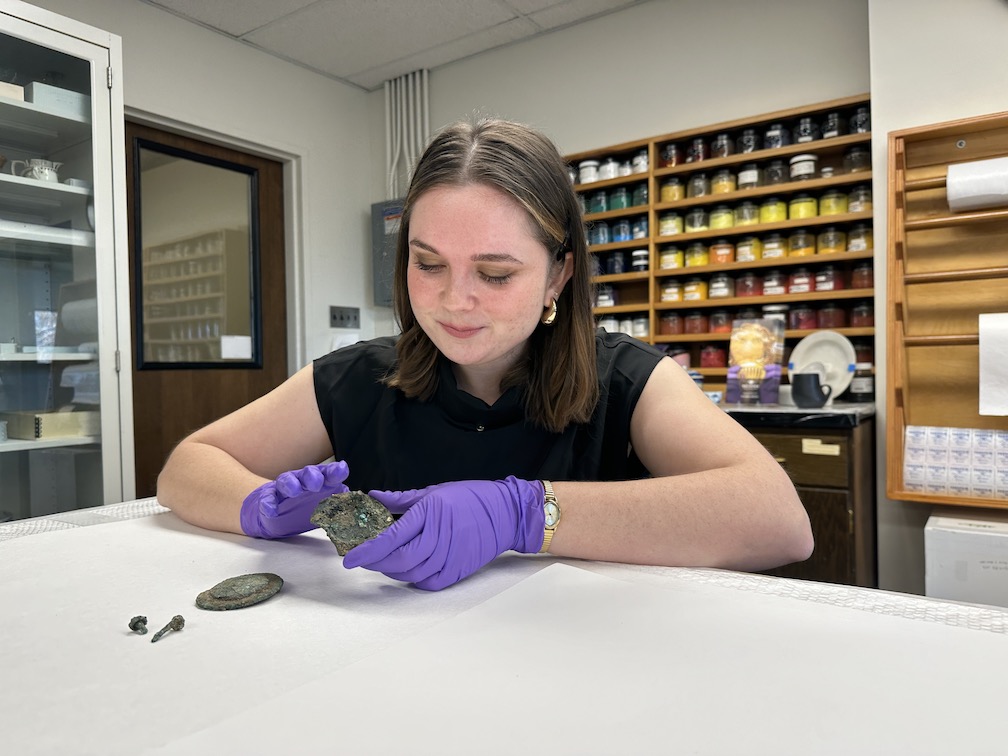
At first inspection, it’s not clear what the two circular copper alloy discs, each about three inches in diameter, were originally used for. Likely, they are bosses, “a piece of metal hardware that would have been affixed to a portion of armor or horse gear,” says WUDPAC Fellow and objects major Leah Palmer. The green bosses, mottled with rusty corrosion, dirt and fibers, are one of her second-year treatment projects—and her ticket to the ancient past. “I asked for this item specifically because the condition was really interesting,” she says. “I’m interested in anything that connects me to a person across time and place.”
While it’s impossible to know specifically who owned the bosses, which are on loan to the graduate program from the Penn Museum, Leah is learning as much as she can about their provenance. Around 8,000 years ago in the Zagros Mountains of northwest Iran, active trade routes passed through the culturally rich city of Hasanlu, connecting the region with Mesopotamia and Anatolia. Hasanlu had been continuously occupied for thousands of years, but around 800 B.C.E. it’s believed an invading army sacked it, laying waste to everything in their path. Time then buried the detritus, including these bronze bosses, for future archaeologists to discover.
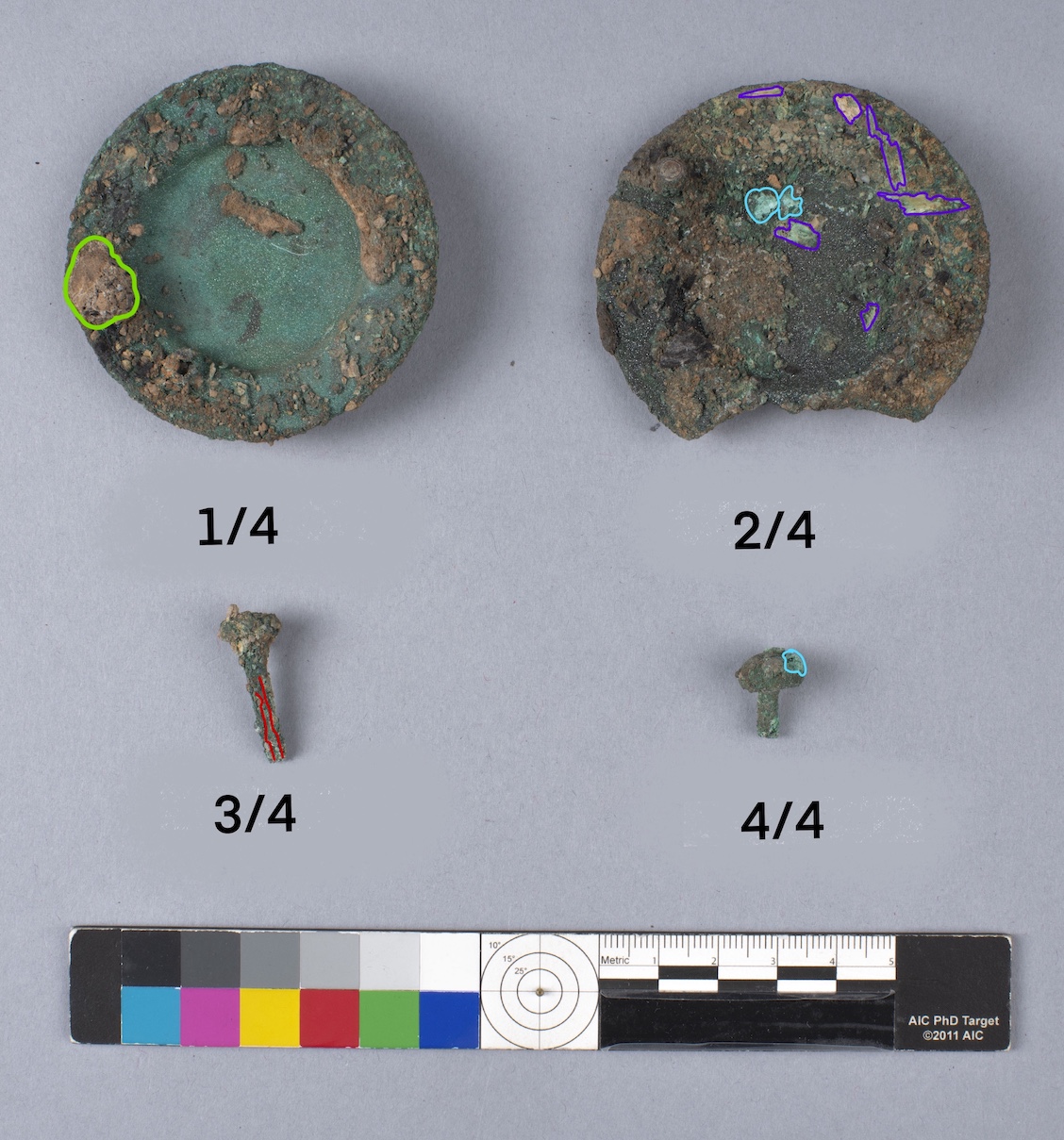
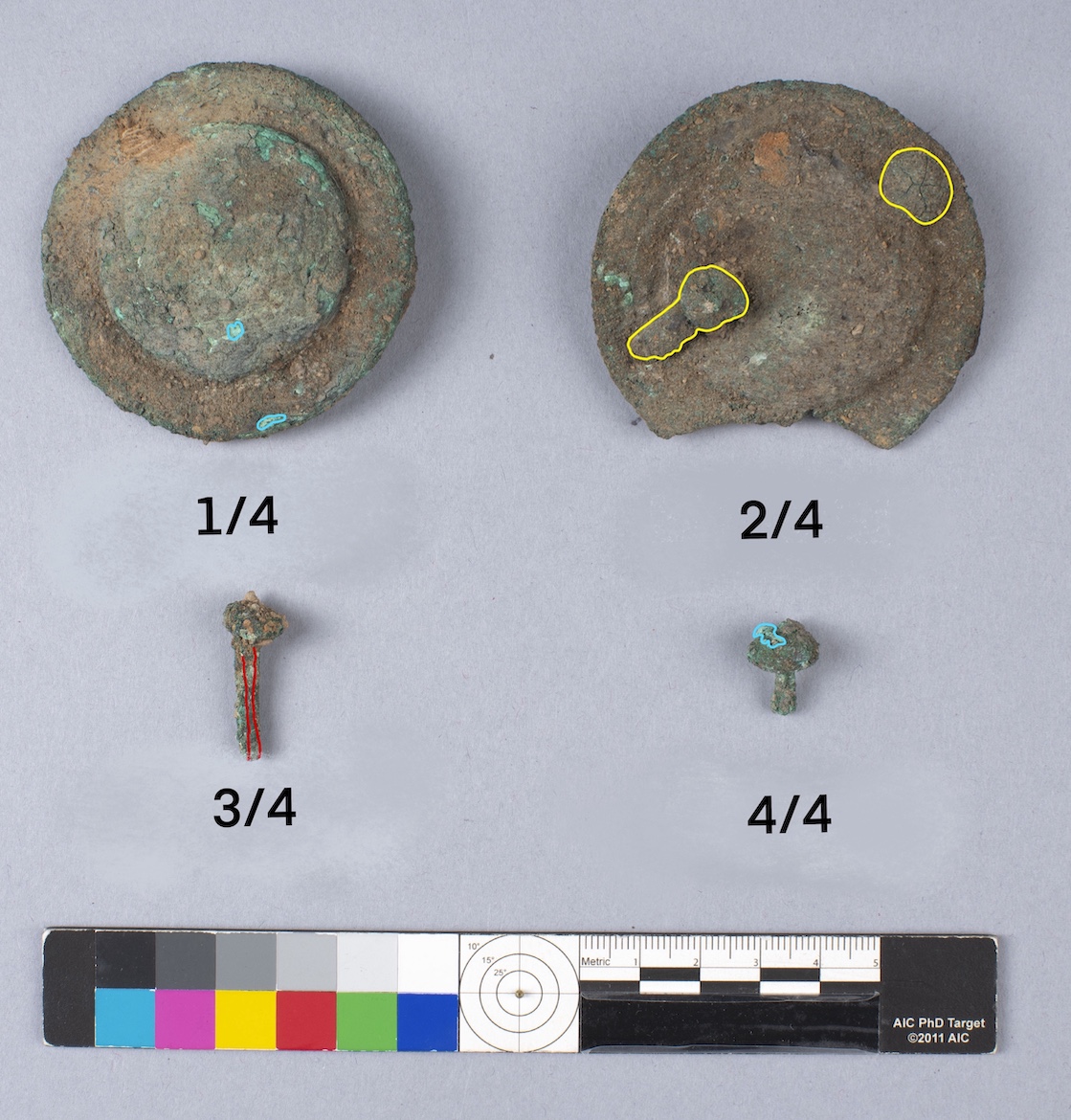
The bosses are slightly convex, with flat hammered rims around the outside. “They’re really grimy, with a lot of dirt embedded into the corrosion,” Leah explains, and one has two nail-like studs on either edge. In examining the bosses, Leah discovered that beneath the dirt, the green corrosion layer also contains lighter green, powdery areas. “That’s a big issue; it’s what we call bronze disease,” she says, describing a chemical reaction that occurs when corrosion created by chloride salts found in the soil reacts to water and oxygen after the object is excavated. Like many human viruses, “Bronze disease keeps going unless you stop it,” she says.
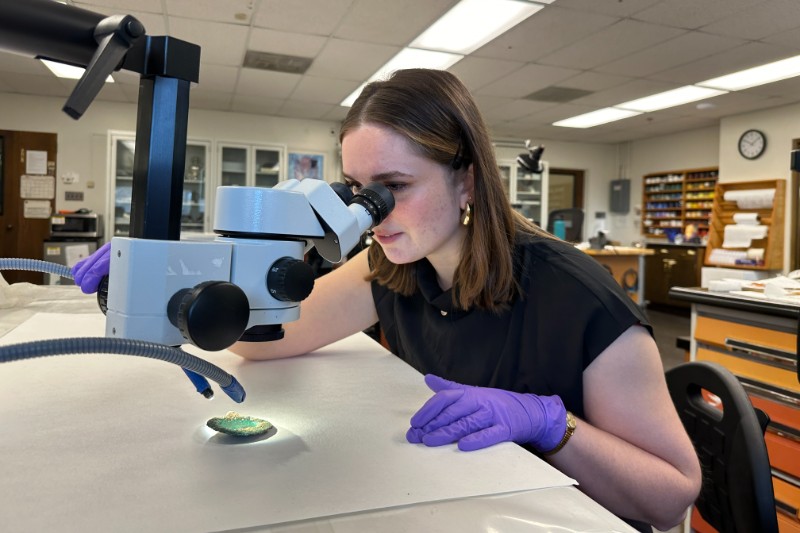
Leah will test the bosses to see if chlorides are present, confirming bronze disease, and use X-radiography to examine their internal structure and determine whether the bosses can be cleaned further. If they can, she’ll use a brush, scalpel, and other small picking tools while working under a microscope for careful control. If bronze disease is in fact present, she will excavate the affected areas and immerse the bosses into benzotriazole, a corrosion inhibitor.
The aim is not necessarily to return the bosses to their prior glory, but to understand and preserve them and some of their fascinating history. “Sometimes you come away from an object [after treating it] and it doesn’t look much different,” Leah explains. “But at its core, it’s going to be more stable, for the future. That’s our goal, to have objects live for a while longer without falling into more disarray.”


