



Art Conservation
Preserving the Past, Inspiring the Future
Preserving the Past, Inspiring the Future
Preserving the Past, Inspiring the Future
Preserving the Past, Inspiring the Future
Preserving the Past, Inspiring the Future
Preserving the Past, Inspiring the Future
Preserving the Past, Inspiring the Future
Preserving the Past, Inspiring the Future
Welcome
The Department of Art Conservation at the University of Delaware offers world-class programming dedicated to training future conservators of artistic and cultural heritage. Our interdisciplinary curriculum combines hands-on studio work with advanced study in chemistry, material science, art history, and conservation theory. Students gain extensive experience treating a wide range of artifacts including paintings, sculptures, textiles, books, photographs, and archaeological objects. With state-of-the-art instructional laboratories and strong ties to major museums, the Department of Art Conservation produces leaders in the field who go on to prestigious positions preserving the world's cultural treasures for generations to come. Whether your passion is modern and contemporary art or ancient artifacts, our program provides the comprehensive training needed to become an expert in this highly specialized profession.
Why Art Conservation?
- Unique Undergraduate Experience: The University of Delaware is the only university in the nation to offer courses taught by multiple conservators at the undergraduate level, providing an unparalleled mentorship experience with an average of six conservation professors per student.
- World-Class Master's and Doctoral Programs: The Winterthur/University of Delaware Program in Art Conservation (WUDPAC) is renowned for its three-year graduate curriculum designed to educate and train conservation professionals in the examination, analysis, stabilization, treatment, and sustainable preservation of heritage collections through specialization in eight conservation disciplines. The Preservation Studies Doctoral Program (PSP) is an interdisciplinary course of study in the philosophies, research methodologies, and policies informing the preservation of art and cultural heritage — distinct in its approach combining cross-field expertise toward doctoral study in preservation.
- Exciting Internship Opportunities: Students in the Art Conservation program have opportunities to intern at a wide variety of institutions around the world, gaining specialized knowledge and skills in the arts, sciences, and other fields, and developing the valuable hand, communication, and critical-thinking skills necessary to be responsible custodians of cultural heritage and cultural exchange.
75%
of art conservation undergrads work in collections care post-graduation.
Graduates
of all three art conservation programs work in 44 states, Washington, D.C. and more than 30 countries.
Partnerships
we partner with 200+ museums, donors, and foundations to secure ongoing funding for our students.
 Uniquely UD: Art Conservation
YouTube Link: Uniquely UD: Art Conservation: youtube.com/watch?v=aZEAR-UZHVQ
YouTube Link: Week In The Life Vlog || Art Conservation Grad Student: youtube.com/watch?v=Id75_L1SBV0
-
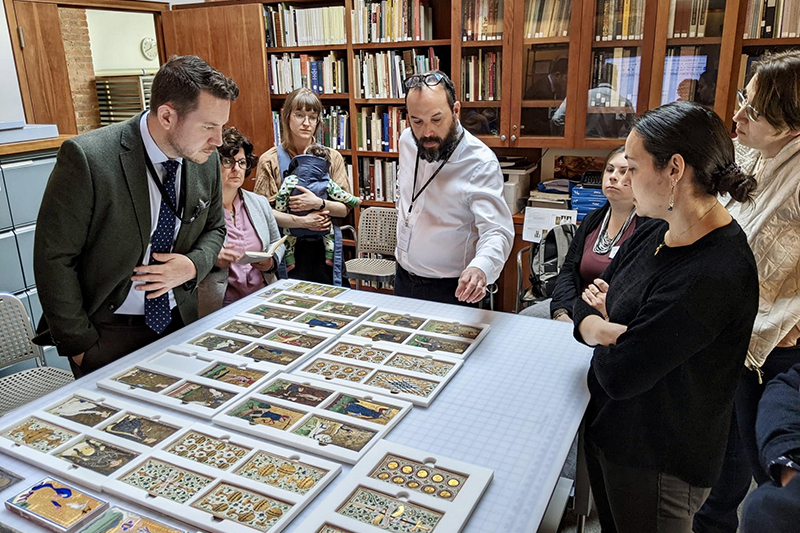
Solving the mysteries of tarot cards
September 29, 2026 | Written by Megan M.F. EverhartArt conservation faculty expertise in imaging science helps researchers identify pigments used in some of the earliest known tarot card decks -
WUDPAC Welcomes the Class of 2029
September 25, 2026 | Written by Art Conservation Communications StaffThe Winterthur/University of Delaware Program in Art Conservation is pleased to welcome the Class of 2029! -
Where disciplines meet: UTulsa scientists, conservators unlock secrets of centuries-old manuscripts
September 17, 2026 | Written by UTulsa StaffWUDPAC Class of 2016 alumna Jacinta Noble helps researchers uncover and preserve secrets held within 16th-century Indigenous Mexican manuscripts.


