


Internships

Undergraduate Internships
Hands-on experience is a cornerstone of the art conservation major at the University of Delaware. Through internships and coursework throughout the year, you’ll build essential skills in condition assessment, technical photography, stabilization and preventive care while preparing for careers in museums, archives and cultural institutions around the world.
Build Real-World Expertise
Opportunities during summer break, Winter Session and dedicated coursework help you build critical professional skills and put what you learn into practice.
- Develop technical skills: Practice condition assessment, treatment techniques and risk assessment while centering ethical practice, health and safety.
- Gain professional experience: Learn alongside expert conservators on campus and explore opportunities in museums, libraries, archives and private collections.
- Expand your global perspective: Pursue regional, national and international placements, including opportunities for mentorship through the World Scholars program.
Explore Specialized Course Topics
Internal internship courses, including ARTC 464, give you hands-on experience with a range of materials and collections.
- Focus on specific materials: Assess and treat specialized media such as ceramics, glass, metals, paintings, paper, photographs and textiles.
- Explore broad collections: Work with diverse holdings, including organic objects, library and archival collections and archaeological material.
Degree Requirements and Progression
To graduate, you must complete two three-credit internship courses, ARTC 464.
- First internship: We strongly recommend beginning with an ARTC 464 course led by UD faculty on campus or at Winterthur Museum, Garden and Library.
- Advanced placements: From there, broaden your experience through regional, national or international opportunities. Consult your advisor and check the UD Art Conservation Internship Board to explore available placements.
Internship Requirements
For each three-credit internship course, you will:
- Complete at least 85 hours of hands-on work in the lab or field.
- Maintain a daily reflection journal documenting your methods and observations.
- Synthesize your experience in a featured article or blog post for the College of Arts and Sciences website, including project photos and documentation.
Get Started and Explore Funding
Connect with your art conservation advisor and Lois Stoehr, College of Arts and Sciences internship coordinator, to explore upcoming opportunities and financial support.
You can apply for Summer Scholars or Fellows and Winter Fellows for University funding or apply for the Vicki Cassman Award for departmental funding.
Recent Student Internship Experiences
Recent student experiences include:
- Kelly Coleman interned at the Smithsonian Museum of American History.
- Leilani Anupol, Laura Shidle and Susie Stovell worked at the Biggs Museum in Dover, Delaware.
- Rachel Clements spent a summer in Turkey on an archaeological dig with the Japanese Institute of Anatolian Archaeology.
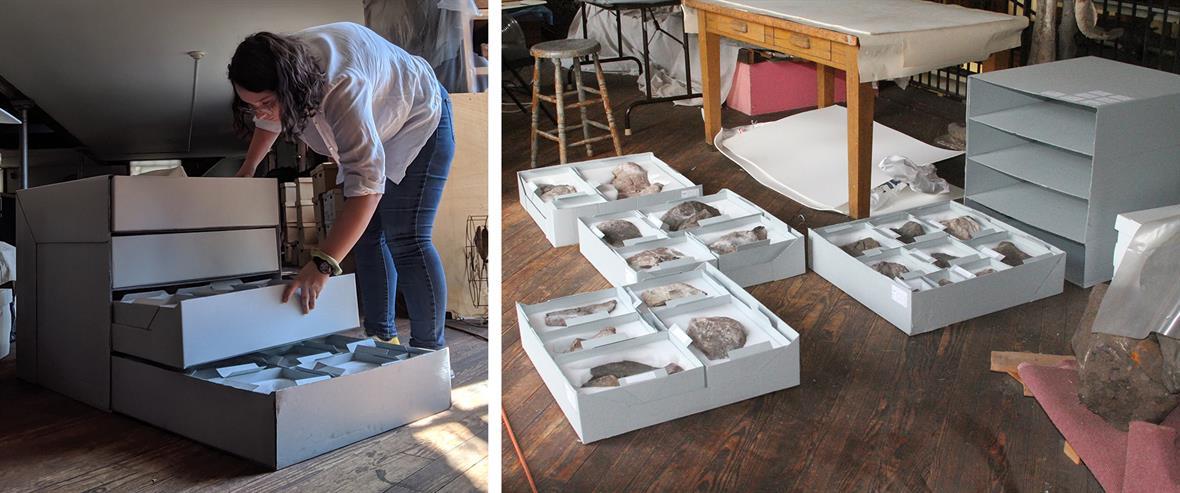
- Finn Thornton worked with a collection of mollusks at the Delaware Museum of Nature and History.
- Linuo Yuo interned at the Guangdong Museum in Guangzhou, China.
Finding Internships
- University of Delaware Art Conservation Department Internships Board
- American Institute for Conservation Member Community Job Board
- Emerging Conservation Professionals Network (Facebook page)
- Global Conservation Forum
- Global Museum
- Handshake – University of Delaware job board
- JobHQ, American Alliance of Museums
- MuseWeekly - University of Delaware Museum Studies Program
- USAJOBS – government jobs


