



Category: Languages, Literatures and Cultures
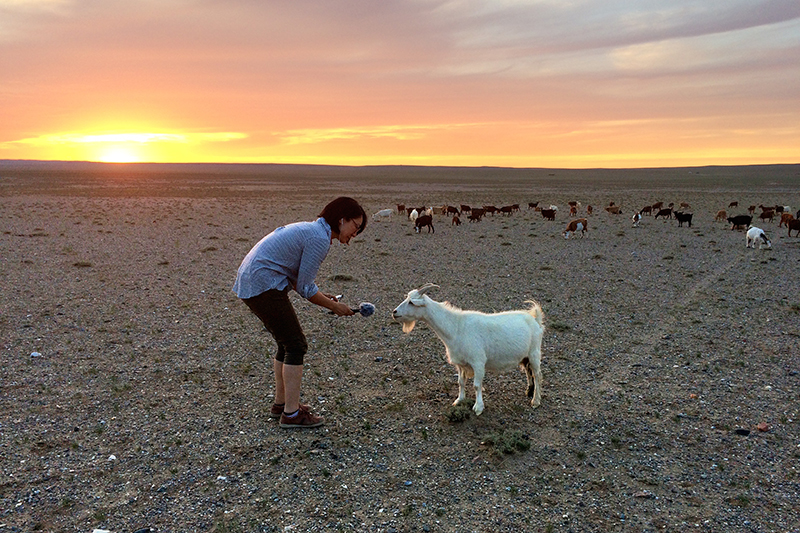
Sunmin Yoon and the Soundscapes of Mongolia
October 19, 2026 Written by Holly Myers and Cristina Guardiola-Griffiths | Photos courtesy of Sunmin Yoon.
Ethnomusicology of Mongolia reveals enduring influence of nomadic culture
For Sunmin Yoon, music has never been just a collection of notes on a page; it is a living, breathing map of human culture. As an ethnomusicologist and Korean language professor, Yoon has spent over two decades exploring the profound intersections between human expression, landscape and cultural preservation.
Her upcoming book, Singing Paths: Nomadic Sensibility of Mongolian Urtyn duu (forthcoming from the University of Illinois Press), serves as a capstone to a fascinating research journey that spans the concert halls of South Korea to the vast steppes of Mongolia.
From piano keys to the open steppe
Yoon’s path to ethnomusicology began during her undergraduate studies in South Korea, where she worked alongside the country’s pioneer ethnomusicologist studying shaman rituals. Although trained extensively as a classical pianist, Yoon discovered a different field that prioritized live performance, narrative-based analysis and a sensitive understanding of culture.
Driven to deepen her studies, Yoon moved to the United States for graduate school. While grading papers as a teaching assistant, she stumbled upon a piece on Mongolian music that sparked a lifelong fascination. Intrigue turned into action: That summer, she enrolled in a language intensive at the National University of Mongolia, stepping onto Mongolian soil for the first time. It was the beginning of an immersive, decades-long relationship with the region's people and sounds.
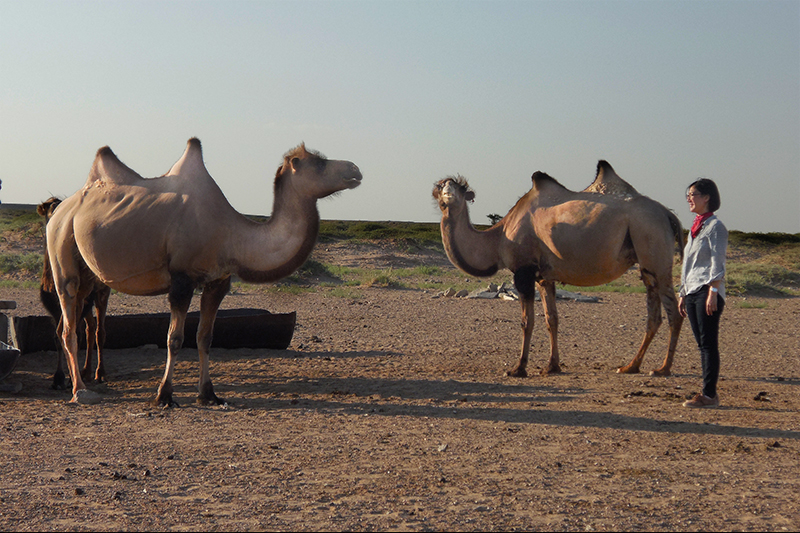
A bridge between tradition and modernity
As a researcher, Yoon investigates how oral traditions survive amid intense political and spatial disruptions. As the co-editor of the volume Mongolian Sound Worlds, she has analyzed the complex tension between rural heritage and a globalized future—ranging from ancient throat singing (khöömii) to modern global rock groups like the HU (a Mongolian folk metal and rock band formed in 2016, and not to be confused with classic British rock band The Who).
Yoon’s research focuses deeply on urtyn duu (traditional "long-song"), a vocal genre deeply tied to nomadic lifestyles and relationships with nature. When urtyn duu transitioned from the rural countryside into urban, modern concert halls, its format changed drastically. Yet, Yoon’s doctoral and ongoing research reveals that this transition did not cause a definitive rupture. Instead, she discovered an enduring "nomadic sensibility" that continually connects the city and the countryside through the shared memories, stories and travels of the singers.
A sensory approach to teaching
Yoon’s upcoming book utilizes sensory ethnography to explore urtyn duu through the five senses, plus a distinct sixth Mongolian concept: medremj, or spiritual "feeling." In her writing, she illustrates how a herder’s acute sight transforms into musical improvisation—where the visual shift of a cloud’s shadow or the curve of a landscape dictates a singer’s timbral shifts and vowel ornamentations.
This profound sensitivity to human connection and expression directly shapes Yoon's approach in the classroom. Guided by the memory of her own foundational language mentors, Yoon brings an empathetic, culturally immersive framework into her UD courses. By teaching her students to listen not just with their ears, but with an awareness of the deeper environmental and cultural landscapes behind the sound, Yoon empowers the next generation of global citizens to understand the world from the inside out.


