



Category: Sociology and Criminal Justice
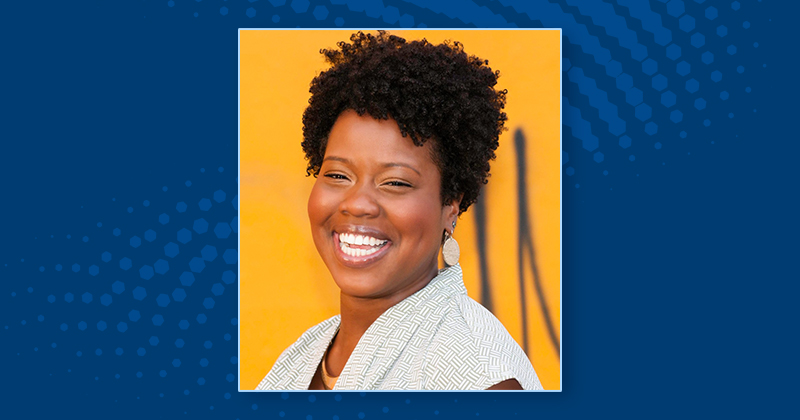
Alumni Spotlight: Erin Michelle Turner Kerrison
November 17, 2026 Written by Chiu-Yin Mak | Photos courtesy of Erin Michelle Turner Kerrison
Congratulations to Erin Michelle Turner Kerrison, Ph.D. ’14, on earning tenure at the University of California, Berkel
Editor's note: Erin Michelle Turner Kerrison, Ph.D., a 2014 graduate of the University of Delaware’s Department of Sociology and Criminal Justice, is an associate professor in UC Berkeley’s School of Social Welfare. Her research examines how criminal legal institutions contribute to racial inequality and shape health outcomes, with a particular focus on how research can inform litigation, public policy, and community efforts to advance racial justice. The Department of Sociology and Criminal Justice spoke with Kerrison about her experiences, career path and research.
Congratulations on earning tenure at UC Berkeley! Can you tell us about your current role and the work you’re most passionate about?
Growing into an empirical legal scholar has been a blast. My work treats law as a determinant of health that can be theorized, measured and changed. I investigate how criminal legal institutions produce racial inequality and work with people who are challenging those institutions through litigation, public policy and community organizing.
I’m especially passionate about my work on California’s Racial Justice Act. Soon after graduating from UD in 2014, I began my postdoctoral fellowship in criminology at the University of Pennsylvania and a research partnership with the San Francisco Public Defender’s Office. I started by studying racial disparities in criminal case outcomes. Twelve years later, I serve as an expert in litigation challenging racial bias in those decisions.
My next research initiative would bring public defenders’ litigation expertise into the design of data tools for investigating racial bias in policing, charging and sentencing. Those tools would help attorneys connect police stop data with charging records, identify patterns across cases, and examine whether people of different races receive different treatment for comparable conduct. I want defenders to have the data and research support to document racial disparities across stops, charges, and sentences and use that evidence in court.
Your research focuses on the legal determinants of health, particularly among incarcerated populations. Could you tell us a little bit about your research?
I treat law as a superdeterminant of health. In my article "Built to Exclude," I examine how law decides who is eligible for addiction treatment, who may provide it, where it can happen and which interventions count as treatment. Racialized drug policy helped create those categories. We cannot explain unequal treatment access without investigating the legal decisions that organized it.
Black feminist thought guides how I investigate those decisions and whose accounts I take seriously. My colleagues and I recently published the Anchored Testimony Calendar, a research instrument for interviewing young adults and caregivers whose lives have been shaped by juvenile court involvement. It helps us follow connections among health, school, family and legal system contact across years.
Someone may remember a period of their life through an eviction, a school change or a family separation rather than a date. I train qualitative research scientists to accommodate and welcome that. Participants should not have to reproduce a researcher’s preferred timeline or recount every painful detail for their knowledge to count. We built those commitments into how the instrument works.
Looking back on your time in the Department of Sociology and Criminal Justice, how did your experiences here help shape your academic and professional journey?
Ronet Bachman, professor of sociology and criminal justice, taught me to use an event history calendar (EHC) and to understand the responsibility that comes with asking people about lifetime trauma. Meeting the methodological minimum was not enough. I acknowledge her in the Anchored Testimony Calendar paper because her mentorship helped establish the foundation from which I developed that work.
I also led the Minority Mentor Lecture Series, bringing scholars of color to campus for talks, workshops, professional development and informal dinners. I valued the opportunity to talk with Black and Brown scholars about their research and about how they were making their lives in the academy. We needed those conversations, and we needed time together.
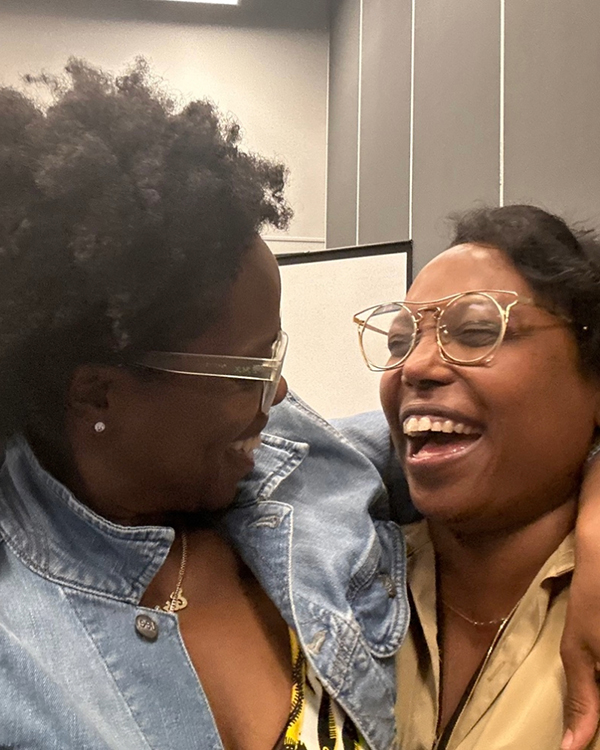
My peers helped sustain me, too. Talisa J. Carter, M.A. 2015 and Ph.D. 2018, is still one of my closest friends. We have had 12 years since graduation to keep learning from each other, celebrate with each other and help each other through things we could not have anticipated in graduate school.
What advice would you give current sociology and criminal justice students who are interested in pursuing graduate school, research or careers focused on social justice and public policy?
Your education should have more than one source, and it should leave you room to live. You can develop methodological expertise while volunteering, participating in local government or joining an organizing campaign. You also learn by cooking and eating well, spending time outdoors, traveling when you can and taking a chance on something unfamiliar. None of that has to become a credential or a research project to be worth your time.
Academic knowledge does not outrank what you learn through sustained participation in a struggle. You need people who can tell you when your explanation misses how a policy actually works in their lives. You also need enough humility to hear them without making your credentials the subject of the conversation.
I encourage students at UD to find mentors and peers with whom they can be honest. You should have people you can call before you know what to do next, not only after you have something impressive to report.
As you reflect on your career so far, what has been the most rewarding aspect of your work, and what are you most excited to explore next?
“What did I do to get somebody free today?” is the question I return to. It helps me decide which invitations to accept, which partnerships to sustain and where to put my effort.
Some of my most rewarding work happens in collaboration, when an attorney, a community partner, a fellow researcher or a student brings a question that changes what we can do together. I enjoy working through a difficult problem with people whose knowledge and experience differ from mine. Those relationships keep me learning and give the research somewhere to go.
Publishing the Anchored Testimony Calendar has been especially meaningful because I can see Ronet’s mentorship in something my colleagues and I developed years later. I get that same pleasure from watching students develop their own questions, disagree with me and pursue directions I would not have thought to suggest. I want to keep making room for that kind of intellectual independence.
I’m excited to keep writing and developing methods that other people can use, while staying involved in the partnerships that challenge my thinking. I want time to follow an unexpected question, too. At least once a day, I expect to be surprised by what comes next.
Is there anything else you’d like to share with our students, alumni or the UD community about your journey or the impact you hope your work will continue to make?
I implore everyone to question what gets called failure, who gets to define it and what that definition rewards. A journal’s decision not to publish your paper is not the same as discovering that your argument does not hold up. A grant rejection does not, by itself, establish that the proposed work is not worth doing. And a finding that contradicts your expectations may be precisely what the research needed to establish. We need to distinguish institutional approval from intellectual contribution if we want to do work that challenges what institutions already accept.
Institutions have criteria for success, but those criteria deserve scrutiny, too. You can learn to navigate them without accepting them as the measure of your intelligence or the value of your work. I want students to have the support to take risks and the authority to decide which goals are worth pursuing.
Twelve years after Delaware, I have more experience and more people to think with. I also have questions I could not have asked then. That is a good reason to keep going.


