



Category: Psychological and Brain Sciences
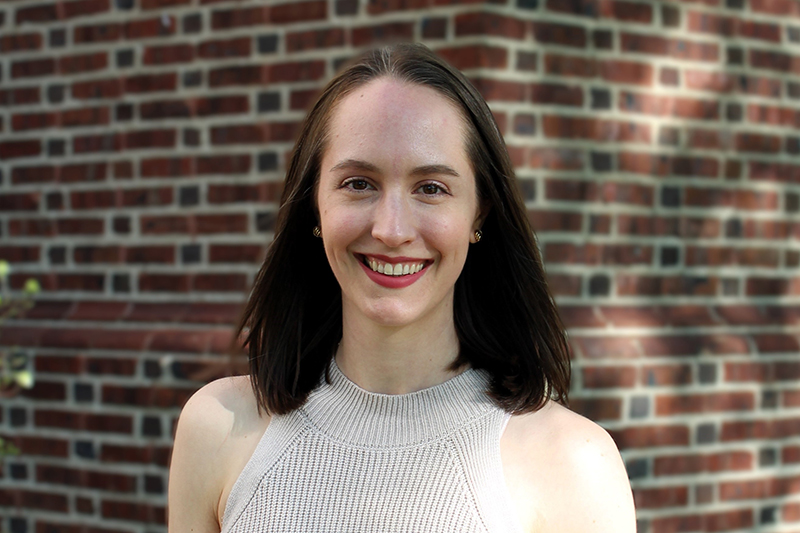
Alumni Spotlight: Kerry Benson
November 04, 2026 Written by Anna Klintsova | Photos courtesy of Kerry Benson
Neuroscience alumna recounts her journey, from figure skating to studying brain plasticity to writing books
Editor’s note: Anna Klintsova, a University of Delaware professor and the chair of Psychological and Brain Sciences, caught up with Kerry Benson (Criss), a neuroscience alumna who graduated in 2012. They discussed her experience at UD, in the PBS Department and in the lab.
Klintsova served as Benson’s advisor and mentor. Benson was admitted to UD in 2008 as a 1743 Distinguished Scholar. She joined Klintsova’s lab in September 2009, at the beginning of her sophomore year.
An excellent student fascinated by neuroscience, Benson was eager to try bench research. During her selection interview, she told Klintsova she had been an accomplished, competitive figure skater, which signaled that she would be a disciplined overachiever. That proved true: Benson worked diligently in the lab, completed her research, defended her senior thesis and graduated with distinction. She did all this while maintaining a 3.992 GPA and honing her skills in Chinese.
As an undergraduate, Benson was awarded a Science and Engineering Fellowship in the summer of 2011 and received the Halsey MacPhee Award as the graduating senior with the highest GPA. She then continued in the lab through the newly offered 4+1 master's program, in which she was the first student to graduate. She defended her master's thesis in June 2013, and the results were published in the peer-reviewed journal Synapse.
After earning a master’s degree in behavioral neuroscience from UD, Benson went on to earn an M.S. in nutritional epidemiology from Tufts University in 2017. Her knowledge of developmental alcohol exposure and its effects on the brain, combined with her understanding of dietary needs, inspired her to write and publish Drinking for Two: Nutritious Mocktails for the Mom-to-Be.
Klintsova: Hello, Kerry, Could you briefly describe why you decided to come to the University of Delaware and what role figure skating played in that decision?
Benson: I started skating when I was seven year old. My sister, who is four years younger, started skating at an early age too, so we were doing it more or less simultaneously. It became clear to our parents that we were both passionate about it. We trained at the same facility where Michelle Kwan did the majority of her training. She happened to come back while we were there, which was a complete coincidence and a surprise. It was a dream to share the ice with her at times. Skating is a beautiful world, a combination of athleticism and artistic expression, and I'm grateful for those opportunities.
Unfortunately, as my career progressed, I dealt with a lot of injuries and setbacks. They taught me a lot and shaped me, especially having to deal with adversity and come back from it, but they ultimately ended my career.
That is also what brought me to the University of Delaware, in a sense. I grew up in New Jersey, so UD wasn't far from home, and it was on my radar because it was one of the few universities with a figure skating club at the time. That's why I toured. I was injured when I was choosing where to go, but it was always in the back of my mind that if I wanted to return to skating, this would be a good place to do it. I didn't, but my sister did. She was part of the club all four years of college. I never really went back to it, but I'm very grateful that skating led me to the University of Delaware. I think it was the best place for me, and I still love UD and think of it very fondly.
Klintsova: So you decided to come to UD. How did you choose your major? I know your sister, who was also at UD, went into physical therapy, right?
Benson: She did athletic training, and she knew right off the bat that this was what she wanted to pursue. I thought I was going into the medical field, and I assumed I would become a medical doctor, so I figured I'd end up in something like biology. But the neuroscience program had just been created, and I was in the second class that had the opportunity to major in it. It was a brand-new opportunity, and it seemed like a great way to check off many of the pre-med prerequisites while learning about the brain, which is fascinating. In the end, it seemed like a no-brainer.
Klintsova: You were in one of the first neuroscience major classes, and you were also the very first 4+1 master's in neuroscience student. You said you wanted to pursue a medical career, but then something changed. What led you to add another year at the University of Delaware and complete the master's program?
Benson: It was an incredible opportunity, and it was unique at the time. Now many more programs offer a 4+1. It gave me more time to think about what I wanted to do, because I was questioning whether I wanted to take the clinical route. I was so involved in the lab and genuinely interested in what we were studying that it seemed like a good chance to take it a step further and see whether I really wanted to commit to a Ph.D. or go down a different route. It gave me an avenue to explore my options in a place where I was already well ingrained and where I wanted to keep doing the work I was doing.
Klintsova: I remember that while you were working on your master's thesis, you had a lot of problems and did a lot of troubleshooting, and it was frustrating. Could you share what emotions you felt when the project wasn't going well and you had to repeat experiments over and over? It could help others see how important it is to overcome difficulties and still achieve your goal.
Benson: In the end, it's all part of the scientific process. It is valuable to go through the motions of pursuing something, even if it doesn't lead to the result you expected, because that's often how science goes. It was frustrating, and I'm grateful that I was still able to present my work. I did a lot of hard work, and not only me. I was supported by undergrads and other members of the lab. From my experience, I learned much more from failures than from easy successes, because failure shows you your character and what you're made of.
Klintsova: Is there any funny episode or anecdote you'd like to share about your time in the lab or at conferences?
Benson: Going to conferences was an amazing experience, and not everyone gets that opportunity. It was exciting to present research and talk to people in the field whose work I had been reading, and it also gave me exposure to the research world. That still means a lot to me, even though I'm not a researcher or in the field of neuroscience. I still attend conferences, and I know what to expect because I've been through it. When people give talks, I understand what goes on in the background to produce them, because I've done it myself. I attend now as a clinician rather than a researcher, but having done those things is invaluable.
But that's not really what you asked. It was simply fun to be part of the lab. It was a little community. You hosted holiday parties, which were always fun, and we had picnics at Lums Pond. They were a nice chance to connect with people outside the lab, strengthen bonds and celebrate the progress we'd made. I think that was important and valuable.
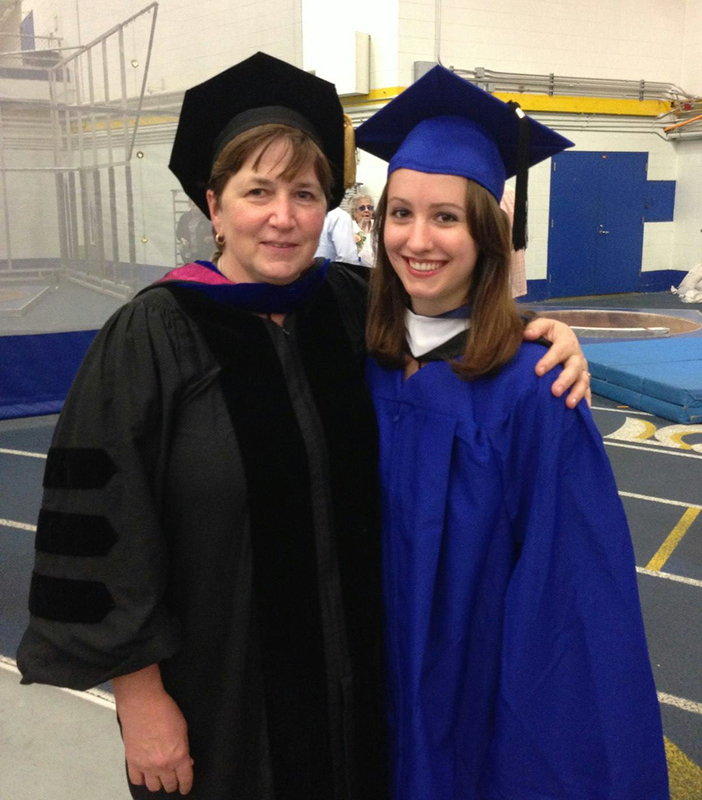
Klintsova: Can you describe your life after graduation? You spent four years as an undergraduate, one more year earning your master's degree, and another year as a research associate. Then it was time to go out into the world. What did you do?
Benson: I decided to pursue nutrition, which sounds random, but dietetics was a good way to enter a clinical field where I could interact with patients and support people directly. It was also a personal passion, though I didn't realize how interested I was until my 20s. My research background was extremely useful during my training to become a registered dietitian, and I still use the skills I learned: reading journal articles and feeling comfortable understanding them and communicating concisely.
Klintsova: You entered one of the best-rated nutrition programs in the nation, right?
Benson: Yes, the Friedman School of Nutrition Science and Policy at Tufts, which is among the top-rated nutrition schools in the country. I entered a dual program with another university: I earned a nutrition-focused master's degree and did the supplemental coursework required to become a registered dietitian at Simmons College, now Simmons University. Then I did a year-long unpaid internship. You need at least 1,200 hours of supervised practice in various settings (clinical, community and food service), and then you take an exam to become a credentialed registered dietitian. I'm currently licensed in Pennsylvania and Delaware.
There's also a connection to the lab. Because we studied fetal alcohol spectrum disorder, I learned about something I might never have encountered otherwise. It gave me an interesting lens on the complexities of alcohol exposure during pregnancy and the conversations around it. Then an opportunity came along to work with a friend on a recipe book of mocktails aimed at people who are pregnant. I was a good person to collaborate on it because of my background knowledge of alcohol consumption and pregnancy, the potential risks, and how to communicate them in an evidence-based way. That led to my first book, Drinking for Two: Nutritious Mocktails for the Mom-to-Be, then a second, Mocktail Party: 75 Plant-Based, Non-Alcoholic Recipes for Every Occasion, and now we're finishing our third, which is about functional drinks rather than mocktails.
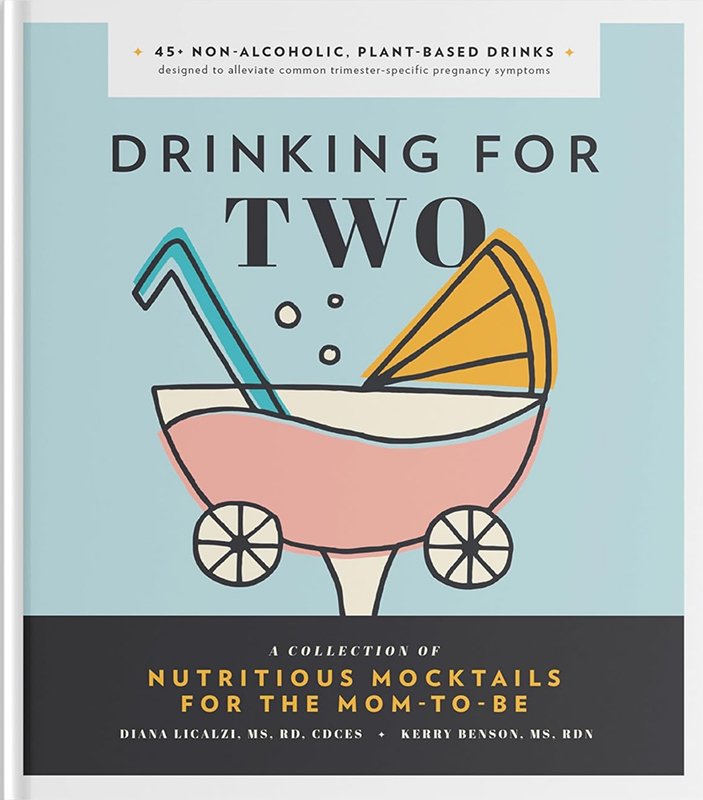
Klintsova: I checked Amazon, and the book is available there.
Benson: Yes, Drinking for Two is still doing pretty well. Our second book, Mocktail Party, was popular too, but Drinking for Two has stood the test of time a little more. We'll see where book number three lands. It will be a little different, and it comes out in spring 2027.
Klintsova: It's a pleasure to hear this, because those of us in the field of fetal alcohol research know how little people outside the field are informed about the dangers of drinking during pregnancy, and how difficult it is to convey the message. Thank you for spreading this information and helping people have healthy pregnancies and good outcomes. It is enormously important.
Benson: I know there has been pushback on telling women not to drink during pregnancy, because it can come across as telling women what to do with their bodies. I can appreciate and understand that. But if you have information, and a woman can make an informed choice, you should present that information accurately. It's not about saying "Don't drink." It's about saying, "Here is what you should know if you are drinking while you're expecting. It's up to you to decide."
It's also about reducing stigma. If you made that choice and have concerns, you should feel able to go to your provider and discuss it openly. That is better in the long run. If, God forbid, there is a negative outcome from alcohol exposure, a child can get the help and interventions they need to have the best outcomes possible. Raising awareness and reducing stigma is important, and that is true well beyond the alcohol field. It is my sincere hope that our book delivers important information about the potential risks and alternatives to alcohol.
Klintsova: Finally, let's do a timeline check to summarize what you've accomplished. You entered the University of Delaware in 2008, right?
Benson: Yes. I graduated with my undergraduate degree in 2012 and my master's in 2013. I started my nutrition graduate program in 2015 and finished at Tufts in 2017. I completed the rest of the coursework through summer 2018, did my internship in 2018–2019, and took my exam, becoming a fully credentialed dietitian by July 2019. I published the first book in 2019. The second came out post-COVID, in 2021, which was also the year I got married. My first baby, a boy, was born in 2023, and my second, a girl, was born in October 2026. I worked until June as part of a group private practice doing nutrition counseling. I wound that down to finish the third book and get ready for the baby, and then we'll figure out where we go from there.
Klintsova: Congratulations and good luck with everything! It was a great pleasure talking with you. Thank you very much for your time.


