



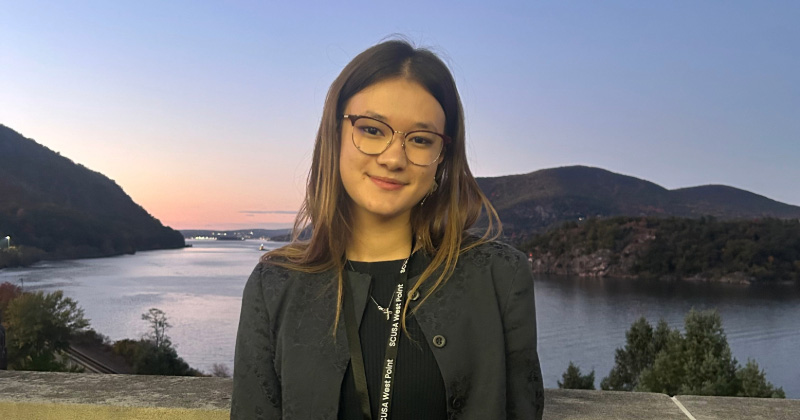
International Relations Student Represents UD at National Student Conference
November 16, 2026 Written by Chiu-Yin Mak | Photo credit: Mona Redder
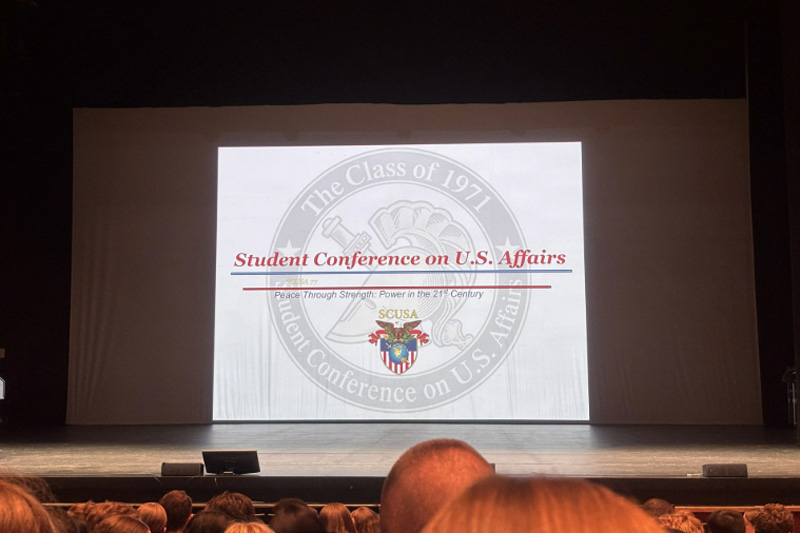
Mona Redder, a senior majoring in international relations with a concentration in diplomacy and global order and an Asian regional specialization, put her interests into practice in October as a University of Delaware delegate at the Class of '71 Student Conference on U.S. Affairs (SCUSA). Hosted annually by the U.S. Military Academy at West Point, the four-day conference brings together approximately 200 undergraduate students from more than 100 institutions to discuss U.S. foreign affairs, develop policy recommendations and build relationships with future military officers and leaders.
This experience gave Redder a closer look at military and diplomatic perspectives, challenged some of her assumptions and reinforced her interest in pursuing a career in international affairs.
This year's conference centered on the theme "Peace Through Strength: Power in the 21st Century," focusing on the role of U.S. leadership, military strength and diplomacy in addressing today's international challenges. Participants joined roundtable discussions on a range of foreign policy issues, including counterterrorism, supply chains, artificial intelligence and regional security.
Each roundtable was tasked with developing a policy recommendation memo to present as part of the conference competition. Redder's group focused on "Allied Power in the Indo-Pacific and the Mechanics of Combined Deterrence." She said her group spent the first day discussing the topic and narrowing its focus before working together on recommendations. Members then divided responsibilities for drafting, editing and presenting the final proposal while continuing to exchange ideas throughout the process.
The conference also featured a keynote address by Ambassador Mike Waltz, the U.S. Representative to the United Nations. Delegates also attended a panel featuring senior military leaders and academics, offering additional perspectives on American foreign policy, military leadership and international affairs.
An Experience Beyond the Classroom
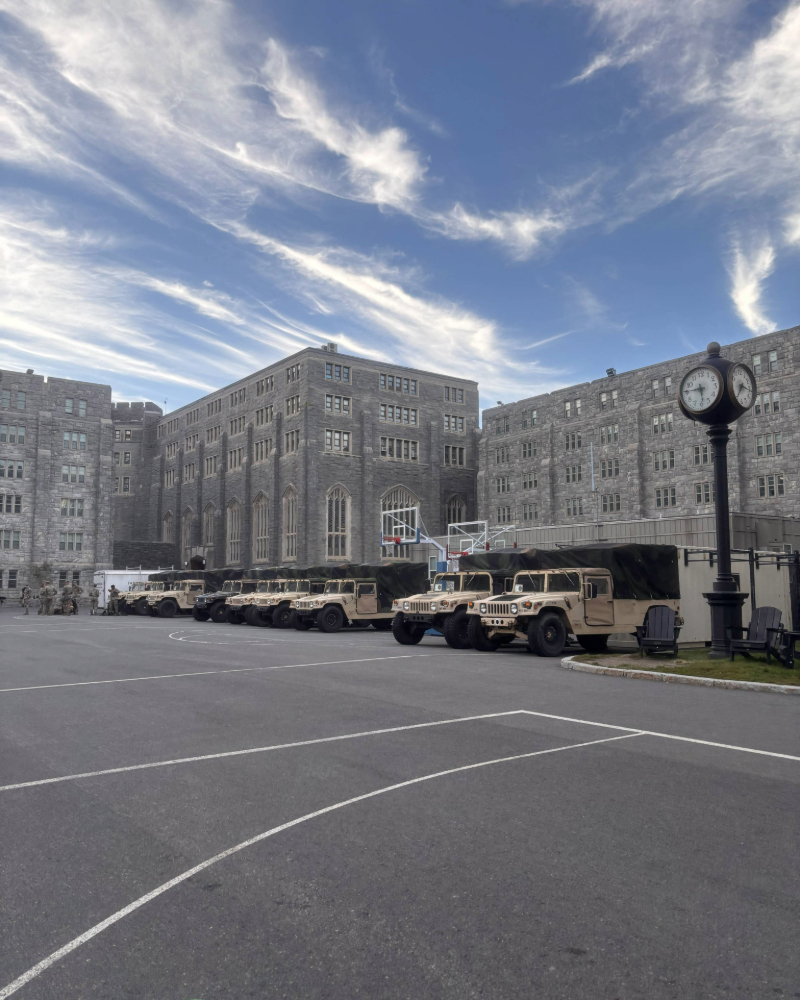
One of the most memorable parts of SCUSA for Redder was experiencing life at West Point. Delegates stayed in the barracks with host cadets and ate alongside them in the academy's large dining hall, where thousands of cadets gathered for meals.
Redder was struck by how different the academy's culture was from that of a traditional college campus. Cadets followed a highly structured daily routine, wore the same uniforms and gathered for meals at designated times. She said these shared experiences helped create a strong sense of community.
"I feel like you could really feel the camaraderie among the cadets and how welcoming the atmosphere is," Redder said. "It felt like a family, which was so surprising for me, and I felt really welcomed there."
Redder also came away with a new appreciation for the connection between achievement and service. She was struck by the humility, maturity and sense of responsibility among the cadets she met.
"They're told that they're excellent, but there's also this sense of duty and service that comes with that excellence," she explained. "It's not necessarily that you're excellent for yourself, but for the country."
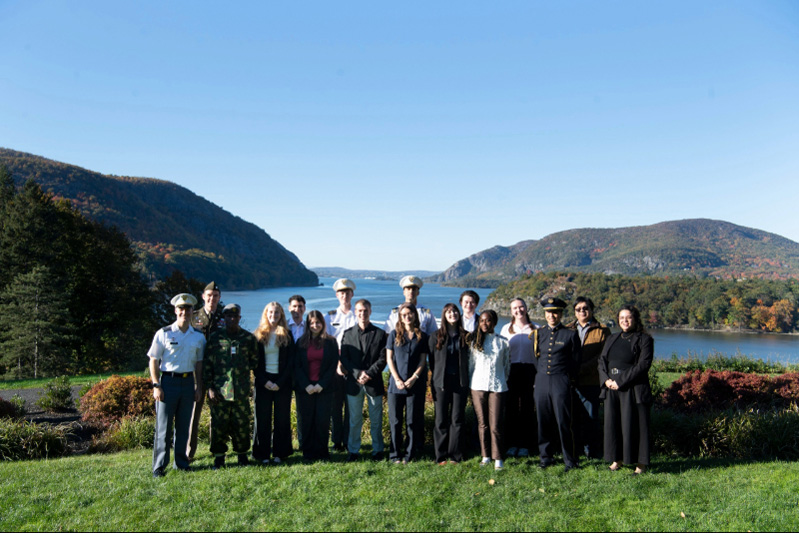
While the policy discussions were an important part of the experience, Redder said the connections she made with fellow delegates were just as valuable. She met students from universities across the country, including the University of Pennsylvania, Georgetown University and the U.S. Naval Academy. One delegate even traveled from Guam to attend the conference.
The experience also gave her a better understanding of the interpersonal skills needed in diplomacy. For Redder, being able to work through disagreements while maintaining productive relationships is essential.
"Being able to reconcile different ideas and still have an amicable, constructive conversation, moving productively toward a shared goal is really important," she said. Through the experience, Redder also recognized the importance of charisma and humility in building those connections.
Connecting the Experience to Her Studies and Future Goals
Redder noted that her coursework in political science and international relation (POSCIR) had prepared her well for the conference. Classes such as International Criminal Law and the United Nations with Matthew Weinert, chair and professor of POSCIR, gave her a foundation for understanding international institutions, law and global affairs. A diplomacy course with Robert Denemark, professor of POSCIR, also helped her become more comfortable with public speaking and expressing her ideas.
More broadly, she believes the International Relations program has helped her learn to process information quickly, evaluate arguments critically and engage with complex issues.
"I think the IR degree in general prepares you to be able to read something quickly, digest it and be able to critically think about it," she said.
Participating in SCUSA gave Redder a clearer picture of the professional environments she hopes to enter. She is considering several paths after graduation, including law school and a career in international development or with a nonprofit or international organization.
The conference strengthened her sense that international affairs is the right field for her. Being surrounded by people who were engaged with global issues and eager to exchange ideas was especially meaningful.
"I remember thinking these are the kinds of rooms I need to be in," Redder said.
For Redder, SCUSA was an opportunity to take what she had learned in the classroom and apply it to real-world engagement, while gaining new perspectives and building relationships with students who share her interests. Experiences like this allow POSCIR students to explore possible career paths, put their academic skills into practice and develop connections that can shape their futures.


