



Exploring Public Humanities in Philadelphia
May 12, 2026 Written by Natasha Kapadia
For graduate students in the humanities, the difference between studying culture and shaping it often comes down to connection. Partnerships with cultural institutions and community organizations help scholars bring their research beyond the classroom and into public spaces where it can create a meaningful impact.
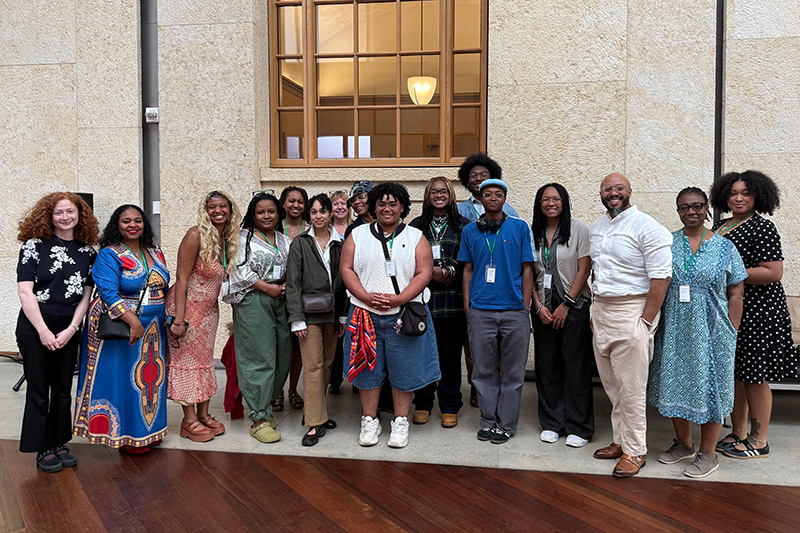
That experience came to life during the University of Delaware’s African American Public Humanities Initiative (AAPHI) Public Humanities in Action excursion to Philadelphia. Led by AAPHI Director Durell Callier, the trip connected AAPHI Scholars with leaders at two of the city’s most influential arts institutions.
At the Barnes Foundation, scholars explored Freedom Dreams, an exhibition inspired by Robin D. G. Kelley’s book Freedom Dreams: The Black Radical Imagination. The display encouraged students to think critically about how imagination shapes social movements and public understanding.
Scholars also met with James Claiborne, alongside museum leaders Alison Boyd and Sophie Zaidman, to discuss how exhibitions are developed, interpreted and shared with audiences.
“I feel like the exhibits, particularly Ja'tovia Gary's film Quiet As It’s Kept, connected some aspects and problems of everyday Black society with theoretical concepts, particularly in ways that I plan to engage with for my larger dissertation project,” said Ashlan Stewart, a first-year AAPHI Scholar pursuing her doctorate in English. “It shows the potential of what academic work can become, bridging them in a way that makes academic work just as important as public humanities, and vice versa.”
The group later visited the Philadelphia Museum of Art, where they met with Imani Roach to discuss representation, community collaboration and the evolving role of cultural institutions.
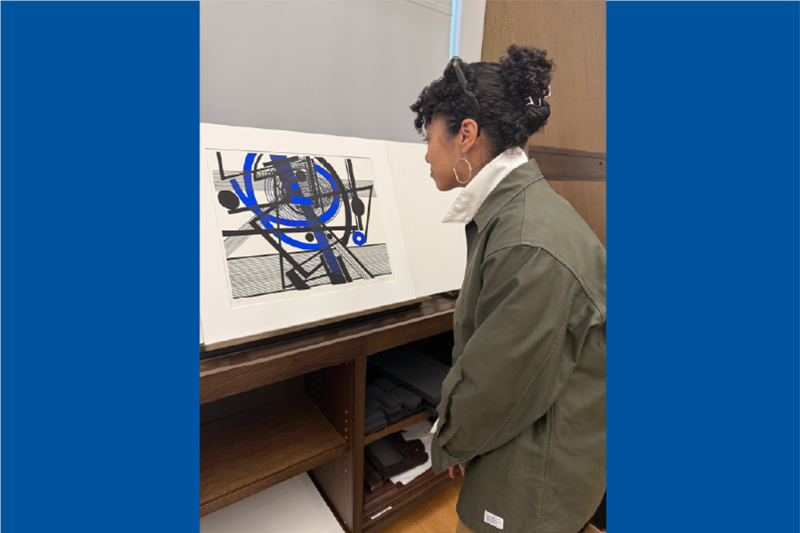
For first-year AAPHI Scholar Jasmine McCray, the experience highlighted how scholarship can extend beyond traditional academic spaces.
“Being in AAPHI as an English doctoral student has helped me imagine my scholarship beyond traditional academia publishing and teaching,” McCray said. “AAPHI scholar corners and field trips put me in touch with scholar activists, artists and curators who also work to bridge the gap between academia and the public. I can now see myself as more than an academic and I do not have to wait until graduation to start. I look forward to being involved in more public-facing scholarship via the digital space, as I have seen with scholars both in and outside of UD.”
McCray also reflected on the conversations sparked during the visit to the Barnes Foundation.
“By talking directly with curators and administration leaders at the Barnes, we were able to come together on the pros and cons of displaying the more painful aspects of history to the public,” McCray said. “We conversed about how that information can be altered for different age groups while still getting the information to the public.”
Experiences like this are central to AAPHI’s mission of connecting scholars with practitioners who are actively shaping the public humanities landscape. Through conversations with museum professionals, curators and community leaders, students gain a deeper understanding of how humanities research can influence audiences, communities and public discourse beyond the university.


