



Category: Associate in Arts Program
AAP Alumni Awarded McNair Scholarship
May 04, 2026 Written by Kaitlyn Diehl
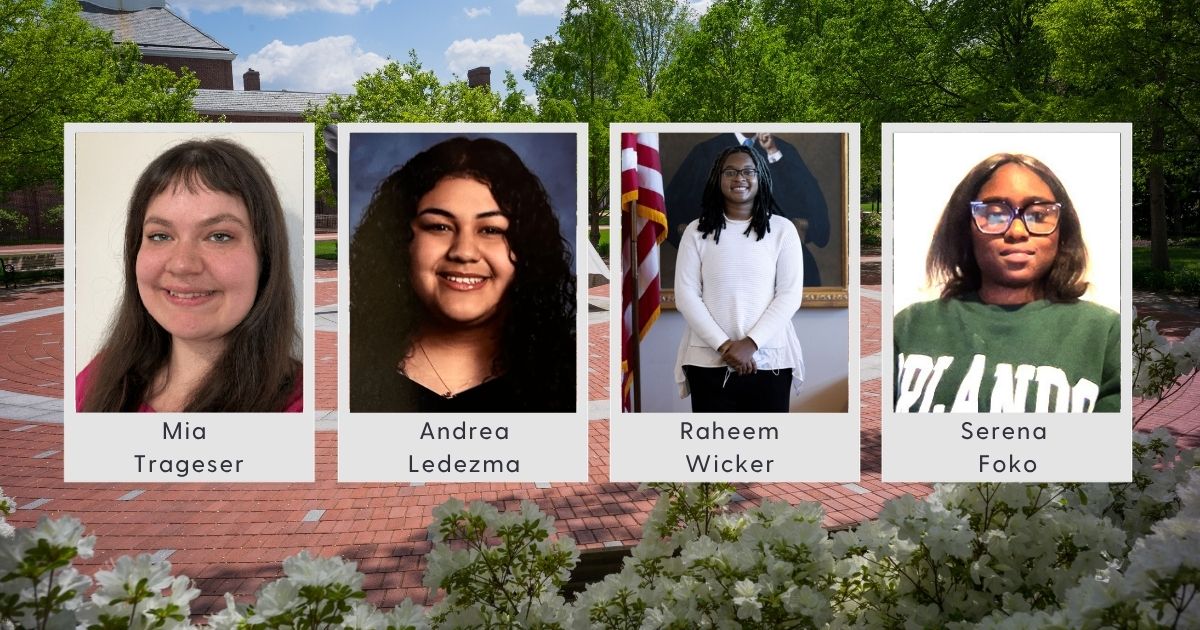
Four Associate in Arts Program (AAP) alumni have been accepted into the University of Delaware’s 2026-2027 McNair Scholar Cohort: Serena Foko, Andrea Ledezma, Mia Trageser and Raheem Wicker.
The McNair Scholars Program is a Federal TRIO program aimed to prepare and empower undergraduate students to pursue a doctoral degree. McNair participants are either first-generation college students with financial need and/or members of a group that is traditionally underrepresented in graduate education.
Guided by a faculty mentor, McNair Scholars engage in intensive research or creative projects over the summer while also taking part in program activities throughout both the summer and academic year. These experiences help boost their applications to graduate programs.
From AAP to main campus
Many AAP students don’t envision themselves pursuing graduate or doctoral degrees when starting their UD journey. Through personal relationships and intimate support in small class sizes, AAP faculty, staff and advisors empower and encourage them to take their dreams to the next level.
Students can begin exploring research projects while in the AAP, giving them the same early access to research as students in the traditional four-year undergraduate pathway. This makes their transition to the Newark campus even easier.
“Through their relationships with our faculty, AAP students have been matched with research opportunities while they study with us in Georgetown, Dover and Wilmington. They don't need to wait until they transition in Newark to launch,” said David Satran, AAP faculty director.
Recent opportunities have included research funded by INBRE and NASA, as well as community-based projects led by faculty and partners. Under the guidance of Sarah Trembanis, professor of history and associate director of the AAP, students have conducted historical research with the South Bethany Historical Society through the Community Engagement Scholars program. Others have worked with Sea Grant scientist Emily Maung-Douglas to study the Route 9 corridor and its communities. Additional summer projects have included collaborations with the Lewes History Journal and Lewes Historical Society alongside adjunct faculty Andrew Lyter and Bill Meehan.

AAP alumni pursue big dreams
Mia Trageser graduated from the AAP in 2025 and is now a first-generation junior English major. The Dagsboro, Delaware native started the AAP as a nursing major; however, she decided to pursue a graduate degree in English literature after her AAP English professor, James Keegan, read one of her essays and suggested she consider going to graduate school.
“It was such a supportive environment, and having that as my foundation made it easier to approach bigger environments and goals. I wouldn't be in McNair or considering graduate school without the encouragement I received from the AAP professors,” she said.
Andrea Ledezma, a junior marketing major with a minor in art who hails from Newark, Delaware, did not initially picture herself attending graduate school either. However, through academic experiences at UD and in the AAP, she began to see graduate school as an achievable goal to further her education and career. Ledezma now plans to pursue a graduate degree in business analytics.
“The AAP showed me that my background does not limit my success. Instead, it motivated me to pursue opportunities that once seemed too challenging,” said Ledezma, who is the first in her family to attend college.
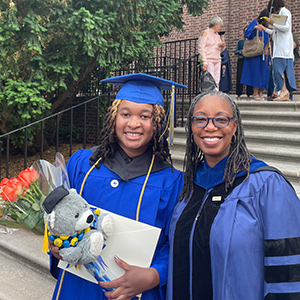
Unlike Trageser and Ledezma, Raheem Wicker, who graduated from the AAP in 2025 and is now a junior Africana studies and sociology double major, always knew he wanted to pursue graduate education. Hailing from Wilmington, Delaware, Wicker plans to attend law school but is also considering earning a doctorate, as he is deeply passionate about addressing research topics that are often overlooked.
“The AAP prepared me for research by giving me the opportunity to build close relationships with my professors and significantly increased my academic confidence,” said Wicker. “Furthermore, the program fostered my critical thinking, independent analysis and ability to meet the academic rigor of college-level coursework through its small classes.”

Finally, Serena Foko, a first-generation junior majoring in biological sciences who graduated from the AAP in 2025, hopes to explore the biological and biochemical mechanisms underlying mental health with the long-term goal of pursuing graduate study and contributing to evidence-based research and treatment. Through the AAP, Foko became more comfortable conducting research, which inspired her to think bigger.
“The AAP helped me see that research is about asking questions and trying to figure things out step by step. It made me more comfortable with not knowing the answer right away and being willing to learn,” she said. “The AAP helped me think about bigger goals for myself. It encouraged me to believe I can do more, like going further in school or trying new opportunities.”


