



Category: Psychological and Brain Sciences
New Spaces: The Neuroanatomy Lab in Building X
April 16, 2026 Written by Department of Psychological and Brain Sciences | Photos by Evan Krape
State-of-the-art laboratory provides hands-on learning for psychology and neuroscience students
In early 2013, the physical therapy department at the University of Delaware vacated a former morgue space in McKinly Laboratories, sparking an idea: transform the area into a laboratory for the psychological and brain sciences (PBS) department. At the time, the lack of lab space meant PBS students did not have a hands-on component in their curriculum.

The space was converted into the first neuroanatomy laboratory on the University of Delaware’s campus. However, McKinly closed after a fire in August 2017. Eight years later a new, state-of-the-art facility emerged: Building X, designed to support the natural sciences and home to a brand-new neuroanatomy lab.
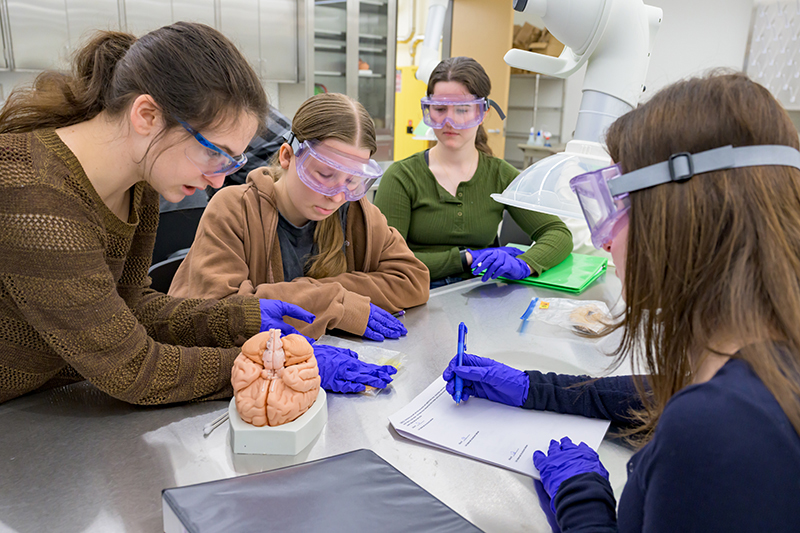
The new 40-seat laboratory features full technology integration, including dual television displays, and represents a significant step forward for psychology and neuroscience students at UD. The lab gives students access to meaningful hands-on laboratory learning. In addition to reading about the brain, students can study it directly–sometimes even holding specimens in their hands.
The new lab also enables students to participate in a range of interactive learning activities, including:
- Comparing different brains to observe natural variations in human anatomy
- Constructing model brains using materials such as Play-Doh to better understand structure
- Observing neurophysiology in action by recording action potentials (nerve activity) from a cricket’s leg movement
- Conducting behavioral studies with live animals, such as observing reptile decision-making in snakes navigating a maze
- Learning and practicing surgical procedures and laboratory techniques
Faculty members Stuart McCaughey and Eric Roth regularly teach in the space. They emphasize that the brain is a three-dimensional structure, yet students typically encounter it in a two-dimensional format in lecture halls. The dedicated lab allows students to explore brain anatomy in a more accurate and engaging way. The space is also available to other instructors and researchers who need laboratory facilities to complement their teaching, extending its value beyond neuroanatomy courses.
One notable feature of the lab are the ceiling-mounted ventilation devices, known as “snorkels.” These units descend over workstations to ventilate brain specimens, helping to reduce both unpleasant and potentially harmful fumes for students.
Cleanliness and safety are central to the lab’s design. A dedicated preparation room allows specimens to be handled and prepared according to modern research standards, ensuring a high level of sanitation and care. The building’s central location–adjacent to Wolf Hall– also makes it easily accessible for students and faculty.
The additional space is now home to additional equipment, anatomical models and teaching materials, giving students new opportunities to engage with one of science’s most complex puzzles: the human brain.


