



Category: Psychological and Brain Sciences
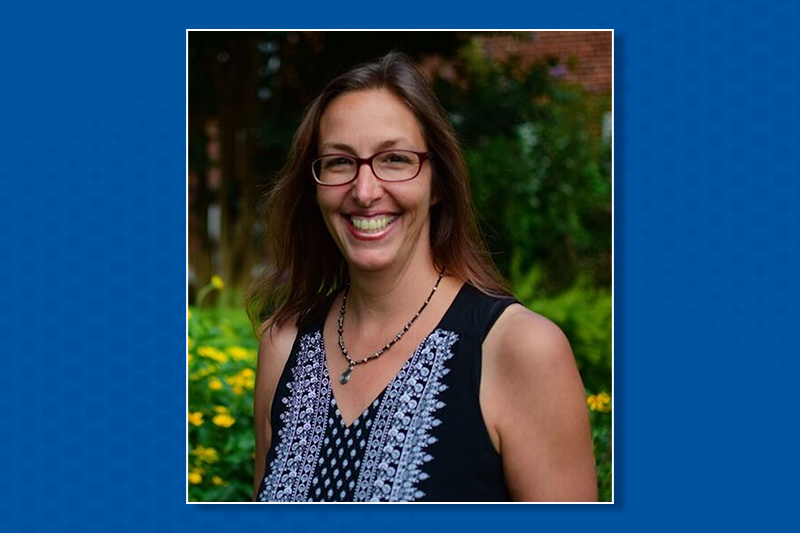
Alumni Spotlight: Angela Seguin
April 21, 2026 Written by Department of Psychological and Brain Sciences | Photo courtesy of Angela Seguin
Advocacy, resilience and the power of a psychology foundation
For Angela Seguin, a career in advocacy began with a simple desire to help others. As a student at the University of Delaware, she entered as a psychology major and later added criminal justice, drawn to work that would allow her to support people through difficult circumstances.
“When I came to UD, I became a psych major, and I knew from […] day one that's what I wanted,” Seguin said. “I added criminal justice later because I knew I wanted to be in a helping role.”
Today, Seguin serves as the executive director of the Delaware Domestic Violence Coordinating Council, where she works on statewide policy and coordination efforts related to domestic violence and sexual assault. Her career spans more than two decades of victim advocacy, prevention education and leadership in the field.
A foundation at UD
Seguin’s time at UD helped shape both her interests and her path forward. As an undergraduate, she worked as a research assistant for Professor Valerie Hans, conducting interviews and helping transcribe juror research. The experience gave her insight into the research side of psychology, even as she realized her professional interests lay elsewhere.
“It taught me that research wasn’t my wheelhouse,” she said. “But I got a lot out of that because her research was very interesting to me.”
Seguin credits her psychology degree with providing a valuable base for a career that would ultimately focus on counseling, advocacy and policy.
“That’s the thing about being able to do something with a degree in psychology – it’s a great foundation.”
After completing bachelor’s degrees psychology and criminal justice, Seguin stayed at UD and earned a master’s degree in education, specializing in college counseling and student personnel administration. Her graduate work coincided with roles in residence life and counseling, launching a career that would take her to several other universities before eventually bringing her back to Newark.
Returning to campus—and finding her calling
Seguin didn’t plan on returning to UD, but she and her family came back to the First State in 1998 after leaving the University of Illinois. As her children grew older, she volunteered with the campus Sexual Offense Support (SOS) program (currently called Support of Survivors). What began as volunteer work soon grew into a full-time career in victim advocacy.
“I had reconnected with the university through Sexual Offense Support, where I had volunteered during my master’s,” she said. “It was sort of a returning home kind of thing.”
Seguin spent more than 16 years as the project coordinator for SOS before being named UD’s assistant director for victim advocacy in 2018. Much of her work in these positions focused on helping victims navigate difficult experiences while ensuring they had the information and support needed to make decisions for themselves.
“As an advocate, your job is to provide information and options and support, so that that person can make the choices, and you can't make them make the choices you think are the right ones,” she noted.
Her commitment to this work is deeply personal. Seguin has spoken publicly about her own experience with childhood abuse and how it shaped her decision to pursue counseling and advocacy. “[It] definitely impacted my desire to go into counseling,” she said.
From campus advocacy to statewide impact
In 2022, Seguin transitioned from campus advocacy to a statewide role as the executive director of the Delaware Domestic Violence Coordinating Council. While the focus of her work remains the same, her responsibilities now include influencing legislative policy and statewide collaboration.
Last year, she helped update the Delaware Victims’ Bill of Rights for the first time in over 30 years, adding changes that increased the safety for and communications with victims of crime in the state.
Seguin reached a new milestone in March when the Delaware House passed legislation she had championed since 2015. Moving now to the Senate, the bill grants legal privilege to victim advocates, ensuring their conversations with survivors remain confidential—protections similar to those afforded to attorneys and mental health providers.
A lasting influence
While Seguin has worked with countless survivors over the years, some of the most meaningful moments in her career come from seeing former students and trainees continue the work. Watching former students carry the work forward is a powerful reminder of the ripple effect that mentorship and advocacy can have. “I beam with pride,” she said. “I'm just so proud of them that they've gone on to be in the field and be successful.”
Not every case has an immediate success story, but Emmett noted that support and advocacy often leaves a lasting impact. Years after one unsuccessful case, she unexpectedly ran into the survivor, who told her, “I wanted you to know I'm doing really well now.” It was a powerful reminder of her work’s long-term influence.
Advice for today’s students
Looking back on her undergraduate years, Seguin encourages students to seek out experiences that help them explore their interests and connect with mentors.
“Don’t be afraid to talk to your professors because they really do want their students to learn,” she said. “Do all the things you can do. Have all the experiences.”
She noted that UD offers a variety of ways to get involved, from student organizations and internships to study abroad and field placements, all of which help students discover both what they enjoy and where they can make the greatest impact—just like she has.


