



Category: Art History

In Memoriam: Ann Eden Gibson
December 18, 2025 Written by Department of Art History Staff | Photos by Kathy F. Atkinson and courtesy of art history
The Department of Art History remembers former chair who made lasting contributions to the field
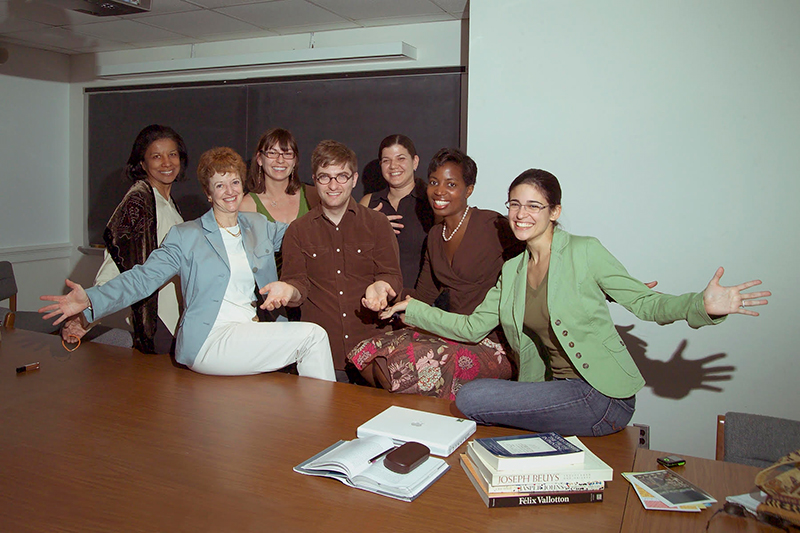
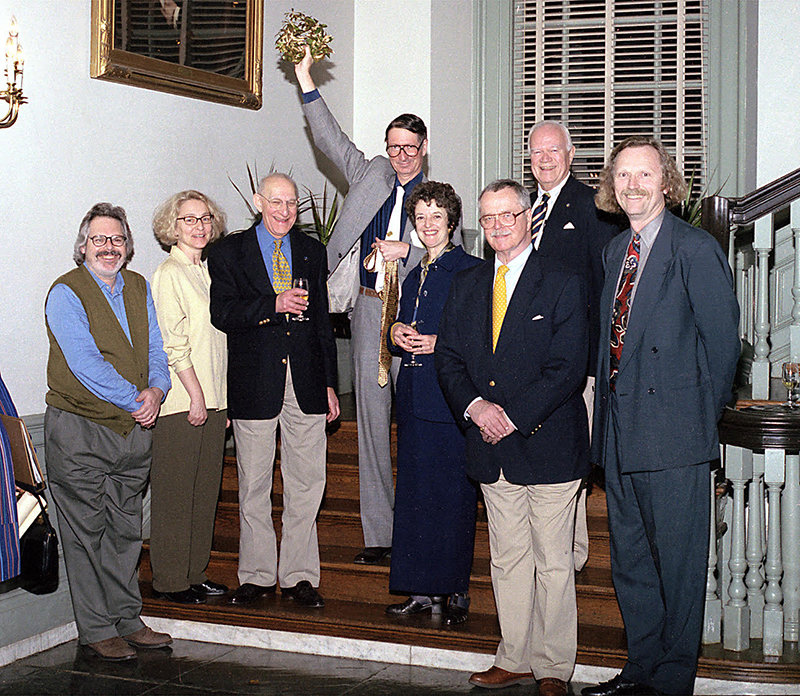
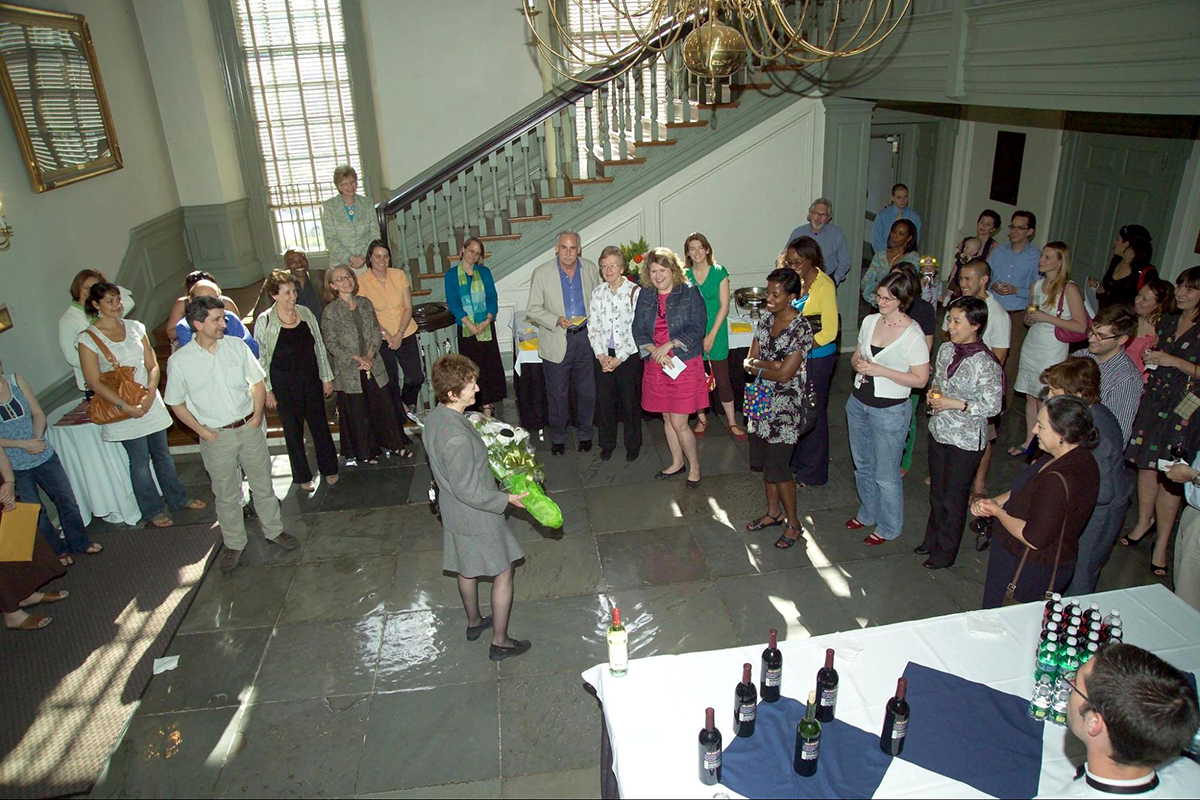
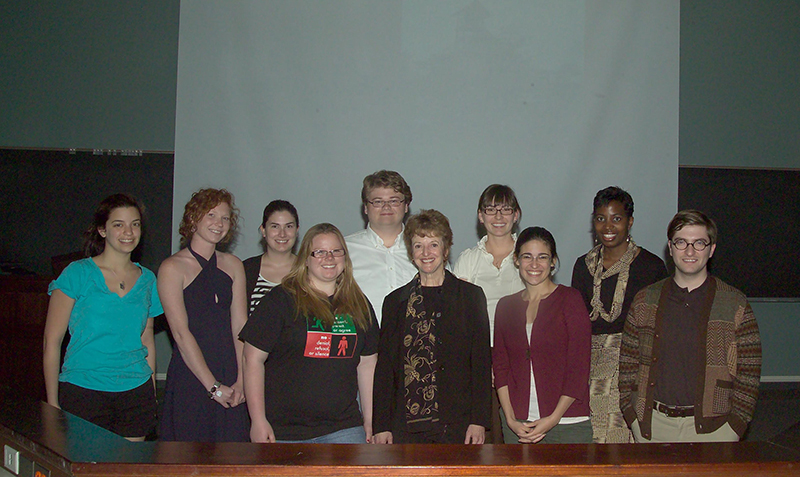
The University of Delaware’s Department of Art History is mourning the loss of Professor Emerita Ann Eden Gibson, who died on Oct. 9, 2025 in Tucson, Arizona. Gibson was a central presence in the Department of Art History for decades, serving as chair from 1998 to 2003, and as a professor in the Department until her retirement in 2010. Her research on contemporary art was groundbreaking; she championed the stories of Black artists, women and other artists often overlooked. With her passing, the University of Delaware and the field of art history have lost an irreplaceable voice.

Among her many publications, Dr. Gibson’s most notable book is Abstract Expressionism: Other Politics (New Haven: Yale University Press, 1997). Her project was a departure from the established art historical scholarship on the Abstract Expressionist movement. As Dr. Gibson argued, the story of Abstract Expressionism from its beginning had focused on a small group of straight white men, at the expense of important artists of color, women artists and queer artists who had made enormous contributions to the movement but whose accomplishments had been overlooked. Dr. Gibson’s book has had a significant and continued impact on the field; in 2012, 15 years after its initial publication, it won the Georgia O’Keeffe Museum Research Center Book Prize, an honor reserved for books that had a significant contribution in shaping current thinking about the arts that did not necessarily receive recognition at the time of publication. The award was based on the book’s excellence, originality, quality of writing and scholarship, contribution to knowledge, and significance to the field of American Modernism.
Dr. Gibson’s other publications include Issues in Abstract Expressionism: The Artist-Run Periodicals (Ann Arbor: UMI Research Press, 1990), journal articles and contributions to many books and exhibition catalogs. Among her curated exhibitions were Norman Lewis, The Black Paintings, 1945-1977 (The Studio Museum in Harlem, 1998) and Judith Godwin: Style and Grace (Art Museum of Western Virginia, 1997). Dr. Gibson also received numerous awards throughout her career, including a prestigious Guggenheim Fellowship in 2006 in addition to support from the Metropolitan Museum of Art, the Center for Advanced Study in the Visual Arts at the National Gallery and the Getty Research Institute.
Special Collections in Morris Library is now the home of the Ann Eden Gibson Papers, which comprise materials collected by Dr. Gibson during her career as an art historian. The collection includes artist files (mostly of artists working from 1940 to 2008), audio recordings of Dr. Gibson’s interviews with artists and talks by art historians, and slides that contain photographs of art objects, some taken by Dr. Gibson herself. When she offered the papers to Special Collections in 2016, Dr. Gibson noted that many of the artist interviews were unpublished. The Gibson Papers are available for research access in Special Collections.
While preparing for her retirement from the Department of Art History in 2009, Gibson wrote: “Not everyone is lucky enough to have a home that they actually want to go back to. Probably even fewer are offered the opportunity to return to it. But the University of Delaware, my alma mater, actually did invite me back after 17 years away. I decided to come, not out of sense of duty, but for the sheer pleasure of rejoining the most cordial and supportive group of academics I knew.” Ann Gibson will be dearly missed by all who were impacted by her scholarship and service. The UD Department of Art History joins her loved ones and the field of art history in mourning her loss and celebrating her remarkable life.
Colleagues recall
UD faculty members and former advisees shared their memories of Dr. Ann E. Gibson.
Wendy Bellion, professor and Sewell C. Biggs Chair in American Art History: “When I joined the department in 2004, Ann Gibson offered the warmest welcome I could have imagined. She was warm hearted, witty and a generous mentor to hundreds of students at UD and beyond. Her sequence of “decades” seminars in modern and contemporary (1960s, 1970s, etc.) were relished by our graduate students! And her work on Abstract Expressionism and African American art helped reshape the discipline and remains required reading today for anyone studying twentieth-century art history.”
Mónica Domínguez Torres, professor and chair, Department of Art History: “Ann was not only a brilliant and groundbreaking scholar who helped expand the canon of contemporary art, but also an adept and innovative department chair. Under her leadership, UD’s Department of Art History expanded its traditional strengths in the arts of the United States and Europe to embrace the artistic production of regions from what we today call the “Global South”—specifically Africa and Latin America with the hires of Prof. Ikem Okoye and myself. I will always remember my perplexity when in fall 2002 I read the job posting for what would be a year later my position. The department was looking for a specialist in cross-cultural exchanges between Europe and other regions of the world during the period 1400–1700. Although such postings are common occurrences nowadays, no other department in North America at the time was defining a faculty search in early modern art in that way—almost invariably all positions were for Italian Renaissance, Northern Renaissance or Baroque specialists; nothing for Renaissance Spain, let alone other regions of the world. Once at UD it became clear to me that my position was part of a hiring plan that sought to connect the arts of the U.S. and Europe to other areas of the world that were important players in the dynamics of expansion and colonization. UD was therefore at the avant-garde in reshaping the field of art history into what has become the norm 20 years later, fostering the study of connections across diverse regions that had been traditionally studied as separate entities but in reality were closely interconnected. After my arrival, Ann was a gracious and welcoming host, who helped me feel at home at Delaware. And in the six years that our UD careers overlapped, I learned a great deal from her leadership style based on dialogue and collaboration.”
Julie McGee, interim associate university librarian for special collections & director of museums: “I met Ann Gibson for the first time in 2008, when I was appointed curator of African American art with the University Museums. Our scholarly fields of inquiry intersected at times, and long before we met in person, her research excellence and attentiveness to the artist’s account over fixed art historical storylines deeply resonated with me. My first office at UD, in Mechanical Hall, was next to Ann’s. Although we did not overlap in our tenure for long, her impact on students and, most notable to me, the Paul R. Jones collection of African American art, was blazingly evident. Ann Gibson leveraged the museums’ collections and living artists for her teaching in ways that are a model for experiential learning. Perhaps her journey from artist-maker to art historian facilitated the deep respect and curiosity she had for artists and art history. Dr. Gibson left her research materials to the University of Delaware Library where they are cared for by special collections. I have used these resources for my own research on the American artist Sam Middleton (1927–2015), including correspondence and handwritten notes from interviews she conducted with Middleton in the Netherlands. We can all benefit from her methods of inquiry and her scholarship. May her legacy and gifts to the field of art history and the love of teaching long continue.”
Lauren Hackworth Petersen, professor of art history and women and gender studies: “Not only was Ann a trailblazing and much admired scholar, but she was also a true humanist. As the department chair when I was hired at UD, her genuine interest in the well-being of the faculty, staff, and students in the department, as both professionals and as people, was immediately apparent. From the many gatherings she hosted at her place to the bright smile she brought to conversations, her warmth and compassion shone through. She was a model colleague and a wonderful example for us all.”
Kelly Baum (Ph.D. 2005), John and Mary Pappajohn Director and CEO, Des Moines Art Center: “Some of the oldest pieces of paper in my personal archive, which has traveled with me for 25 years, are printed copies of Professor Gibson’s syllabi from the late 1990s and early 2000s. I keep them as much for the innovative, pathbreaking scholarship they represent as I do for the person who wrote them. Professor Gibson arrived at the University of Delaware after I completed coursework and just as I was beginning to research my dissertation. It was a precarious moment for me as it is for so many graduate students. I knew Professor Gibson mostly through phone calls and, eventually, emails. She stepped onto my dissertation committee at a time when I felt a bit adrift, intellectually and professionally, in the department. Along with my other advisors, she steered me towards a successful Ph.D. Professor Gibson provided support and encouragement during the five long, challenging years it took to research and write my dissertation while I was working professionally. Her commitment to feminism was incredibly important to me. She also challenged me to be better, smarter, and more rigorous in my thinking. Professor Gibson was a consummate scholar, mentor and advisor.”
Adrian Duran (Ph.D. 2006), professor of art history, University of Nebraska Omaha: “Last week, shortly after learning that Ann Gibson had departed this mortal coil, I found myself at the Wichita Art Museum’s Abstract Expressionism: The Women exhibition surrounded by artists to whom she had introduced me. I am still, constantly, reminded of things she showed us in seminar nearly three decades ago and I continue to wonder at how she knew so much so early, how she was always already so many steps ahead. Her relentless curiosity made learning from her into a form of time travel, existing simultaneously within the midcentury moment in which the art she celebrated was produced and the future of art history, a discipline still at full speed trying to keep up with her insights and innovations.
The lengths Ann would go to to be there for her students was extraordinary. We both happened to be in the same city and made a date to have dinner and catch up on my dissertation progress. To do so, she ducked out of a conference and left behind the people she had flown across an ocean to see, including some properly heavy hitters that surely offered more catalyst than my newest chapter. But Ann showed up and spent most of the dinner double checking how my life was going (including a demand that I eat more vegetables) instead of discussing my dissertation. She knew that advising was a holistic affair, that you had to nurture the individual within the art historian first. Her version of art history was eminently human and humane.
My favorite memories of Ann Gibson aren’t from the classroom. I still cannot believe she let me drive a 14 person van full of us around Manhattan. I wish we could go back to the rest stop on 95 where she confessed her love of gas station souvenirs. I miss how welcome she made us all feel whenever she invited our classes to her home for dinner. Right before we went into her office for my defense (she let me sit behind the chair’s desk), she looked at me with a wry grin and said ‘Don’t forget, this could be fun.’
Ann Gibson leaves an enviable legacy of family, friends, students and colleagues. Being in her presence and under her guidance was a truly special experience. It is now time for us to pay that forward.”
Anne E. Monahan (Ph.D. 2010), independent scholar: “Ann’s scholarly acumen and insight were matched only by her kindness and generosity. In so many ways, she’s the reason I finished my Ph.D., and I can see her influence in my work today. I feel incredibly lucky to have known her.”
Dorothy Moss (Ph.D. 2012), director, Hung Liu Estate: “I have vivid memories of Ann’s seminar discussions, which were often centered around learning from living artists. One of my favorite assignments and one that I carried with me into my professional work with contemporary artists was a seminar project that involved interviewing artists whose work had entered the University Museum’s collections. I was assigned David Driskell and had the privilege of meeting him in his studio in College Park, Maryland. I remember the vibrant sunny space filled with canvases in progress, the sound of the railroad nearby, and Professor Driskell’s warm generosity in sharing the life experiences that shaped his work and his wisdom regarding how to balance a career that involved art making, teaching and mentoring. I will always be grateful to Ann for making artist studios and artists voices available to students as a vital part of the seminar experience. I will also always be grateful to Ann for her support and advice to students who navigated finishing graduate dissertations while starting a family. Her example and her mentorship provided a path forward for many of us as we learned to balance life and work. Above all, her championing of marginalized voices reshaped the canon and lit a fire in her students to continue to open the narrative and expand the definition of American art for generations to come. Thank you, Ann.”
Carol A. Nigro (Ph.D. 2009), art dealer, Charles Isaacs Photographs, Inc.: “Ann Gibson was brilliant and kind in equal measure. Ann inherited me as an advisee and, by the time she was on faculty, I was already writing. But, our interests dovetailed and I could not have found a better dissertation advisor. As we communicated and she read my drafts, I looked forward to her notes because I always knew that she would deftly and gently elevate my thinking and encourage my style of writing. I felt not only her care and attention but also the privilege of having her guide my intellectual pursuits. My only regret is that I didn’t have the opportunity to spend more time under her tutelage and to study with her more intensely in seminars. She was a great scholar who made extremely important contributions to her field and a humane, admired presence in the lives of those of us who knew her.”

About Ann Eden Gibson
Dr. Gibson was born April 30, 1944, in Hagerstown, Maryland. She earned a bachelor’s degree in art education and a master’s in ceramics at Kent State University and had a career as a studio art instructor before receiving a master’s degree in art history from the University of Pittsburgh. In 1984, she completed a Ph.D. in art history from the University of Delaware. Her dissertation, advised by art history’s founding chair, William I. Homer, was “Theory Undeclared: Avant-Garde Magazines as a Guide to Abstract Expressionist Images and Ideas.” Dr. Gibson’s accomplished teaching career included roles at Yale, the University of Pittsburgh, the State University of New York at Stony Brook and the University of California, Los Angeles. In 1998, she returned to UD to serve as chair of the Department of Art History. She was named professor emerita after her retirement in 2010.
Read her obituary at Sensible Funerals & Cremation.


