



Clinical Psychological Science (M.S.)

WELCOME TO THE CLINICAL PSYCHOLOGICAL SCIENCE M.S. PROGRAM
The University of Delaware introduces the new Master of Science in Clinical Psychological Science, offered through the Institute for Community Mental Health (ICMH). This innovative program meets the rising demand for skilled mental health professionals. The curriculum blends scientific rigor with clinical practice, ensuring that graduates are proficient in evidence-based interventions while also equipped as pioneers in advancing mental health care.
Led by the distinguished clinical science faculty from UD’s Department of Psychological and Brain Sciences, the program emphasizes a deep understanding of psychological theory, research methodology, and clinical application. Students engage in state-of-the-art training, conduct impactful research, and deliver essential mental health services to the community, all within the supportive and collaborative environment of the ICMH. With this program, UD aims to cultivate the next generation of mental health leaders who will not only provide high-quality care but also contribute to the evolving landscape of mental health science. This new degree offering reflects the University’s commitment to addressing societal mental health needs with compassion, innovation and scientific excellence.
Why Choose Our Program?
The M.S. program stands out for its integration of scientific research, clinical training and community engagement.
Scientific Excellence — The curriculum is grounded in the scientific methods that support evidence-based mental health care. Through hands-on experience in clinical psychological science laboratories, you will contribute to research that connects theory with practice. This training will prepare you to think critically about the science behind clinical work and to apply interventions with a strong understanding of the evidence that supports them.
Focus on Evidence-Based Practices — The program emphasizes empirically supported assessment and treatment approaches. You will develop the knowledge and skills to address a range of mental health conditions across diverse settings, including private practice and integrated health care systems.
Advanced Research and Clinical Facilities — Located in the Tower at STAR on UD’s STAR Campus, the program provides access to advanced research and clinical training facilities. The interdisciplinary environment of the Institute for Community Mental Health encourages collaboration with other health clinics and programs on campus, supporting innovative clinical work, research and professional development.
Preparation for Licensure — The curriculum is designed to align with requirements established by the Association of State and Provincial Psychology Boards and standards developed by the American Psychological Association. This preparation supports graduates pursuing licensure as mental health professionals in many states. Because requirements vary, students should review the regulations in the state where they plan to practice.
Community-Based Training Through C-TECC — The Institute for Community Mental Health is also home to the Center for Training, Evaluation, and Community Collaboration. Through the center, students work with mental health systems across Delaware and the Mid-Atlantic region to help disseminate, implement and evaluate evidence-based practices that respond to community needs.
Program Highlights
- Clinical Experience — Gain closely supervised, hands-on experience working with diverse populations in integrated care settings.
- Research and Thesis — Conduct clinical research with nationally and internationally recognized experts while strengthening your ability to evaluate and apply psychological interventions.
- Faculty Mentorship — Learn from leading scholars in psychopathology, intervention research and evidence-based treatment through personalized guidance.
- Inclusive Training — Join a diverse, bilingual learning community and prepare to serve a broad range of communities, including historically underserved populations.
- Small Cohorts — Benefit from individual attention, strong faculty connections and a collaborative training environment.
Start your journey today!
Join us in making a profound impact on mental health care. The M.S. in Clinical Psychological Science at UD provides the scientific foundation, practical training and supportive environment you need to excel as a clinician and researcher. Discover how you can be part of a pioneering program that is shaping the future of mental health care.
Admissions Information
The deadline for graduate applications is April 1. We admit students for fall admission only.
For more information regarding the criteria for admission please refer to the Graduate College website. For more information regarding the Graduate College application process please refer to Applying to UD.
Requirements
- Minimum GPA: 3.0 in a bachelor’s degree from an accredited institution.
- Required coursework: Introductory courses in psychology, research methods, measurement, and statistics are essential. Additional coursework in affective, biological, cognitive, social, and developmental psychology is strongly recommended.
Questions? Contact our program directors
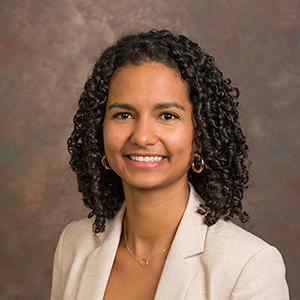
Franssy Zablah, Ph.D.
Clinical Science Faculty at UD
Franssy Zablah’s work is centered on addressing disparities in mental health care access for underserved communities, particularly the Latino population. She specializes in culturally relevant, evidence-based interventions and oversees clinical training for doctoral students.
Program Degree Requirements
This 60-credit, full-time program is designed to be completed in three years: two years of intensive coursework and supervised clinical practice, followed by a clinical internship experience.
Suggested Course of Study
PSYC821: Intelligence & Achievement Testing |
PSYC681: Intro to Ethics and Clinical Practice |
PSYC867: Intro to Clinical Science |
PSYC683: Clinical Research Design |
PSYC819: Child Psychotherapy - Empirically-Supported Treatments |
PSYC829: Advanced Psychopathology |
PSYC827: Adult Psychotherapy - Empirically-Supported Treatments |
PSYC820: Psychodiagnostic Assessment |
PSYC868: Research |
PSYC800: PBS Colloquia |
PSYC685: Integrated Behavioral Healthcare & Consultation |
PSYC835: Supervised Practice in Clinical Psychology |
PSYC687: Diversity in Clinical Practice |
PSYC869: Master’s Thesis |
PSYC800: PBS Colloquia |
600/800 Level Advanced Elective in Students' Area of Interest (Biological, Social, Cognitive, Developmental, Affective Aspects of Behavior) |
PSYC834: Supervised Practice in Clinical Psychology |
PSYC689: Intro to Supervision |
PSYC869: Master’s Thesis |
PSYC800: PBS Colloquia |
PSYC835: Supervised Practice in Clinical Psychology |
UNIV554: University Internship Semester |
UNIV554: University Internship Semester |
Master's Thesis
In addition to clinical training experiences, all students pursuing the M.S. in Clinical Psychological Science at UD will be required to complete and defend a master’s thesis project prior to their graduation from the program. This master’s thesis project is taken as PSYC 868 over three semesters for three credit hours per term. Students will work closely with program faculty to determine the type of project based on students’ interest and training goals (e.g., original research study, literature review, case study, paper presentation). Students begin working on their research thesis project in the spring of their first year, propose their project by the end of the fall of their second year, and orally defend their thesis in the spring of their second year.


