


Language Resource Center
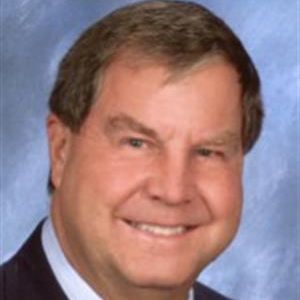
Tomas McCone
Assistant Professor of Spanish
Office: 006A Jastak-Burgess Hall
Location: 30 East Main Street
006 Jastak-Burgess Hall
Newark, DE 19716
Hours of operation are as follows:
9:00 am to 4:30 pm
Monday through Friday

About the Language Resource Center
The Language Resource Center (LRC) is located in Jastak-Burgess Hall (Room 006), right downstairs in a space designed for students to study, relax, and connect.
Open to all students (not just language majors), the LRC is a flexible, welcoming spot where you can:
- Study solo or meet up with classmates
- Take a break in comfortable lounge areas
- Access an extensive library of international and foreign films
- Use resources to support language learning and coursework
We also host movie nights, study breaks, and student-focused events throughout the semester.
Whether you’re looking for a quiet place to focus or just need a change of scenery, the LRC is here for you.
Resource Center Material Resources
The creation of student projects and documents at the Language Resource Center is significantly influenced by the availability of material resources for our student visitors. Access to computing resources, such as computers with adequate connectivity for online research and email communication, as well as the necessary software for document creation and slideshow development, is essential.
In addition, the physical spaces within the center are vital for collaborative student projects and tutoring sessions. Conference tables are needed to facilitate group work, along with large screens for displaying and sharing student findings. As conversation plays a vital role in language acquisition, it is important to provide furnishings that encourage relaxed, conversational interactions. Additionally, facilities that support the study of video materials in the target language should be equipped with video-capable screens located throughout the center to enhance the learning experience.
Space supports function at the Language Resource Center where five workstations devoted to black and white printing and international word processing make document production quick and easy, where D-Table based High Definition displays promote collaborative tutoring and video viewing, where our newly created mini conference room allows for student and faculty meeting venues, and where our open infrastructure, equipped with comfortable furniture, supports conviviality, collaborative learning, conversational opportunity and departmental academic and promotional events.
Student multimedia project development as well as computer-based testing must depend on reliable high-speed equipment to meet the multimedia needs of today’s online development and testing environments, and the computer workstations selected for the Language Resource Center provide both. Resource Center computers are workstations designated primarily for printing and extended storage to ensure a seamless online experience for our students, unencumbered by update delays and intrusive virus scans. Generally, our desktop systems are of two types: Dell Precision Workstation T5500s and Dell Optiplex 7010s providing more than enough power for Microsoft Office applications, Online Textbook Activities and Canvas applications.
Central to Resource Center printing services are its three laser printers, one of which is designated for staff use. The New LRC Student Printer is a Hewlett Packard LaserJet 9050dn used as the default printer for the five student workstations located along the left side of the Resource Center space toward the back. The 9050dn is capable of both single-sided and double-sided monochrome printing and is prominently located near the entrance for convenient access. Color printing is available by special request to both students and faculty and is made possible by a Dell 5130cdn Laser Printer also capable of printing both single-sided and double-sided documents. The LRC Staff printer is a Hewlett Packard LaserJet P3015dn for staff use when the New LRC Student Printer is busy.
The Resource Center’s four scanners which include one book scanner, one large format scanner, and one high-speed document scanner, are all capable of producing portable document files (pdfs), images, and editable texts from the materials they scan. The ScanSnap iX500 document scanner scans both sides of a page at once and typically processes a 50-page document in about two minutes. The Plustek OpticBook 4800 book scanner provides a special binder locater edge that allows it to scan bound pages without the crease shadows that plague other flatbed scans and the ScanSnap SV600 large format scanner provides two-page book and large image scanning. From document acquisition to document printing, few UD facilities can match the unparalleled quality of those produced at the Language Resource Center.
Video images are all about the screens you see them on and the better the quality, the more involved in the visual experience viewers can be. The Resource Center offers two types of screens to its visitors including everything from the simple high resolution flat panel displays on its five computer workstations to the sixty-three inch HD displays over the collaborative D-tables. Regardless of the viewing platform you choose, watching movies at the Resource Center is always an exceptional experience.
The LRC is a well-organized international film library housing more than two thousand subtitled DVDs and video tapes from countries in which all of the languages we teach are spoken. Everything from classical and contemporary films, to informative documentaries, and professionally produced instructional videos are accessible to students and faculty. Most of our video materials are available in digital format and can be watched on LRC workstations as well as visitor laptops and most have English or target language subtitles.
Resource Center Services
Although the Language Resource Center is essentially a self-access learning center in which language students make use of our material resources to design, initiate, and complete class related projects, it also provides services important to student language acquisition which include tutoring, access to language related video materials, proficiency assessment, document preparation and conversion services and video and audio recording services. Add to this our translation services and you have a full service organization uniquely prepared to support the needs of students enrolled in language and culture related courses.
Given the wide variety of formats in which video materials have been recorded, the Language Resource Center has developed the ability to convert video materials from one format to another when access to those materials is otherwise compromised. This includes capturing videotaped materials and converting them to .mp4 digital files and ripping DVD materials to a variety of digital file formats that can be hosted on faculty laptops for display in the classroom environment. In this way, international DVDs recorded in PAL can be shown in the second language classroom without region code or format limitations and can be made more widely available to student audiences. Video materials that are streamed can also be captured and saved as digital files when permission to access those materials has been made available to the LRC. All LRC conversion services are freely available to all UD students and faculty.
The future of foreign language assessment is proficiency-based testing designed to monitor inter-language development across language courses. Such assessments as the Avant computer-based second language proficiency test are frequently administered here on campus.
Although the Language Resource Center is primarily known for its state of the art international computing facilities and services, it is also a well organized international film library housing more than two thousand subtitled DVDs and video tapes from countries in which all of the languages we teach are spoken. Everything from classical and contemporary films, to informative documentaries, and professionally produced instructional videos are available for viewing either in our secluded video mini-theater or at one of our many video workstations and forty-three inch Ultra High Definition flat screen televisions by anyone caring to immerse themselves in the unique international language experience that only film can provide. Our viewing facilities accommodate streaming media as well as media recorded not only in American NTSC, but also in European PAL and French SECAM, making the Resource Center the most flexible viewing facility on the UD campus.
The personnel employed by the Language Resource Center not only assist students in accomplishing their language acquisition goals through the use of LRC equipment and services but as fluent speakers of Spanish, they are often able to provide written translations of Spanish texts, often with the assistance of ChatGPT. Such translation services are available free of charge to the University Community but apply only to documents that are a just few pages in length. Any requests for translation services should be addressed to the Director of the LRC for assessment and subsequent assignment.
General Language Resources
- Chegg (Create your own flashcards)
- Coffee Break Academy (Beginning lessons in several languages)
- Duolingo (Free language learning course with listening, speaking, reading, and writing)
- Forvo (Pronunciation Guide: Hear any word pronounced)
- Goethe Verlag (Beginning vocabulary and phrase lists with pronunciation)
- I Kinda Like Languages (Introductory lessons for many languages)
- LangMedia (Introduction to everyday language in several languages)
- Mango Languages (Language-learning app that’s highly popular)
- Memrise (Sets of flashcards and courses for many languages)
- OptiLingo (Amazing set of diverse resources)
- Quizlet (Contains sets of flashcards for many different languages)
- Tinycards (Flashcards for many different languages. If a language is offered through Duolingo, Tinycards will have flashcards decks linked to the Duolingo lessons.)
- Transparent Language (Language learning online made personal)
- TuneIn (Search by language to find a variety of radio stations)
Mission Statement
The process of learning a second language (L2) is both an intensive and time-consuming activity. After years of experience in training field agents, the Foreign Service Institute (FSI) estimates that anywhere from 700 to 1,320 hours of full-time instruction are needed to reach a level of high fluency (Bialystok and Hakuta 1994, 34). This means that the time commitment for learning a Romance language minimally approaches 20 weeks of intensive, full-time study at 30 hours per week for a grand total of 600 hours, while for other languages, such as Russian and Chinese, the ideal exposure can exceed 44 weeks at 30 hours per week, or 1,320 hours. However, most university students spend on average only 150 hours per academic year actively studying a second language (10 weeks at 5 hours per week for three quarters = 150 total hours). Those students who began studying a second language in high school and continued at the university level find that most of the material taught in their second language classrooms appears to be remedial. However, it is a simple fact that it takes from four to six years to reach functional proficiency in a second language even counting the additional high school exposure (Brave New Digital Classroom: Technology and Foreign Language Learning, by Robert J. Blake, 2008).
Naturally, Study Abroad has been an effective way of dealing with the impoverished or insufficient input in the target language that impedes the development of student proficiency. However, given the fact that not all students are able to study abroad, technology, if used wisely, can play a major role in enhancing L2 learners’ contact with the target language. It is the mission of the Language Resource Center to enhance access to target language input by providing tutoring in the target language, conceptual scaffolding of target language processes, video media in the target language, access to tutorial software, and the technology required to produce documents, presentations, videos, and audio recordings as target language output options. In short, the LRC is designed to bring target language input to life.


