


Category: News
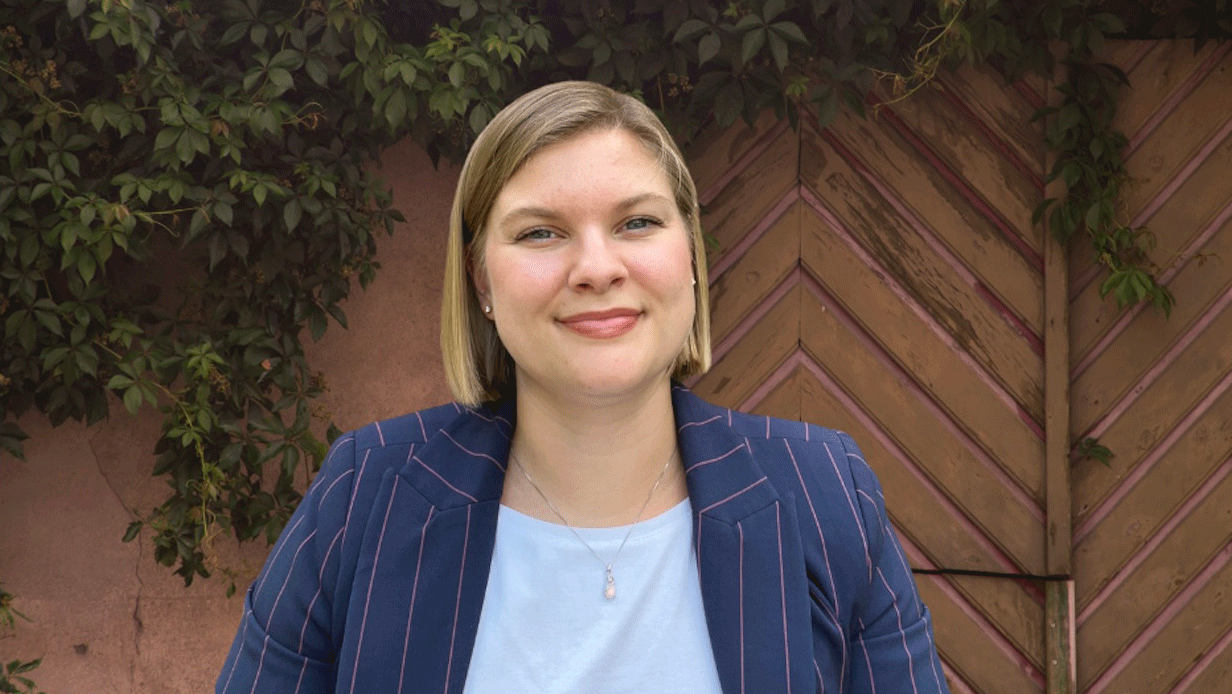
Elizabeth Whitney reflects on Knauss Fellowship
December 17, 2025 Written by Adam Thomas
Elizabeth Whitney received her doctorate from the University of Delaware in Civil and Environmental Engineering in 2024. She was selected by Delaware Sea Grant to be a 2025 John A. Knauss Fellow, a fellowship run through the National Sea Grant office that offers direct experience working on the latest issues in ocean, coastal and Great Lakes management and research.
Below is an interview with Whitney on her experience.
Where have you been placed as part of your Knauss Fellowship?
I am the Science and Technology Coastal and Ocean Enterprise Fellow in the Integrated Ocean Observing System office which is one of the program offices within the National Oceanic and Atmospheric Administration’s (NOAA) National Ocean Service.
What have you been working on during your fellowship?
I play a lot of different roles, and every day is busy.
I'm nested in this greater ocean policy and science world. I support the ocean economy initiatives in my office. That entails organizing meetings, taking notes, and I'm kind of a coordinator in that role.
I play the same role for the National Ocean Service’s Water Team where various groups across the National Ocean Service have representatives come and talk about how they're going to improve flood forecast models and enhance service delivery across the modeling efforts that they have. I'm the executive secretary for that group and I'm also the acting policy lead for my office. I’ve gotten to participate in technical drafting assistance for the Integrated Coastal and Ocean Observing System Act which is the act that mandates my office’s existence.
Then, I am a liaison with Congress. Any time Congress writes a letter about my office, NOAA’s Office of Legislative Affairs sends it to us, and I’ll be the first person to start a response and then send it up through the chain of command.
How has it been working outside of academia?
It's been great. I enjoy the coordination role that I've played. The fellowship gave me the opportunity to use some of my professional development funds to take a training to receive my project management professional certification, so I took that training and ended up passing the exam.
During this fellowship, I learned from other people in my office that you can have an academic background and take that knowledge with you and expand on it in ways that allow you to make an impact. It's more of a background role than a principal investigator type of role liked you’d have in academia, but I enjoy it. That's not something I had any idea about prior to the fellowship.
Has your background in civil and environmental engineering come into play during this role?
A little bit. Mostly because I'm familiar with what it's like to be the person doing the science or doing the water quality monitoring.
In my office, we have 11 regional associations who are those boots on the ground people. Whenever there are challenges that arise, I can relate to what they're going through because I've done that. That’s been helpful in understanding the mechanics of how things work from their perspective while I’m also learning in the office how things work on a federal level.
What has been your favorite part?
There is something new to learn every single day. It’s never boring. The amazing part about this fellowship is that it’s so well respected at NOAA. You can send an email to anyone at any time, and they will respond and share their experiences and sit down and talk with you. The network that we have access to as Knauss Fellows is incredible. There’s a lot of love for the Fellows.
What was it like during the government shutdown?
Every Fellow had a different set of guidance. In my office, there were a lot of contractors continuing to work during the shutdown so there were things for me to work on. Other fellows had their offices completely shut down because they are fully federal and all that work stopped. My capacity was cut down about 50 percent because there was no policy stuff happening. We couldn’t engage with Congress at all because the office that communicates between NOAA and Congress was completely shut down.
I took a lot of time during that month for professional development. I took the test to get my project management professional certification. I also applied to jobs and found volunteer opportunities in the area to give back to the community. It was easy to fill the time, but I wasn’t filling my time with as much work as I'd like to have been doing.
What has been the most beneficial aspect of the Knauss Fellowship?
I learned that I really enjoy these coordination types of roles, and I've learned that I really enjoy public service. It feels rewarding. No matter whether I agree with everything that's happening or not at the highest level of policy making, I still know that I'm having an impact on those communities. I've learned that those jobs exist and it's been nice to see what other jobs are out there aside from industry and academia, so it's influenced the types of jobs I’m applying to.
Anything else?
The biggest thing is just knowing that the Knauss network exists. It's a powerful network. There are Knauss Fellows from a long time ago and it's a highly respected and prestigious fellowship.
It's been an honor to join the ranks. A lot of people will apply to this fellowship; they'll get it and then they'll stay at their agency or in the federal space for a long time. That network of people is always going to be there, they're always going to support us and there's a lot to be said for being a part of that network. That's something that I'm so grateful to be a part of.