MAJOR FINDER
Filter by College
Filter by Program Types
Filter by Subject
Biological Sciences
INVESTIGATE LIFE
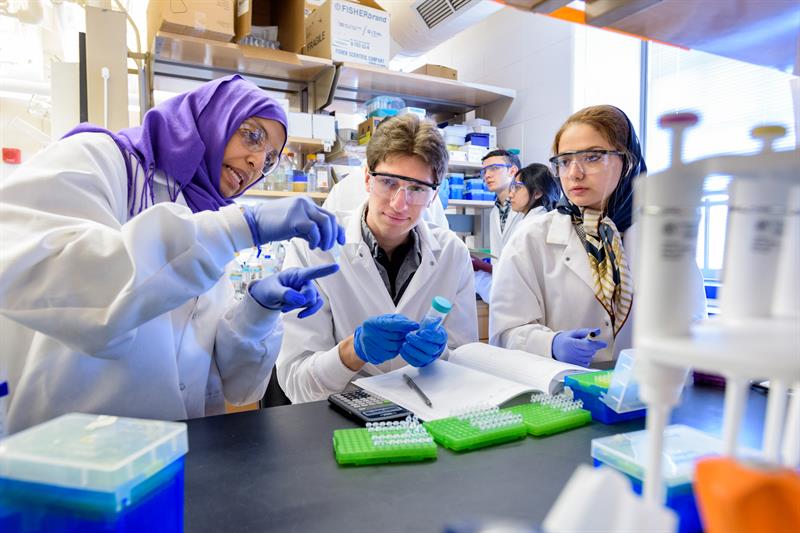
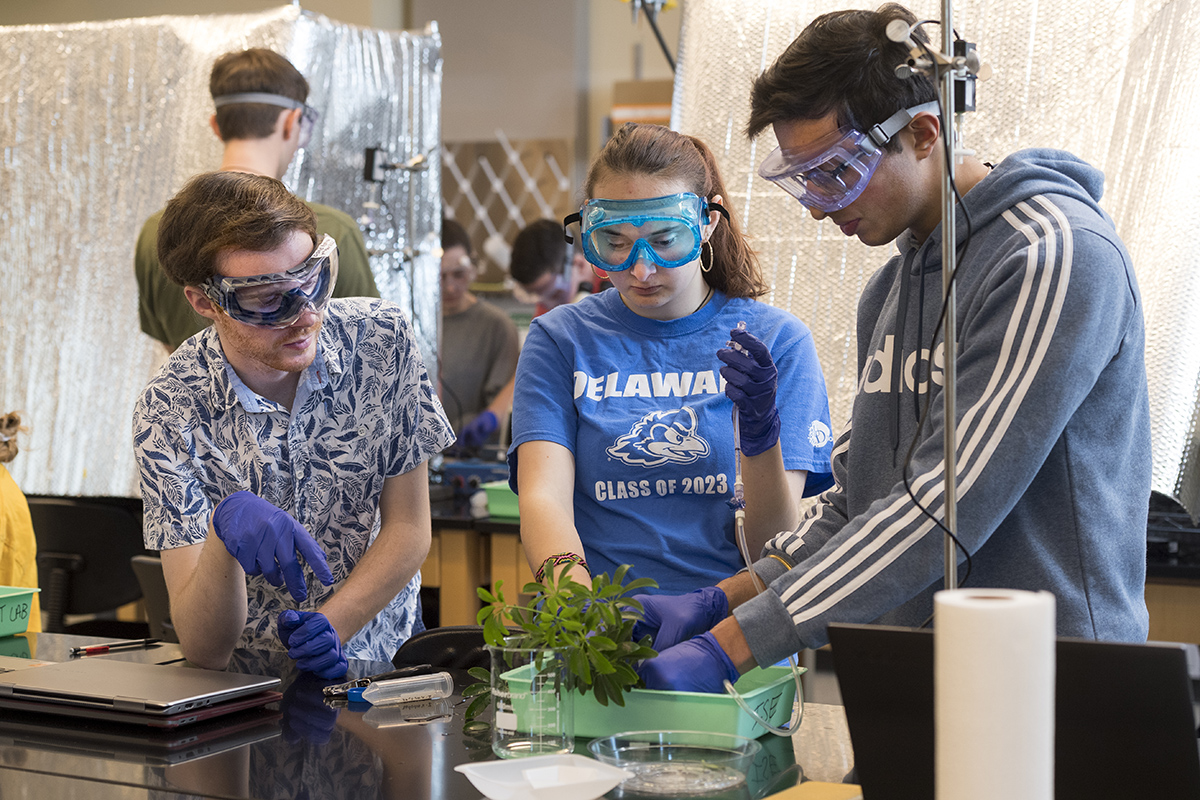
From molecules and cells to organisms and ecosystems, biology students at UD develop the understanding and skills to prepare them for futures in medical or pharmacology school, as researchers or lab technicians in a range of industries, or as a biology teacher. Students can apply to pursue research with a faculty member as early as their first year. The department offers two undergraduate degrees and several 4+1 programs giving students the opportunity to complete their undergraduate and a master’s degree in just one additional year.
What is the difference between the B.A. degree and the B.S. degree?
The B.A. in biological sciences provides an excellent foundation for students interested in advanced study in graduate school or professional programs. The B.S. in biological sciences offers the opportunity for highly motivated students to pursue the curriculum in greater depth.
What can you do with a biology degree?
UD students become doctors, pharmacists, genetic counselors, research scientists, teachers, scientific writers, bioanalysts and pharmaceutical sales representatives.
Can you do research in a lab with a faculty member?
Yes! Students have started working in faculty labs as early as their first year. Some have left UD as the author of multiple scientific publications.
AREAS OF STUDY
- Physiology
- Cellular Biology
- Ecology
- Molecular Biology and Genetics
- Microbiology
CAREER OPTIONS
- Physician or Dentist
- Physician Assistant
- Pharmacist
- Genetic Counselor
- Optometrist or Podiatrist
- Research Scientist or Bioanalyst
- Biology Teacher or Scientific Writer
- Laboratory Technician or Pharmaceutical Sales Representative
GRADUATE PROGRAMS
- Medicine
- Dentistry
- Physician Assistant
- Pharmacy
- Genetic Counseling
- Research
- Optometry
What’s special about this program?
The biological sciences major at UD accommodates virtually every student’s unique interests and career goals. From healthcare to teaching, the program gives students the foundation they need for long-term success. Students are encouraged to gain experience outside the classroom, and some pursue research with a faculty member as early as their first year.
Get Involved
Beta Beta Beta Biological Honors Society
Phi Delta Epsilon International Medical Fraternity
Medlife
Pre-Physician Assistant Club
Scientista Foundation
Lori’s Hands
Making Doctors
Pre-Dental Society
Sample curriculum
BISC207/217
| Introductory Biology I (lecture and lab) |
| BISC208/218 | Introductory Biology II (lecture and lab)
|
CHEM103/133
| General Chemistry (lecture and lab) |
CHEM104/134
| General Chemistry (lecture and lab) |
| ENGL110 | Seminar in Composition
|
MATH115
| Pre-Calculus |
UNIV101
| First Year Experience |
| Foreign Language Courses (105 or Higher)
|
University Breadth Course
|
| BISC302 | General Ecology
|
| BISC306 | General Physiology
|
| CHEM321/325 | Organic Chemistry I (lecture and lab)
|
| CHEM322/326 | Organic Chemistry II (lecture and lab)
|
| MATH221 or 241 | Calculus (Bachelor of Science specific)
|
Foreign Language Courses (107 or Higher)
| |
| University Breadth Courses |
BISC305
| Cell Biology |
BISC303
| Concepts in Genetics and Molecular Biology |
PHYS201/221
| General Physics I (lecture and lab) |
PHYS202/222
| General Physics II (lecture and lab) |
| STAT200 | Basic Statistical Practice
|
BISC Elective Course
| |
University and College Breadth Courses
| |
| University Multicultural Course |
BISC Elective Course
| |
Experimental BISC Laboratory Course (Serves as capstone)
| |
BISC 4XX or 6XX Lit-based Course
| |
University Breadth Course
| |
Second Writing Course
| |
Elective Courses
|