




Working through pain
Photos by Evan Krape January 20, 2026
UD physical therapy research highlights arthritis’s toll on the workforce — and the path forward
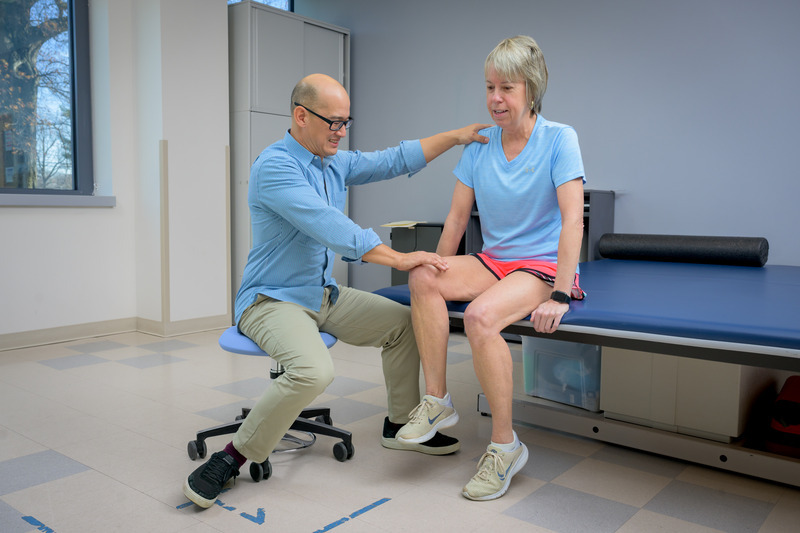
Laura Schmitt remembers traveling to a physical therapy conference in Washington, D.C., and, by the end of the conference, she had difficulty moving as she stepped off the train in Newark with her luggage.
“My right knee was on fire,” she recalled.
Her knee troubles started decades earlier, with a high school basketball injury. As an adult, she had an ACL reconstruction and revision and had been living with knee osteoarthritis (OA) for nearly 20 years. Physical therapy helped ease the pain and staved off an inevitable knee replacement for several years.
“I had trouble walking around that conference; my knee was swollen and throbbing,” she said. “Once I started losing confidence on stairs, the pain tipped the scale. Surgeons always told me, ‘You’ll know when you’re ready,’ and that was my moment.”
As a PT at the University of Delaware’s Physical Therapy Clinic, Schmitt helped others with OA while her own knee swelled on the job between teaching students and assisting patients. She isn’t alone.
One in three Americans says they face arthritis-attributable work limitations, according to new research by Daniel White, associate professor of physical therapy. White’s analysis of findings from the 2023 National Health Interview Survey was recently published in the journal Arthritis Care & Research.
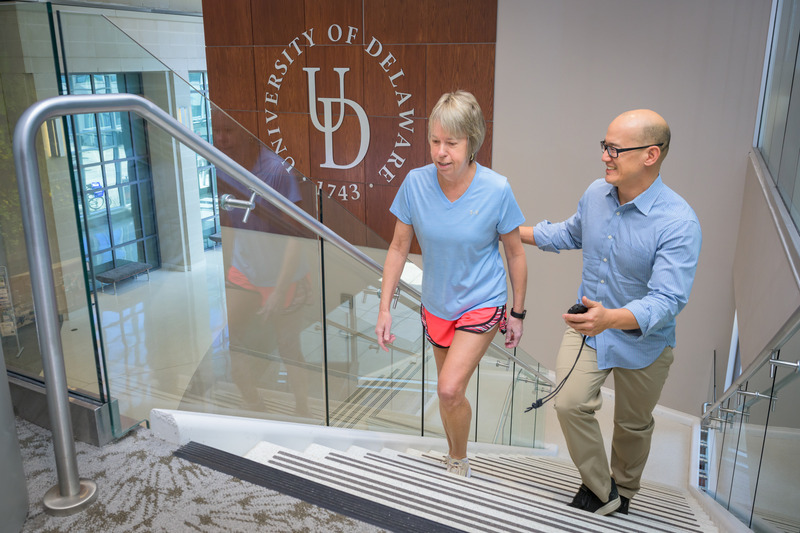
Nearly 40% of American adults ages 18 to 64 with arthritis — almost 10 million people — say arthritis is limiting their ability to work. And as White, a knee OA expert, points out, the number is likely much higher.
“We didn’t include people 65 or older because of retirement, but with what we know about the economy and inflation, people are working longer,” he said.
While the data didn’t identify specific types of arthritis or work limitations, White said overall health was a significant factor.
“Among respondents, 68% of people who had difficulty climbing stairs, walking or other mobility problems reported greater work limitations due to arthritis,” noted White. “We found that people with heart disease, stroke or cancer, as well as those reporting anxiety or depression, faced a significantly higher risk of such limitations.”
Just 23% of people who rated their overall health as “excellent” reported experiencing these limitations.
Although the data did not classify employment types, it included socioeconomic factors that showed Hispanic adults, veterans and those without a college education were more likely to experience arthritis challenges at work.
“That points to more manual labor or to those working in trades suffering more from arthritis-attributable work limitations,” White said. “Whereas with veterans, it could be past combat-related injuries; they’re also at a higher risk for osteoarthritis from carrying heavy backpacks and gear.”
Regaining control
The numbers concern PTs like White, who say they’ve made little progress in the fight against arthritis, with nearly identical numbers in the 2019 self-reported data.
“It’s incredible that this one disease can be responsible for so much work disability or limitations year after year,” White said.
The findings also suggest that too many people are simply living with pain. But White cautions — there’s hope.
“Arthritis is commonly misunderstood as a disease of aging that’s just something people have to deal with,” White said. “But it’s incredibly treatable.”
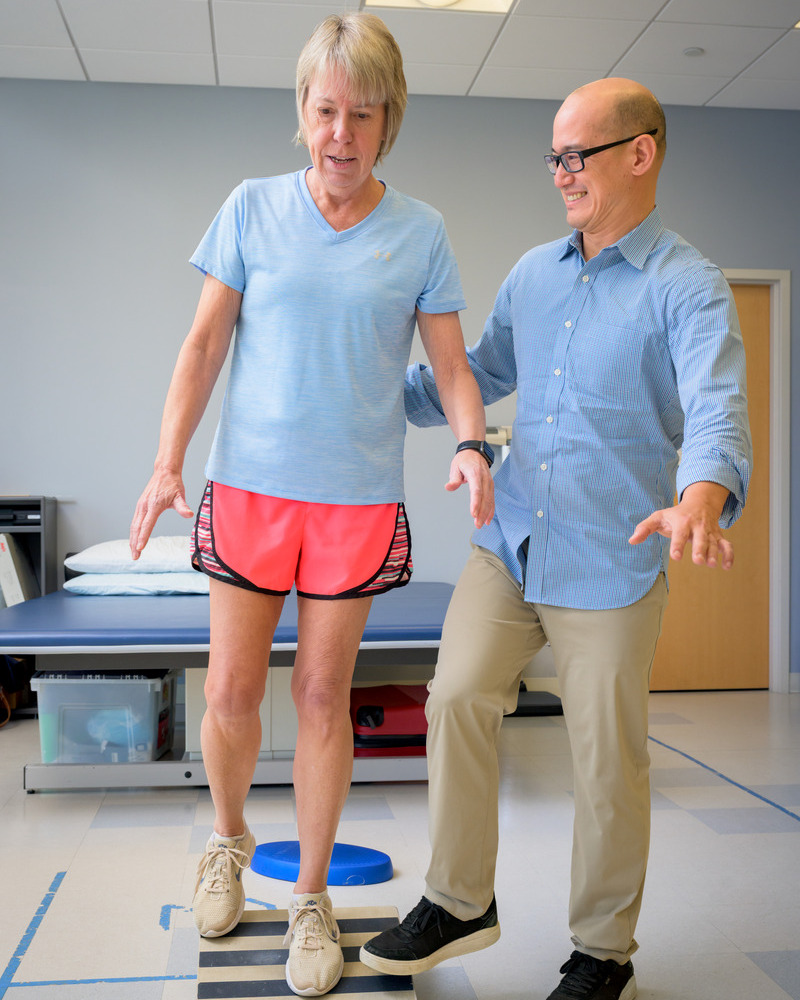
He points to medication, at-home exercise programs and physical therapy as ways to improve quality of life.
“Everyone needs to move,” he said. “People think walking will hurt them, but that’s not the case. You’ve got to find that sweet spot that promotes movement and gains control over the pain.”
Or, in some cases, like Schmitt’s, a knee replacement could ultimately be necessary.
“UD’s PT Clinic helped me rebuild my strength for decades before my surgery, and in the months after my surgery, it helped me regain movement and build my confidence,” Schmitt said.
Today, Schmitt is back to moving without pain. She walks an hour every day, and while she’s retired from patient care, she has deep empathy for those who struggle as she once did.
“The pain is real — it’s not all in their heads,” Schmitt said. “Even if it’s not impacting their work because of what they do, it’s affecting their daily lives. But you can’t let pain drive the bus. People need to be empowered to take control, and even small changes can make a big difference.”
Contact Us
Have a UDaily story idea?
Contact us at ocm@udel.edu
Members of the press
Contact us at mediarelations@udel.edu or visit the Media Relations website