



MAJOR FINDER
Filter by College
Filter by Program Types
Filter by Subject
Medical Diagnostics
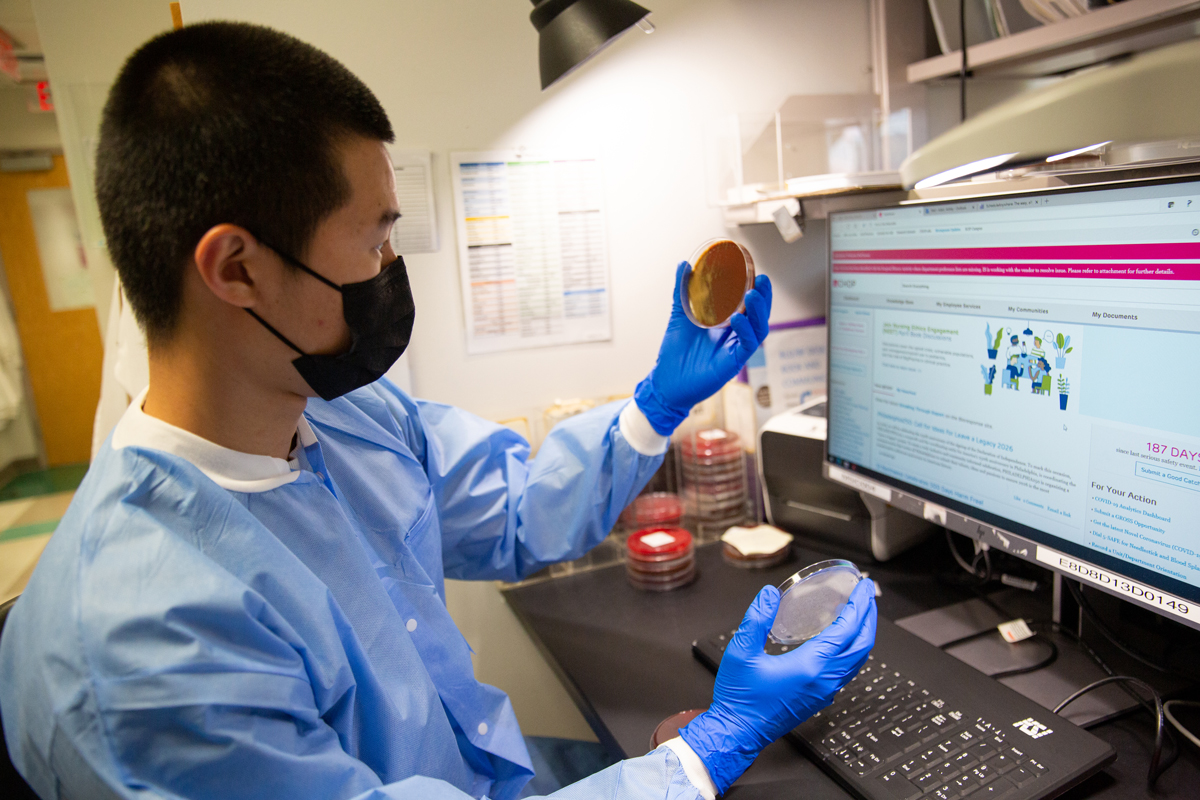
A Foundation for Medical Professionals
Medical diagnostics is a clinically-oriented science program that incorporates the basic science courses required for admission to medical schools with medically-related courses that have impact on the diagnosis and therapy of disease. This major prepares students who plan to pursue postgraduate study in health-related areas immediately upon graduation, including careers in medicine, dentistry, optometry, physician assistant and other medical careers.
Students with the goal of attending Medical School should visit UD's Pre-Med website for advising and admission information. There are two distinct pathways by which students can gain admission to a professional school. One is open to all majors and requires a basic knowledge of science and mathematics. Students taking this option are evaluated by the Health Professions Evaluation Committee (HPEC), which writes a University of Delaware recommendation to medical institutions of the student's choice.
AREAS OF STUDY
- Hematology
- Immunohematology
- Microbiology and Infectious Diseases
- Molecular Biology or Molecular Genetics
CAREER OPTIONS
- Public Health Laboratories
- Biomedical Research Laboratories
- Forensic Laboratories
- Pharmaceutical Companies
- Technical Sales
- Science Communication
GRADUATE PROGRAMS
- Medical School (M.D. and D.O.)
- Dental School
- Podiatry School
- Optometry School
- Veterinary School
- Public Health
- Science Ph.D. Programs
What’s special about this program?
The medical diagnostics curriculum provides a foundation for further study in many healthcare-related professions. Students learn the pathophysiology of diseases in five major areas of study: Clinical Chemistry, Hematology, Immunohematology, Immunology, and Medical Microbiology. Students study detailed information about laboratory analysis and how laboratory data correlates to human disease. Medical diagnostics students take most of the Medical Laboratory Science lecture courses but do not take the accompanying laboratory courses. This schedule allows students to take courses from other scientific disciplines to prepare for entry into post-baccalaureate studies. Graduates in medical diagnostics earn a Bachelor of Science degree and also may qualify for a minor in biological sciences if they meet certain criteria.
Sample curriculum
| FALL | SPRING | ||
BISC207/217
| Introductory Biology I with Lab | BISC208/218 | Introductory Biology II with Lab |
| CHEM103/133 | General Chemistry I with Lab
| CHEM104/134 | General Chemistry II with Lab |
MATH115
| Pre-Calculus | MMSC200 | Language of Medicine |
MMSC100
| Introduction to Medical & Molecular Sciences | ENG110 | First-Year Writing |
UNIV101
| First Year Experience I
| ||
| Breadth Requirement | ||
| FALL | SPRING | ||
BISC300/310 OR MMSC270 | Introduction to Microbiology with Lab OR Medical Microbiology & Infections Diseases
| CHEM322/326 | Organic Chemistry II with Lab |
| CHEM321/325 | Organic Chemistry I with Lab
| BISC306 | General Physiology |
| PHYS201/221 | Introductory Physics I with Lab
| PHYS202/222 | Introductory Physics II with Lab |
Breadth Requirements
| Breadth Requirements
| ||
| FALL | SPRING | ||
MMSC490 OR BISC401 | Clin. & Molecular Cell Bio OR Molecular Biology of the Cell
| MMSC491 OR BISC 303 | Human Molecular Genetics OR Concepts in Genetics and Molecular Biology |
| CHEM214 | Elementary Biochemistry
| MMSC407 | Clinical Physiological Chemistry I |
MMSC415 | Clinical Immunology & Medical Virology
| MMSC423 | Hematology I |
| MMSC402 | Body Fluid Analysis | MMSC428 | Medical Microbiology and Parasitology |
STAT200 OR STAT408 | Basic Statistical Practice OR Statistical Research Methods I | MMSC409 | Immunohematology I |
| Breadth requirement
| ||
| FALL | SPRING | ||
| MMSC436 | Clinical Physiological Chemistry II
| English | (at 200+ level) |
| MMSC433 | Hematology II
| MMSC 462
| Interdisciplinary Healthcare Perspective
|
| MMSC420 | Immunohematology II
| Second Writing Requirement
| |
| MMSC438 | Diagnostic Bacteriology & Medical Mycology
| Breadth Requirements
| |
| Breadth Requirements |
| ||