



Category: Cooperative Extension

How to Use a Wellness Wheel to Assess Your Health & Wellness!
February 18, 2021 Written by Alyssa Whittaker, Extension Agent, Health and Wellness
What is a Wellness Wheel?
A Wellness Wheel is a tool and visual guide that helps one assess all aspects of their wellness. There are many wellness wheel varieties, highlighting different areas of wellness, most commonly known as the 7 Dimensions of Wellness. Wellness is a continuous and active process of achieving an optimal state of health, where an individual becomes aware of or makes choices towards a more whole-self lifestyle. Using a Wellness Wheel helps us assess this continuous and active process for ourselves!
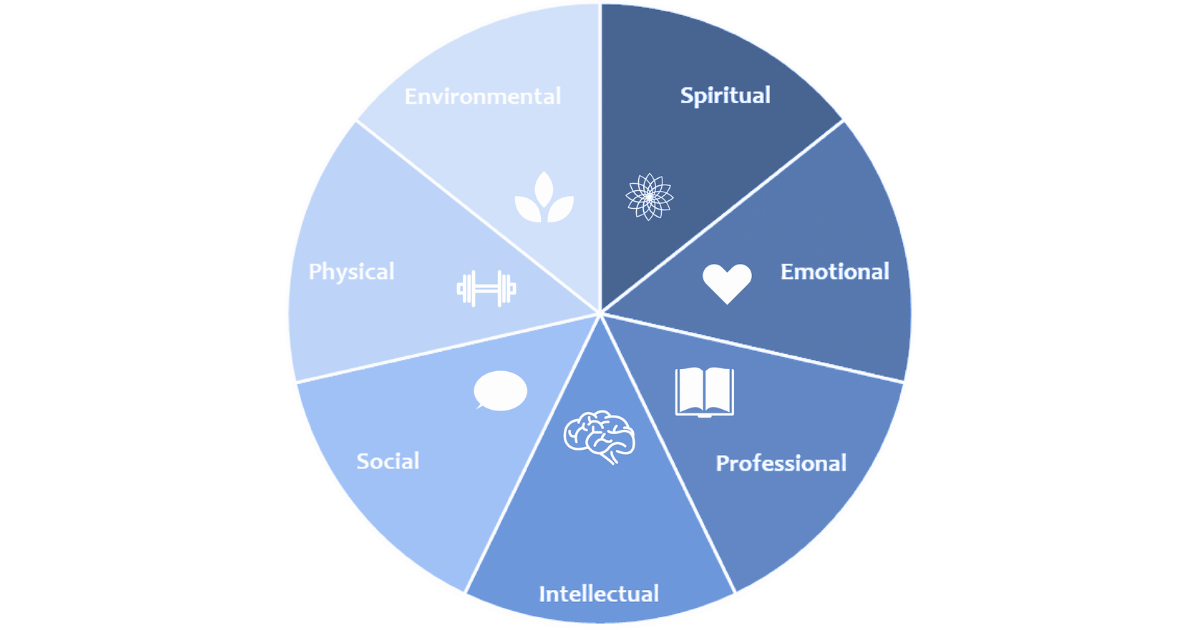
What are the 7 Dimensions of Wellness?
- Environmental
- Spiritual
- Emotional
- Professional
- Intellectual
- Social
- Physical Wellness
Why the Wellness Wheel?
The Wellness Wheel can help increase our self-awareness in areas related to our health and wellness. Sometimes we think of health and wellness just in terms of fitness and nutrition when — really — there are many more areas!
The process of using a Wellness Wheel is highly individual and unique to you. For example, your Wellness Wheel may change throughout the year and look different from that of your friends or family members! The important part is to learn something new about yourself each time you complete the Wellness Wheel.
How can I use a Wellness Wheel?
Let's do it together! Download and print this fillable Wellness Wheel worksheet or draw your own Wellness Wheel to get started!
Step 1
Read the definitions and examples below of each dimension of wellness, considering each example for yourself carefully as you read.
1) Environmental: Taking care of both the global environment and your immediate personal environment through sustainable practices and organization skills.
Examples:
- I recycle plastic, glass and paper products when possible.
- I maintain a clean and organized home/room.
- I spend time outdoors.
2) Spiritual: Establishing peace and harmony in our lives by demonstrating an individual purpose and reflecting your values and beliefs in your actions.
Examples:
- I have a sense of meaning and purpose in my life.
- I trust myself and others and am able to forgive and let go.
- Principles, ethics and morals provide guides for my life.
3) Emotional: Understanding and coping with feelings and emotions through a positive attitude and strong sense of self.
Examples:
- I have a sense of fun and laughter.
- I can identify my feelings and express them appropriately and constructively.
- I have a sense of control in my life and am able to adapt to change.
4) Professional: Professionally or in school, you should have fulfillment in your work. There is also a balance between work and leisure.
Examples:
- My beliefs and values surrounding money/education are harmonious with my behavior.
- I have a balance between work/school and the other areas of my life.
- I have financial/educational plans for the future.
5) Intellectual: Being open to new experiences and ideas by thinking creatively, curiously and critically and by seeking out new challenges.
Examples:
- I have goals to learn a new skill or study a particular topic.
- I would describe myself as a lifelong learner.
- I commit time and energy to self-development.
6) Social: Relating and connecting to others by engaging in the community and building and being a part of supportive social networks.
Examples:
- I am aware of others' feelings and can respond in an appropriate manner.
- I have people with whom I have a trusting relationship.
- I am able to set and respect my own and others' boundaries (boundaries can include personal space, personal belongings and property and safety.
7) Physical: Maintaining a healthy body through smart diet and activity choices.
Examples:
- I eat a balanced nutritional diet.
- I exercise at least 60 minutes per day for youth or 2.5 hours per week for adults.
- I am generally free from illness and practice a preventive lifestyle.
Step 2
For each dimension of wellness in the Wellness Wheel, write down one thing next to the #1 that you are already doing, or doing well, for that dimension of wellness.
Step 3
Go through the wheel and complete #1 for each of the seven dimensions, referring back to the examples and definitions as needed.
Step 4
Go back through the dimensions and think about one thing you would like to do (or could be doing better) to further enhance this dimension of wellness. Write this down next to the #2 for each dimension.
Step 5
Do this for each dimension until you have both #1 and #2 completed for each dimension.
Step 6
Now that you have completed your Wellness Wheel, consider ways to maintain what you have written beside the #1s, and how you can get started on the items written beside the #2s. Make a plan or goal for these listed items, then hang your Wellness Wheel somewhere you will see it, referring back to it weekly. Need some more guidance with setting goals? Next month keep a lookout for a How to Set SMART Goals article!
Note: While the Wellness Wheel is to be completed individually, feel free to complete this activity alongside family or friends! Completing Wellness Wheels with others is a great way to brainstorm ideas to enhance your wellness in different areas and even provide opportunities to set goals together for each dimension of wellness.