

Great Decisions, the award-winning PBS television series on international affairs, is recorded on the campus of the University of Delaware in association with the Foreign Policy Association.
Host Ralph Begleiter is the University’s Distinguished Journalist in Residence and Rosenberg Professor of Communication and previously was CNN’s World Affairs Correspondent from 1981-99.
The longest running television series devoted exclusively to international affairs and foreign policy, Great Decisions is broadcast over many Public Broadcasting System stations nationwide. and is distributed to schools, organizations and individuals in digital format. It was produced in association with the University of Delaware’s Department of Media Services/Iinformation Technologies.

-
Great Decisions 2011 features impartial, thought-provoking analyses on eight issues of concern to U.S. policymakers today representing our foreign policy challenges of tomorrow. Click on a topic below to learn more about each episode.
- Great Decisions: Introduction
- Topic 1: Rebuilding Haiti
- Topic 2: U.S. National Security
- Topic 3: Security in the Horn of Africa
- Topic 4: The Financial Crisis
- Topic 5: Germany Ascendant
- Topic 6: Sanctions & Nonproliferation
- Topic 7: The Caucasus
- Topic 8: Global Governance
- UNIVERSITY OF DELAWARE EXPERTS
- REGIONAL RESOURCES

Great Decisions:Introduction
The Great Decisions in Foreign Policy television series returns for another insightful season on PBS, airing nationwide beginning in January. The 2011 series is now available in major markets on PBS World. This award-winning series – recently recommended by the New York Times – frames the most important foreign policy questions of the year ahead. It then turns to the experts, and Americans in four cities, to answer them. In 2012 the series will celebrate 40 years on the air, making it the longest running program on U.S. foreign policy and global affairs in American history.

University of Delaware Distinguished Journalist in Residence & Rosenberg Professor of Communication
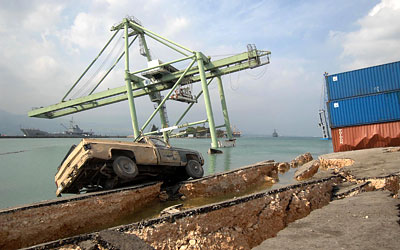
After The Earthquake: Should the U.S. give up on Haiti?
The January 2010 earthquake that devastated Haiti struck a country already suffering from widespread poverty and underdevelopment. Did this natural disaster inadvertently provide an opportunity for reassessment and planning a new Haiti? Will the results of the 2010 presidential elections provide the leadership bring to restore the country? Guests include:
Ray Walser — Senior Policy Analyst, The Heritage Foundation
Michael Shifter — President, Inter-American Dialogue
Department of Political Science & International Relations
Latin American Studies/Cuba
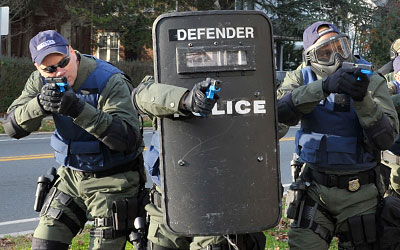
U.S. National Security: Is America safer 10 years after 9/11?
U.S. national security priorities were expanded after the terrorist attacks of September 11, 2001, to include waging war in Iraq and Afghanistan, tightening border security, pursuing cyberthreats, halting nuclear proliferation and attempting to snuff out homegrown terrorism. How has the U.S. national security agenda evolved since 9/11? In what ways will this agenda shape the American way of life in the future? Guests include:
Marc Lynch — Director, Institute for Middle East Studies,
———————George Washington University
Malou Innocent — Foreign Policy Analyst, Cato Institute
Department of Political Science & International Relations
War and Politics
Department of Political Science & International Relations
International Politics
Department of Political Science & International Relations
Terrorism, migration, national security policy
Department of Political Science & International Relations
Afghanistan/Pakistan, Rising Powers, Middle East
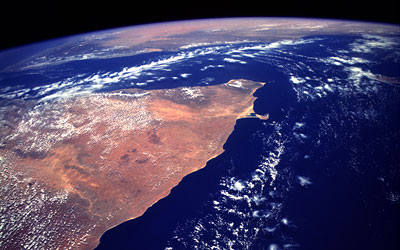
Horn of Africa: the next Afghanistan?
Since the early 1990s, the U.S. has monitored the Horn of Africa due to security concerns. Internal instability, weak governments in some countries, regional rivalries and a lack of development have resulted in an environment conducive to terrorism. Can the U.S. protect its national interests while mitigating the dangerous conditions in the region? Guests include:
Daniel Simpson — Former U.S. Ambassador and Special Envoy
—————————to Somalia; Columnist and Editorialist, Pittsburgh
—————————Post-Gazette and Toledo Blade
Terrence Lyons — Associate Professor, Institute for Conflict Analysis
—————————and Resolution; Author, Avoiding Conflict in the Horn
—————————of Africa: U.S. Policy Toward Ethiopia and Eritrea
Department of Political Science & International Relations
African Politics

Responding to the Financial Crisis
As an immediate response to the financial crisis of 2007–08, governments around the world stepped in to bail out troubled private banks deemed “too big to fail,” underscoring the interdependence between private and public finances. With the recent eurozone crisis, what have we learned so far and is it possible to ensure that future crises will not occur? Guests Include:
Peter Wallison — Senior Fellow, American Enterprise Institute
Dean Baker — Co-Director, Center for Economic and Policy Research
Department of Political Science & International Relations
European Politics/International Political Economy
Department of Finance
Mergers and acquisitions, corporate governance, fairness opinions
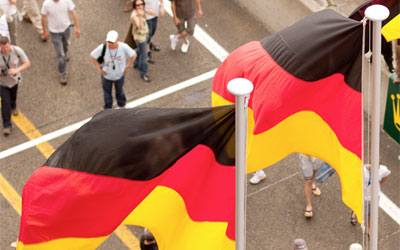
Germany Ascendant
Germany has emerged from both the financial crisis and the eurozone crisis as the dominant economic and political power in Europe, in particular setting the tone for dealings with Russia, Eastern Europe and Iran. How important is it for U.S, interests to enhance relations with Germany, and how should the U.S. react when German and U.S. interests fail to align? Guests include:
Daniel Hamilton — Executive Director, Center for Transatlantic Relations,
—————————John Hopkins University
Charles Kupchan — Professor of International Affairs,
————————— Georgetown University
Department of Political Science & International Relations
European Politics/International Political Economy
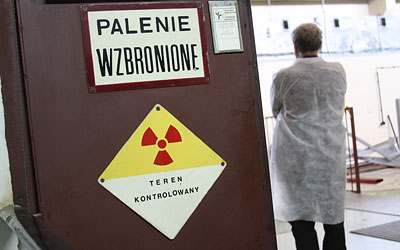
Sanctions and Nonproliferation: Do sanctions work?
Sanctions have been created to curb nations in violation of international law, especially agreements concerning nuclear nonproliferation. How successfully have sanctions been applied against past violators? Is there any chance sanctions can curtail North Korea and Iran from continuing to develop nuclear weapons? Guests include:
Gary Hufbauer — Senior Fellow, Peterson Institute for
————————–International Economics
Mark Dubowitz — Executive Director, Foundation for
————————–Defense of Democracies
Department of Political Science & International Relations
Afghanistan/Pakistan, Rising Powers, Middle East
Department of Political Science & International Relations
War and Politics
Department of Political Science & International Relations
East and Southeast Asia
Department of Political Science & International Relations
International Politics
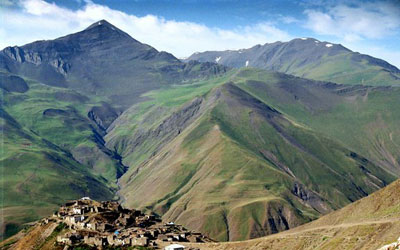
The Caucasus
The countries and regions of the Caucasus all have strong national identities but have long lived in the shadow of their larger neighbors: Russia, Iran and Turkey. How does this influence the Caucasus of today? How do the region's energy resources play into its relations with the outside world?
Charles King — Professor of International Affairs and Government,
———————–Georgetown University
David Kramer — Executive Director, Freedom House
Department of Political Science & International Relations
European Politics/International Political Economy
Department of Political Science & International Relations
Afghanistan/Pakistan, Rising Powers, Middle East
Department of Political Science & International Relations
War and Politics
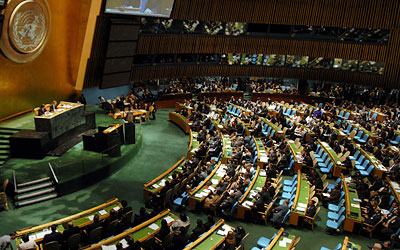
Global Governance: Is U.S. power in decline?
International cooperation subjects political leaders to an ongoing test: balancing national needs with a commitment to building a durable international order. How has an increasingly interconnected and shrinking world affected the viability of existing agreements and institutions? What economic, social, political and security concerns are currently on the agendas of intergovernmental bodies, and what is the future U.S. role?
Richard Gowan — Associate Director, Center on International
—————————Cooperation
David Shorr — Program Officer, The Stanley Foundation
Department of Political Science & International Relations
Global Governance
Department of Political Science & International Relations
Human Rights
Department of Political Science & International Relations
East and Southeast Asia
Center for Energy & Environmental Policy
Energy
Department of Finance
Mergers and acquisitions, corporate governance, fairness opinions
UNIVERSITY OF DELAWARE EXPERTS
 Alice Ba: East and Southeast Asia Gretchen Bauer: African Politics Kenneth Campbell: War and Politics Julio Carrion: Latin American studies/Cuba Daniel Green: Global Governance Janet Johnson: Environmenal Politics Stuart Kaufman: International Politics Muqtedar Khan: Afghanistan/Pakistan, Rising Powers, Middle East Daniel Kinderman: European Politics/International Political Economy William Meyer: Human Rights Mark Miller: Terrorism, migration, national security policy
Adam Marsh: Arctic
John Byrne: Energy
REGIONAL RESOURCES
The World Affair Council of Wilmington provides a forum for thought leaders and intellectually curious citizens to learn about world affairs from foreign and domestic leaders. The council is a cosponsor of the University of Delaware’s Global Agenda lecture series.
The World Trade Center Delaware is a nonprofit organization that assists small- and medium-sized companies in expanding their markets overseas.