



Derelict Crab Pots
Trap Trackers Program: Investigating lost crab pots of the Delaware Inland Bays
Ghost crab pots are lost commercial-style traps no longer attached to buoys. In the Delaware Inland Bays, a recreational only blue crab fishery, they litter the seafloor, damage boat propellers, and trap marine life—posing both environmental and navigational risks.
With funding from the National TRAP Program, Delaware Sea Grant and the CSHEL lab are collaborating with state and local partners and volunteers to not only remove derelict crab pots from Delaware’s Inland Bays, but to collect information on locally-relevant impacts.

Crab pot roundup event
Our next event is on September 22 & 23, 2026 with more information to come. There are multiple volunteer and boater roles that are needed.
Habitat mappers needed!
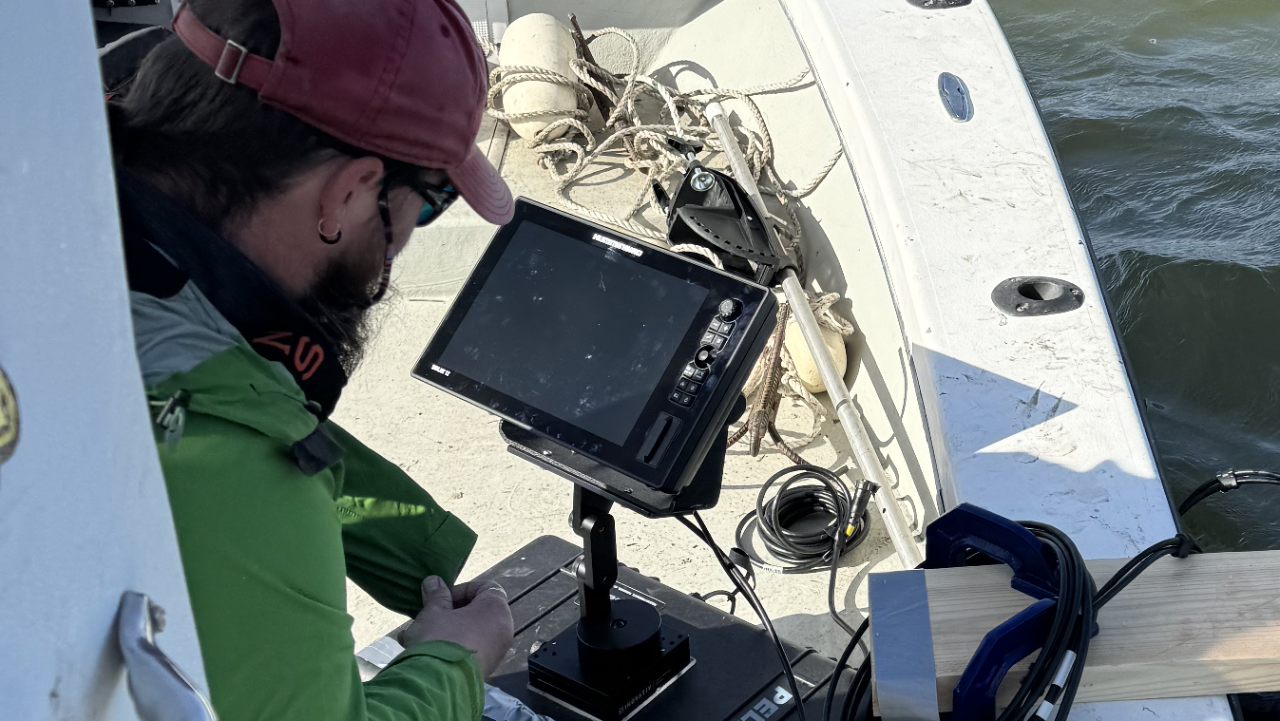
Own a boat and want to help locate derelict crab pots, but don’t want to get your hands dirty? Join this low-effort volunteer opportunity—borrow a Mobile Mapping Unit and view our training videos to collect side-scan sonar data and support the cause.

Delaware Ghost Pot Removal: Program Overview
This StoryMap offers a snapshot of Delaware’s ghost pot removal program, explaining what ghost pots are, how they’re found and recovered, and what the data tells us about their impact. It highlights the science, teamwork, and community effort behind keeping Delaware’s waterways healthy.
Removed a Derelict Crab Pot? Your Data Matters!
Whether you’ve pulled up pots during a beach walk, kayak trip, fishing outing, low-tide search, or with side-scan sonar—tell us about it! Your data helps shape cleanup efforts, protect wildlife, and inform local and national research.
Start with the Data Collection Guide for simple, standardized steps to accurately record and submit high-quality field data, and use the printable Species ID Cheat Sheet to quickly distinguish common bycatch and impacted wildlife.
Note: These forms are not for reporting gear still in the water—only for documenting pots or traps after removal. Lost pots are considered those which do not still have a buoy or owner identification attached. For questions, contact Brittany Haywood at haywoobl@udel.edu.
Delaware Sea Grant Reduces Impacts of Derelict Crab Pots: youtube.com/watch?v=xzeKdpnl40c
Learn more about the program
Watch the video to discover the impact of derelict, or lost and abandoned, crab pots on Delaware’s Inland Bays and learn how Delaware Sea Grant is collaborating with the community to tackle this pressing environmental issue.
Further reading:
2019 Recreational Crab Pot Abandonment Report
2021-2020 Recreational Crab Pot Abandonment Report
Derelict Crab Pots in Delaware’s Recreational Blue Crab Fishery
Crab Smart, from the Start
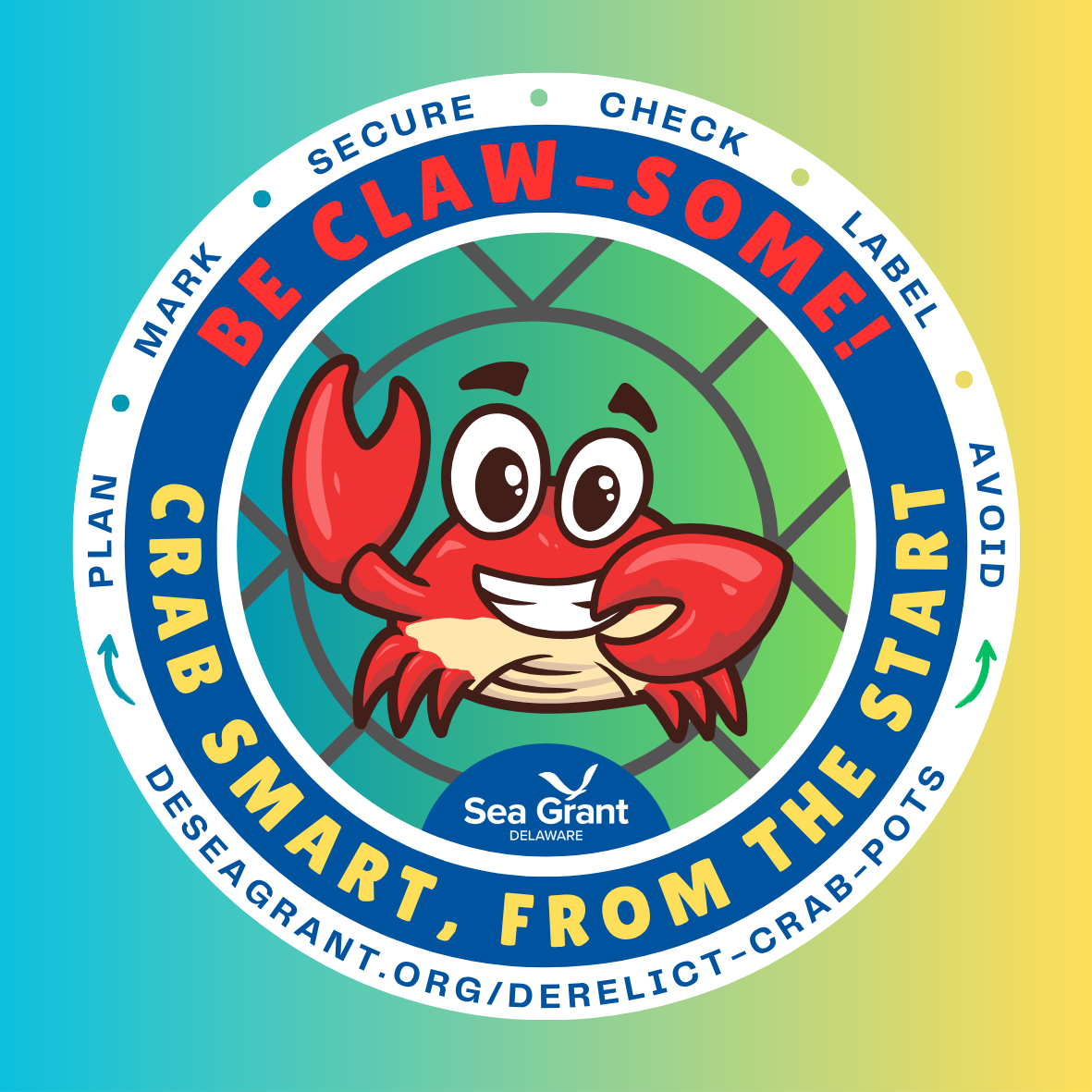
Crabbing should be fun, safe, and sustainable. DESG’s Crab Smart, from the Start initiative helps recreational crabbers learn how to crab responsibly from the beginning. View the Crabbing 101: A Beginner's Guide to Recreational Crabbing flyer here.
We offer free Crab Trap Check events for communities and organizations. These events provide tips on crabbing, explain trap types and gear, and include hands-on checks of commercial-style pots. Missing parts can be replaced on the spot to help keep traps legal and prevent marine debris. Watch DNREC’s Crab Confidently video for a quick look at the tips and gear checks we cover during our events.
Remember, terrapin excluders—also called Bycatch Reduction Devices (BRDs)—are required on all funnel openings in recreational crab pots. Learn more about BRDs and how to install them in your gear.
Our partners
Delaware Sea Grant coordinated this project with financial, logistical, and personnel support from the University of Delaware, DNREC, and the National Oceanic and Atmospheric Administration (NOAA). DESG would also like to acknowledge the support of Art Trembanis and the Coastal Sediments, Hydrodynamics and Engineering Laboratory (CSHEL).



Connect


Robinson Hall, Newark, DE 19716-1304 Phone 302-831-8083 Fax 302-831-2005